Kamata Shotaro, Yamamoto Junya, Ohtani Haruka, Tosaka Yuka, Yoshikawa Sayumi, Akahoshi Noriyuki, Ishii Isao
Laboratory of Health Chemistry Showa Pharmaceutical University Tokyo Japan.
Laboratory of Biochemistry Keio University School of Pharmaceutical Sciences Tokyo Japan.
FEBS Open Bio. 2018 Aug 13;8(9):1524-1543. doi: 10.1002/2211-5463.12497. eCollection 2018 Sep.
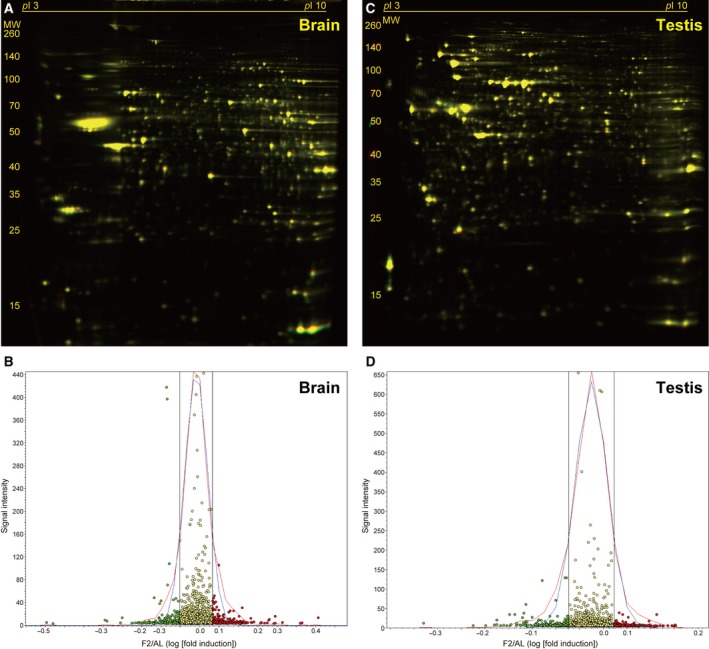
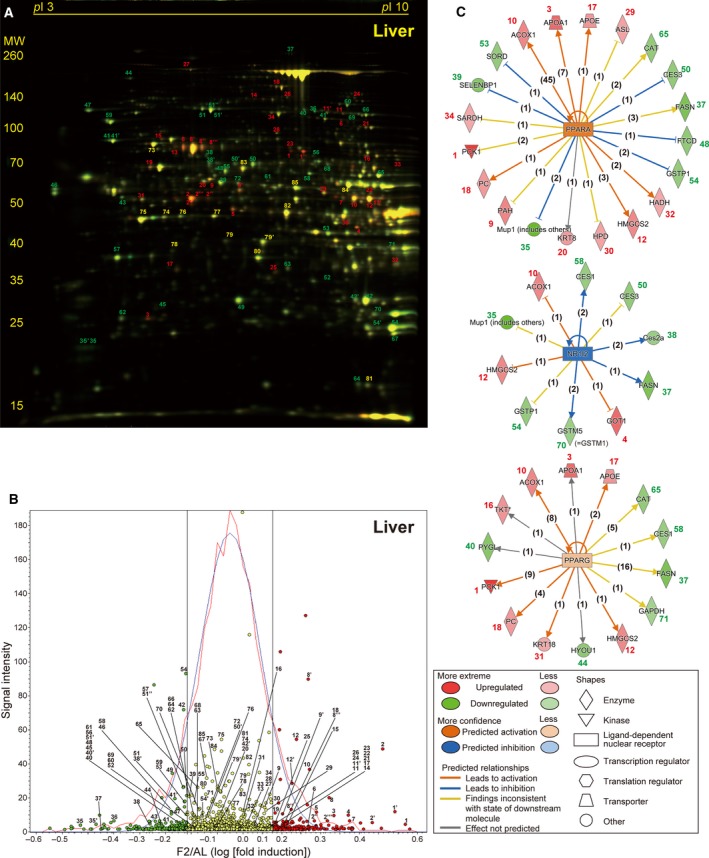
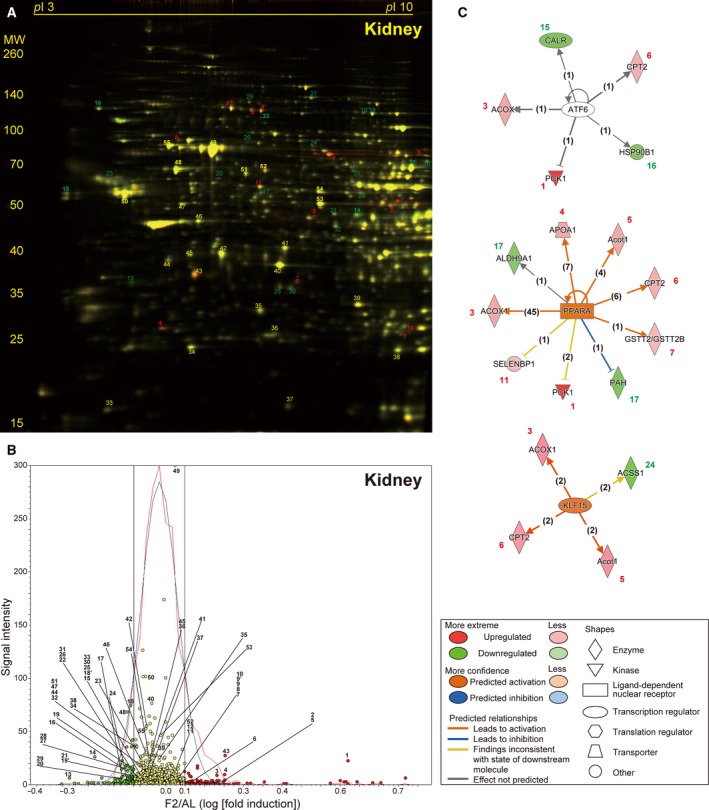
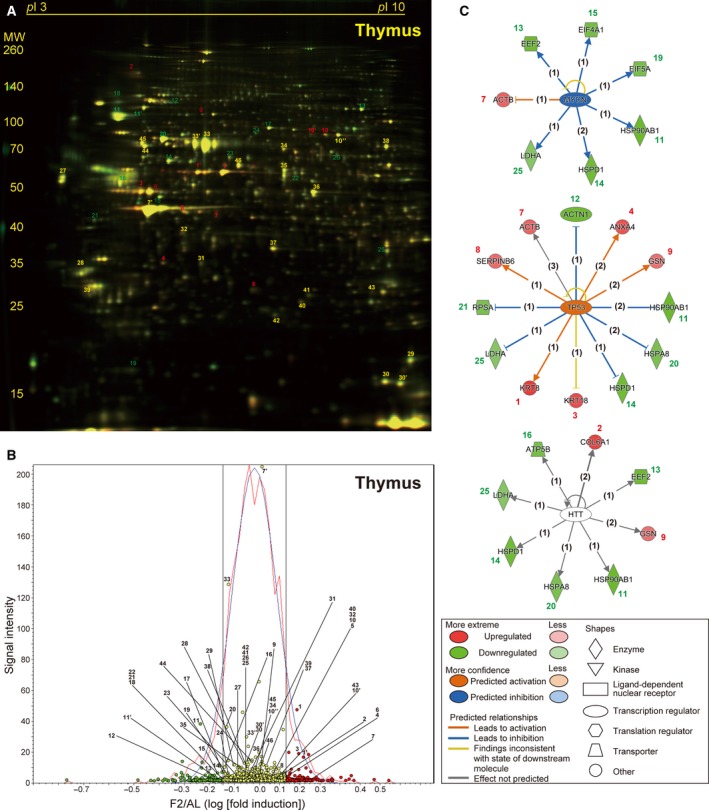
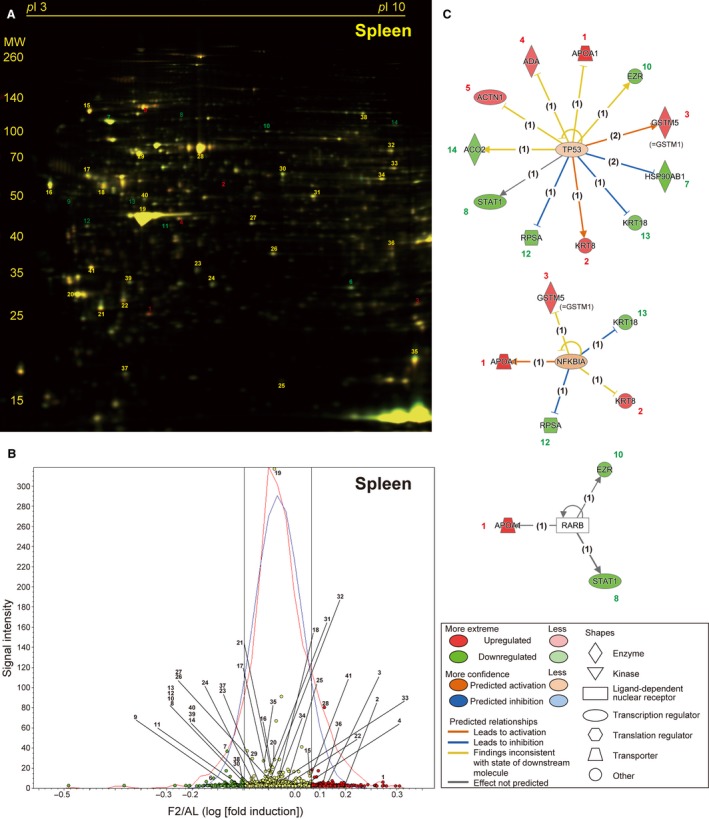
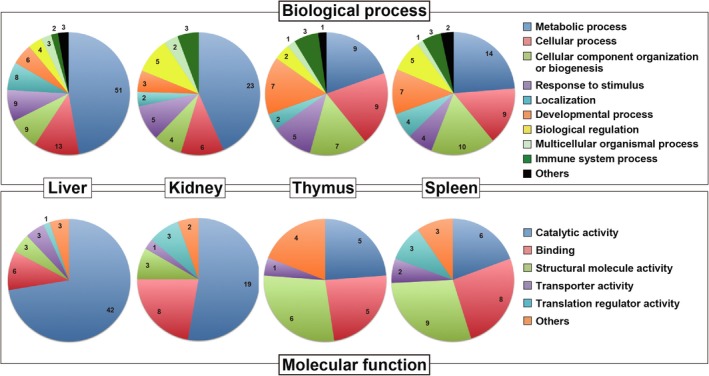
Overnight fasting is a routine procedure before surgery in clinical settings. Intermittent fasting is the most common diet/fitness trend implemented for weight loss and the treatment of lifestyle-related diseases. In either setting, the effects not directly related to parameters of interest, either beneficial or harmful, are often ignored. We previously demonstrated differential activation of cellular adaptive responses in 13 atrophied/nonatrophied organs of fasted mice by quantitative PCR analysis of gene expression. Here, we investigated 2-day fasting-induced protein remodeling in six major mouse organs (liver, kidney, thymus, spleen, brain, and testis) using two-dimensional difference gel electrophoresis (2D DIGE) proteomics as an alternative means to examine systemic adaptive responses. Quantitative analysis of protein expression followed by protein identification using matrix-assisted laser desorption ionization-time-of-flight mass spectrometry (MALDI-TOFMS) revealed that the expression levels of 72, 26, and 14 proteins were significantly up- or downregulated in the highly atrophied liver, thymus, and spleen, respectively, and the expression levels of 32 proteins were up- or downregulated in the mildly atrophied kidney. Conversely, there were no significant protein expression changes in the nonatrophied organs, brain and testis. Upstream regulator analysis highlighted transcriptional regulation by peroxisome proliferator-activated receptor alpha (PPARα) in the liver and kidney and by tumor protein/suppressor p53 (TP53) in the thymus, spleen, and liver. These results imply of the existence of both common and distinct adaptive responses between major mouse organs, which involve transcriptional regulation of specific protein expression upon short-term fasting. Our data may be valuable in understanding systemic transcriptional regulation upon fasting in experimental animals.
在临床环境中,术前禁食是常规程序。间歇性禁食是用于减肥和治疗生活方式相关疾病的最常见饮食/健身趋势。在这两种情况下,通常会忽略与感兴趣参数无关的有益或有害影响。我们之前通过基因表达的定量PCR分析,证明了禁食小鼠的13个萎缩/非萎缩器官中细胞适应性反应的差异激活。在这里,我们使用二维差异凝胶电泳(2D DIGE)蛋白质组学研究了2天禁食诱导的六种主要小鼠器官(肝脏、肾脏、胸腺、脾脏、大脑和睾丸)中的蛋白质重塑,作为检查全身适应性反应的另一种方法。通过蛋白质表达的定量分析,随后使用基质辅助激光解吸电离飞行时间质谱(MALDI-TOFMS)进行蛋白质鉴定,结果显示,在高度萎缩的肝脏、胸腺和脾脏中,分别有72、26和14种蛋白质的表达水平显著上调或下调,在轻度萎缩的肾脏中有32种蛋白质的表达水平上调或下调。相反,在非萎缩器官大脑和睾丸中,蛋白质表达没有显著变化。上游调节因子分析突出了肝脏和肾脏中过氧化物酶体增殖物激活受体α(PPARα)以及胸腺、脾脏和肝脏中肿瘤蛋白/抑癌基因p53(TP53)的转录调节作用。这些结果表明,主要小鼠器官之间存在共同和独特的适应性反应,这涉及短期禁食时特定蛋白质表达的转录调节。我们的数据对于理解实验动物禁食时的全身转录调节可能具有重要价值。