Kamata Shotaro, Oyama Takuji, Saito Kenta, Honda Akihiro, Yamamoto Yume, Suda Keisuke, Ishikawa Ryo, Itoh Toshimasa, Watanabe Yasuo, Shibata Takahiro, Uchida Koji, Suematsu Makoto, Ishii Isao
Laboratory of Health Chemistry, Showa Pharmaceutical University, Machida, Tokyo 194-8543, Japan.
Faculty of Life and Environmental Sciences, University of Yamanashi, Kofu, Yamanashi 400-8510, Japan.
iScience. 2020 Oct 23;23(11):101727. doi: 10.1016/j.isci.2020.101727. eCollection 2020 Nov 20.
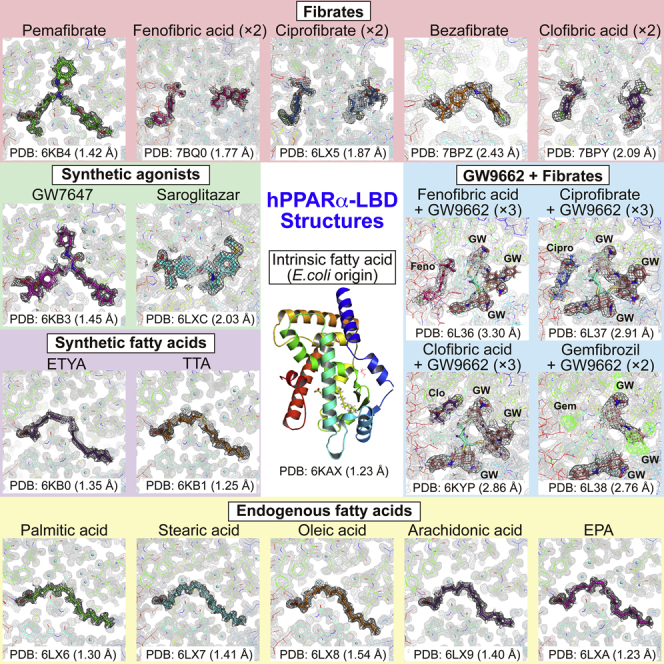
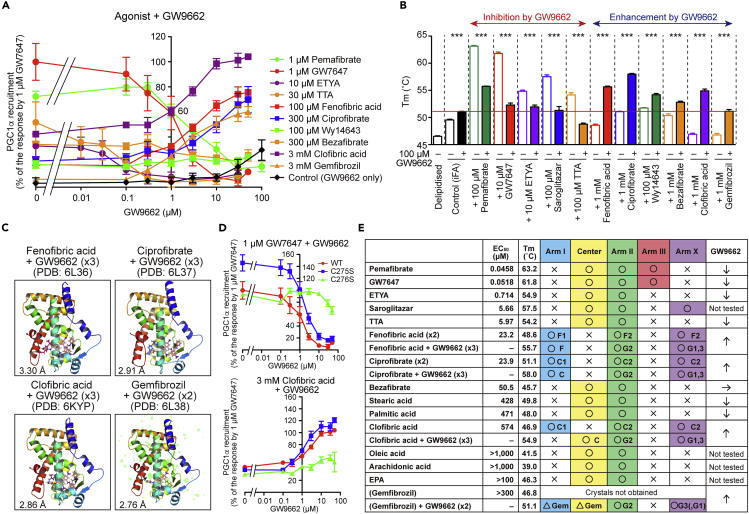
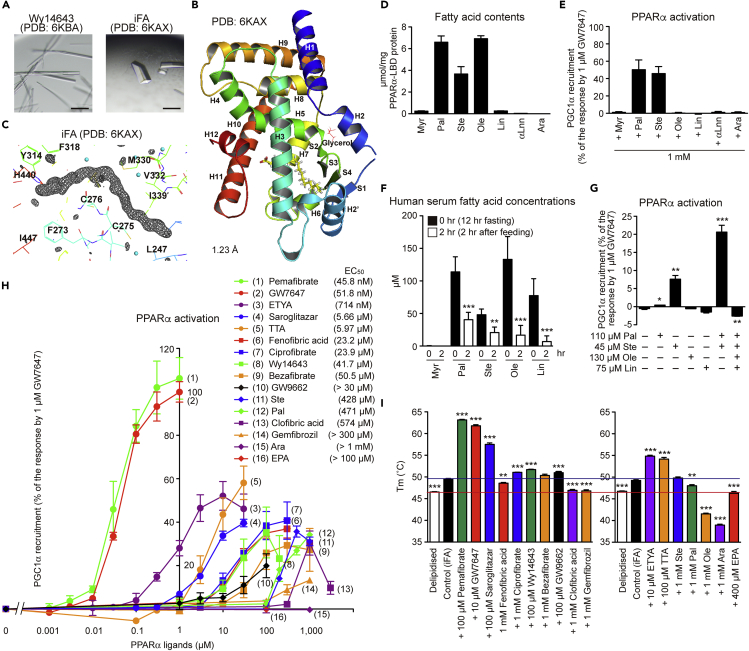
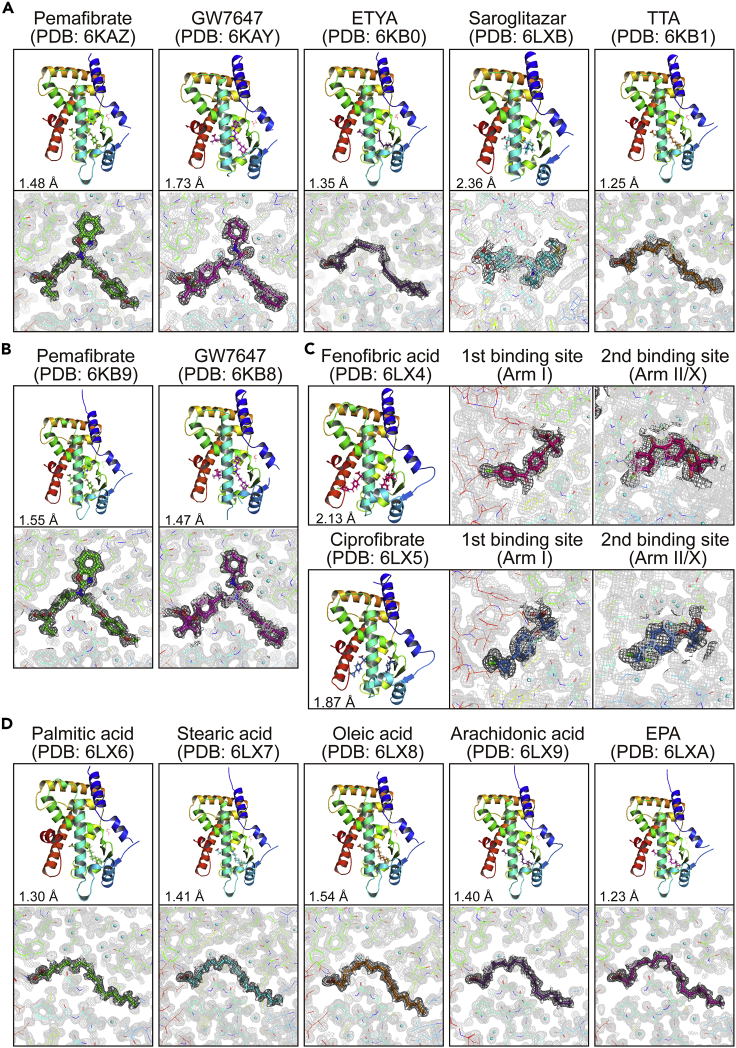
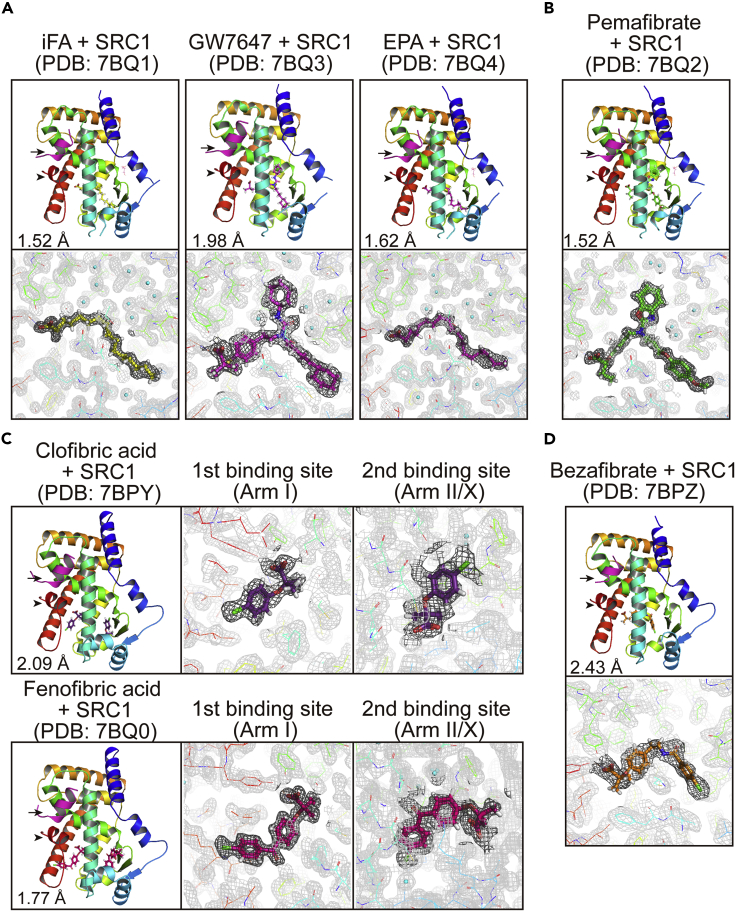
Most triacylglycerol-lowering fibrates have been developed in the 1960s-1980s before their molecular target, peroxisome proliferator-activated receptor alpha (PPARα), was identified. Twenty-one ligand-bound PPARα structures have been deposited in the Protein Data Bank since 2001; however, binding modes of fibrates and physiological ligands remain unknown. Here we show thirty-four X-ray crystallographic structures of the PPARα ligand-binding domain, which are composed of a "Center" and four "Arm" regions, in complexes with five endogenous fatty acids, six fibrates in clinical use, and six synthetic PPARα agonists. High-resolution structural analyses, in combination with coactivator recruitment and thermostability assays, demonstrate that stearic and palmitic acids are presumably physiological ligands; coordination to Arm III is important for high PPARα potency/selectivity of pemafibrate and GW7647; and agonistic activities of four fibrates are enhanced by the partial agonist GW9662. These results renew our understanding of PPARα ligand recognition and contribute to the molecular design of next-generation PPAR-targeted drugs.
大多数降低甘油三酯的贝特类药物是在20世纪60年代至80年代开发的,当时它们的分子靶点——过氧化物酶体增殖物激活受体α(PPARα)尚未被确定。自2001年以来,已有21种配体结合的PPARα结构存入蛋白质数据库;然而,贝特类药物和生理性配体的结合模式仍然未知。在此,我们展示了PPARα配体结合域的34个X射线晶体结构,该结构由一个“中心”区域和四个“臂”区域组成,这些结构与五种内源性脂肪酸、六种临床使用的贝特类药物以及六种合成PPARα激动剂形成复合物。高分辨率结构分析,结合共激活因子募集和热稳定性测定,表明硬脂酸和棕榈酸可能是生理性配体;与臂III的配位对于匹伐贝特和GW7647的高PPARα效力/选择性很重要;部分激动剂GW9662增强了四种贝特类药物的激动活性。这些结果更新了我们对PPARα配体识别的理解,并有助于下一代PPAR靶向药物的分子设计。