Department of Pathology, College of Medicine, Catholic University of Daegu, Daegu, Korea.
Department of Agricultural Biology, National Academy of Agricultural Science, Jeonju-si, Korea.
Br J Pharmacol. 2018 Dec;175(23):4310-4324. doi: 10.1111/bph.14487. Epub 2018 Nov 6.
Atopic dermatitis (AD) is a multifactorial skin condition with complex interactions of innate and adaptive immune responses. There are several existing therapies for AD, including topical glucocorticosteroids, emollients, phototherapies, calcineurin inhibitors and immunosuppressants, such as cyclosporine A. Although these therapies reduce inflammation, they also cause serious side effects. Therefore, it is necessary to develop new therapeutic approaches for AD treatment without side effects. There are several studies on natural materials or toxins, such as herbs, ginseng extract and snake venom, for AD treatment. However, treatment of AD with bee venom and its major component, melittin has rarely been studied.
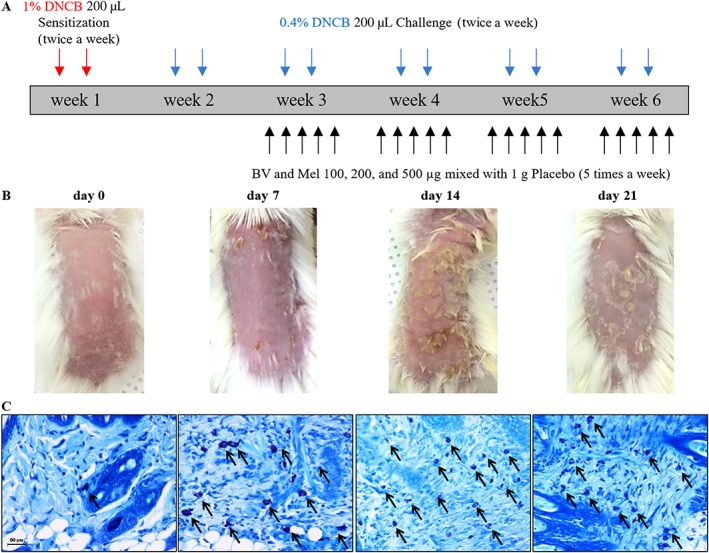
Effects of bee venom and melittin were studied in a model of AD in vivo induced by 1-chloro-2,4-dinitrobenzene (DNCB) in female Balb/c mice and in cultures of human keratinocytes, stimulated by TNF-α/IFN-γ. The potential pharmacological effects of bee venom and melittin on these in vivo and in vitro AD-like skin disease models were studied.
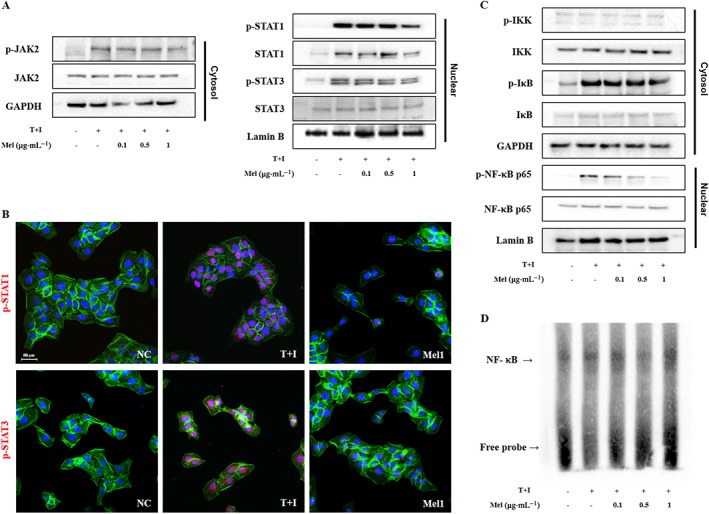
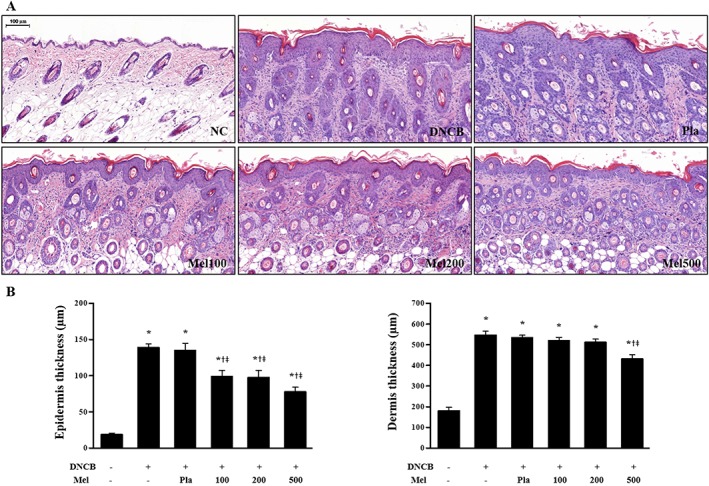
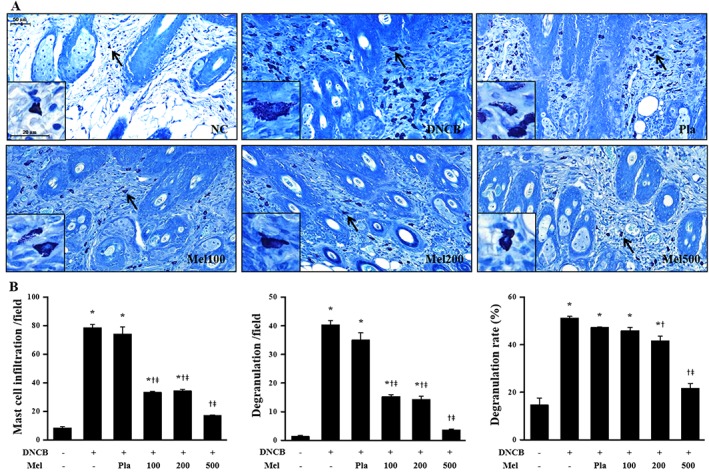
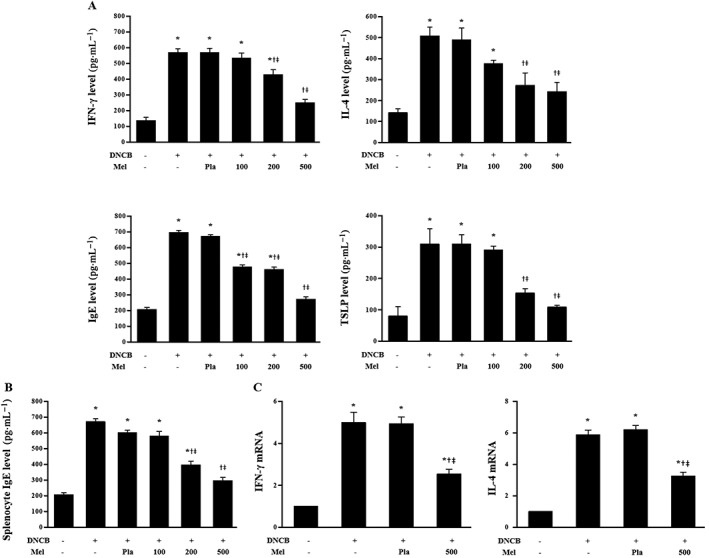
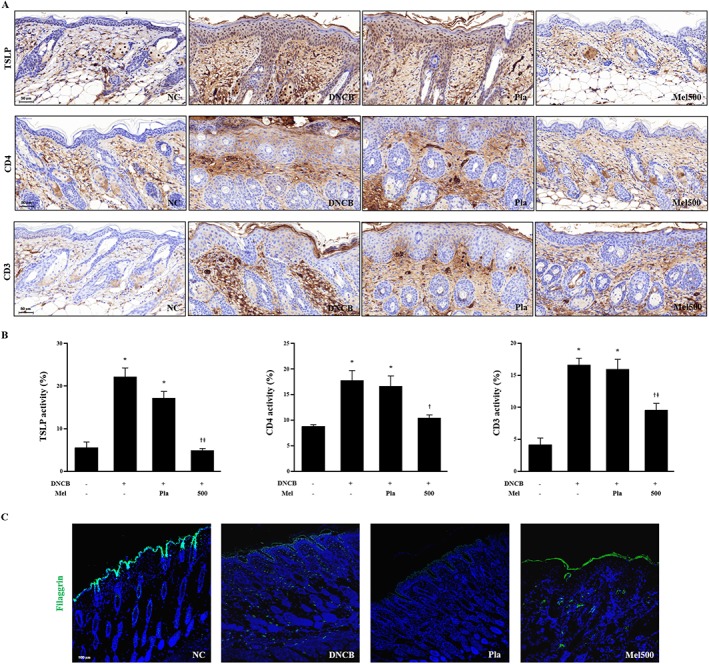
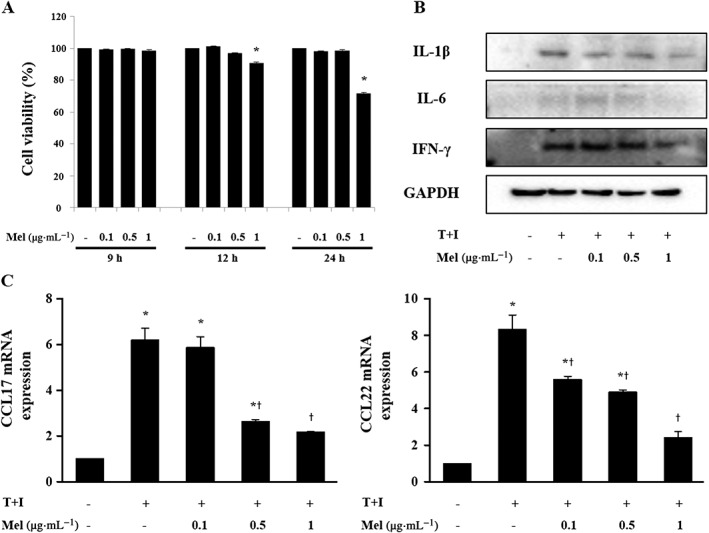
Bee venom and melittin exhibited potent anti-atopic activities, shown by decreased AD-like skin lesions, induced by DNCB in mice. In vitro studies using TNF-α/IFN-γ-stimulated human keratinocytes showed that bee venom and melittin inhibited the increased expression of chemokines, such as CCL17 and CCL22, and pro-inflammatory cytokines, including IL-1β, IL-6 and IFN-γ, through the blockade of the NF-κB and STAT signalling pathways.
Our results suggest that bee venom and melittin would be suitable for epicutaneous application, as topical administration is often appropriate for the treatment of AD.
特应性皮炎(AD)是一种多因素的皮肤疾病,涉及先天和适应性免疫反应的复杂相互作用。目前有多种 AD 治疗方法,包括外用糖皮质激素、保湿剂、光疗、钙调磷酸酶抑制剂和免疫抑制剂,如环孢素 A。虽然这些疗法可以减轻炎症,但也会引起严重的副作用。因此,有必要开发无副作用的 AD 治疗新疗法。有几项关于天然材料或毒素(如草药、人参提取物和蛇毒)治疗 AD 的研究。然而,很少有研究用蜂毒及其主要成分蜂肽治疗 AD。
在雌性 Balb/c 小鼠的 1-氯-2,4-二硝基苯(DNCB)诱导的 AD 模型和 TNF-α/IFN-γ刺激的人角质形成细胞培养物中研究了蜂毒和蜂肽的作用。研究了蜂毒和蜂肽对这些体内和体外 AD 样皮肤病模型的潜在药理作用。
蜂毒和蜂肽表现出很强的抗特应性活性,可减少 DNCB 诱导的小鼠 AD 样皮肤损伤。体外研究表明,蜂毒和蜂肽通过阻断 NF-κB 和 STAT 信号通路,抑制 TNF-α/IFN-γ 刺激的人角质形成细胞中趋化因子(如 CCL17 和 CCL22)和促炎细胞因子(如 IL-1β、IL-6 和 IFN-γ)的表达增加。
我们的结果表明,蜂毒和蜂肽可用于经皮给药,因为外用给药通常适用于 AD 的治疗。