Pinto Maria Beatriz, Pires Patrícia C, Calhelha Ricardo C, Silva Ana Rita, Sousa Maria João, Vilas-Boas Miguel, Falcão Soraia I, Veiga Francisco, Makvandi Pooyan, Paiva-Santos Ana Cláudia
Department of Pharmaceutical Technology, Faculty of Pharmacy of the University of Coimbra, University of Coimbra, Azinhaga de Santa Comba, 3000-548 Coimbra, Portugal.
REQUIMTE/LAQV, Group of Pharmaceutical Technology, Faculty of Pharmacy of the University of Coimbra, University of Coimbra, 3000-548 Coimbra, Portugal.
Pharmaceuticals (Basel). 2024 Apr 29;17(5):572. doi: 10.3390/ph17050572.
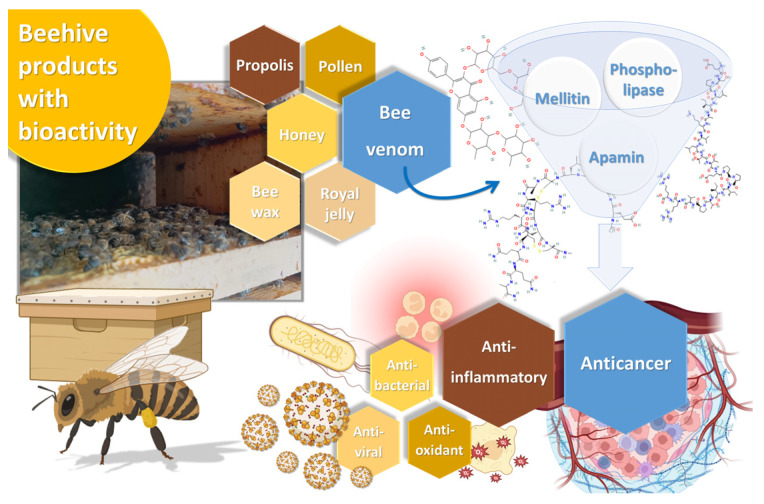
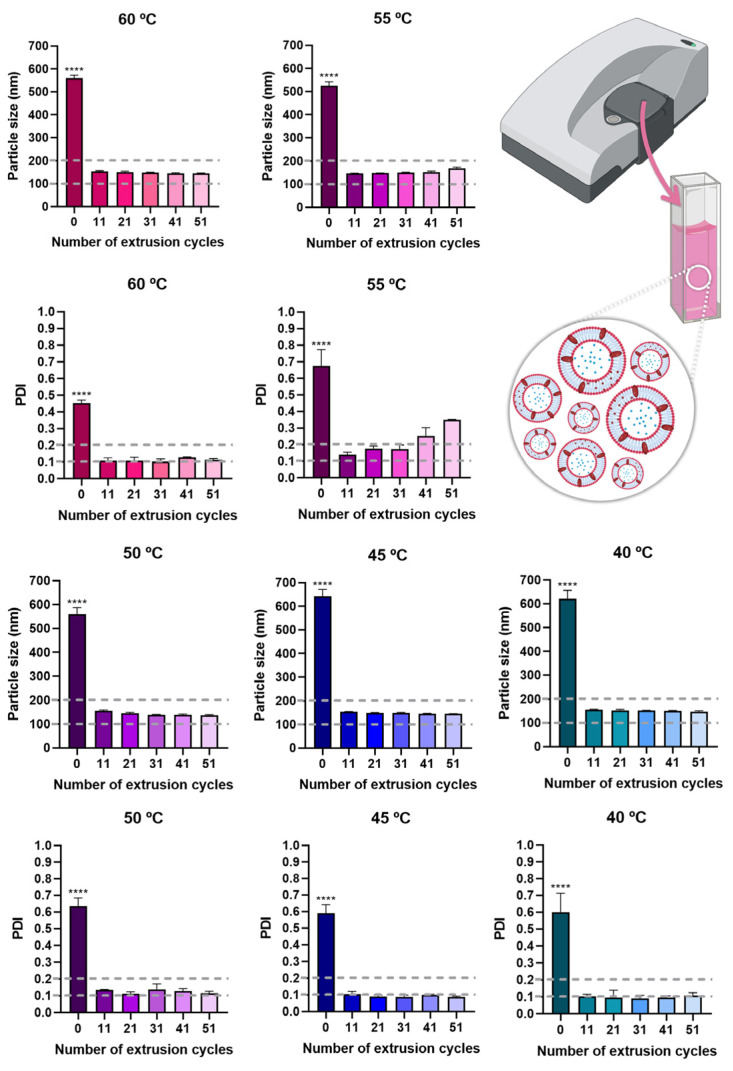
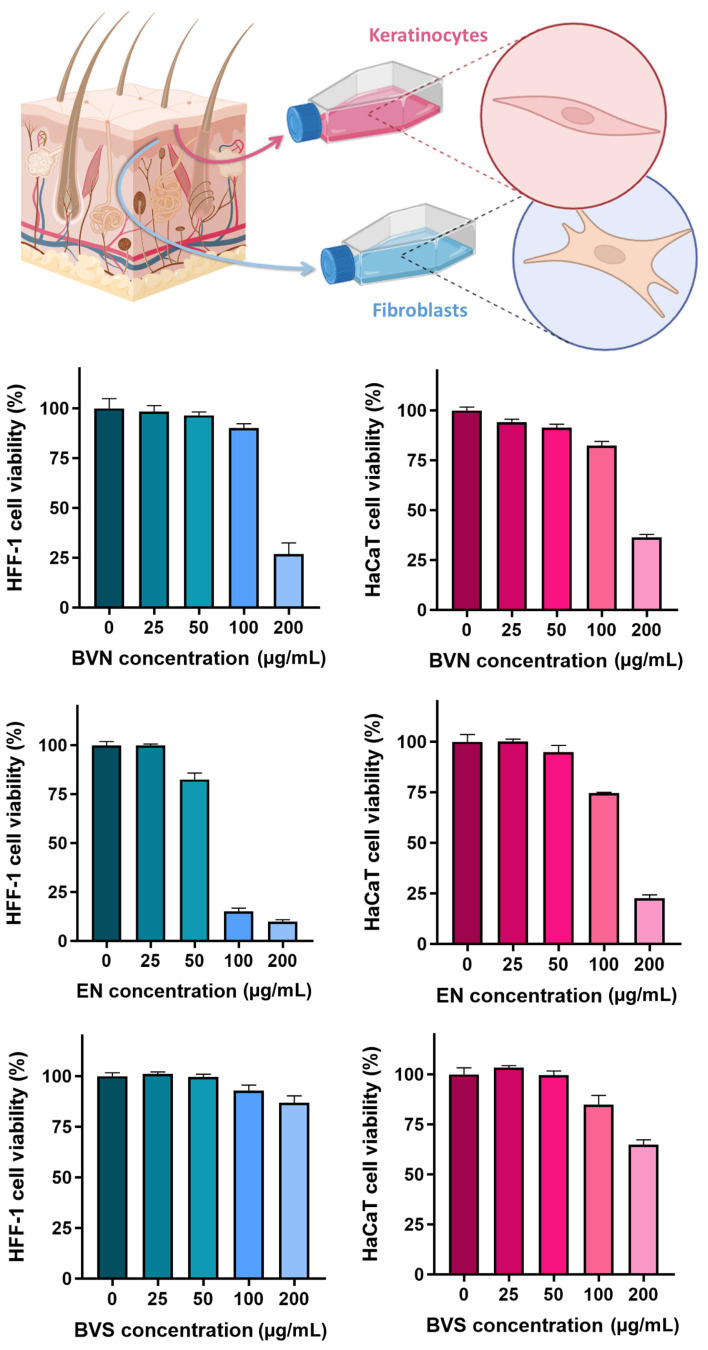
Despite past efforts towards therapeutical innovation, cancer remains a highly incident and lethal disease, with current treatments lacking efficiency and leading to severe side effects. Hence, it is imperative to develop new, more efficient, and safer therapies. Bee venom has proven to have multiple and synergistic bioactivities, including antitumor effects. Nevertheless, some toxic effects have been associated with its administration. To tackle these issues, in this work, bee venom-loaded niosomes were developed, for cancer treatment. The vesicles had a small (150 nm) and homogeneous (polydispersity index of 0.162) particle size, and revealed good therapeutic efficacy in in vitro gastric, colorectal, breast, lung, and cervical cancer models (inhibitory concentrations between 12.37 ng/mL and 14.72 ng/mL). Additionally, they also revealed substantial anti-inflammatory activity (inhibitory concentration of 28.98 ng/mL), effects complementary to direct antitumor activity. Niosome safety was also assessed, both in vitro (skin, liver, and kidney cells) and ex vivo (hen's egg chorioallantoic membrane), and results showed that compound encapsulation increased its safety. Hence, small, and homogeneous bee venom-loaded niosomes were successfully developed, with substantial anticancer and anti-inflammatory effects, making them potentially promising primary or adjuvant cancer therapies. Future research should focus on evaluating the potential of the developed platform in in vivo models.
尽管过去在治疗创新方面做出了努力,但癌症仍然是一种高发性和致命性疾病,目前的治疗方法缺乏疗效并会导致严重的副作用。因此,开发新的、更有效且更安全的治疗方法势在必行。蜂毒已被证明具有多种协同生物活性,包括抗肿瘤作用。然而,其给药也存在一些毒性作用。为了解决这些问题,在这项工作中,开发了用于癌症治疗的载蜂毒脂质体。这些囊泡粒径小(150 nm)且均匀(多分散指数为0.162),并且在体外胃癌、结直肠癌、乳腺癌、肺癌和宫颈癌模型中显示出良好的治疗效果(抑制浓度在12.37 ng/mL至14.72 ng/mL之间)。此外,它们还显示出显著的抗炎活性(抑制浓度为28.98 ng/mL),这是对直接抗肿瘤活性的补充作用。还在体外(皮肤、肝脏和肾脏细胞)和离体(鸡胚绒毛尿囊膜)评估了脂质体的安全性,结果表明化合物包封提高了其安全性。因此,成功开发出了粒径小且均匀的载蜂毒脂质体,具有显著的抗癌和抗炎作用,使其有可能成为有前景的原发性或辅助性癌症治疗方法。未来的研究应侧重于评估所开发平台在体内模型中的潜力。