Department of Psychology, University of California, Davis, CA, USA; Center for Mind and Brain, University of California, Davis, CA, USA.
Center for Mind and Brain, University of California, Davis, CA, USA; Department of Human Ecology, University of California, Davis, CA, USA.
Neuroimage. 2018 Dec;183:818-827. doi: 10.1016/j.neuroimage.2018.08.069. Epub 2018 Sep 4.
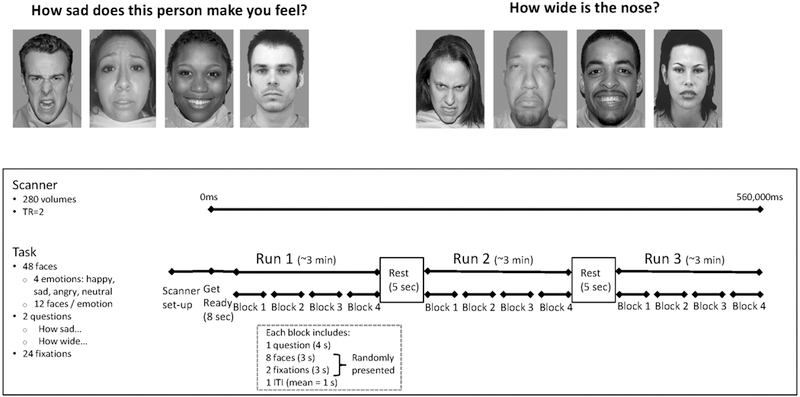
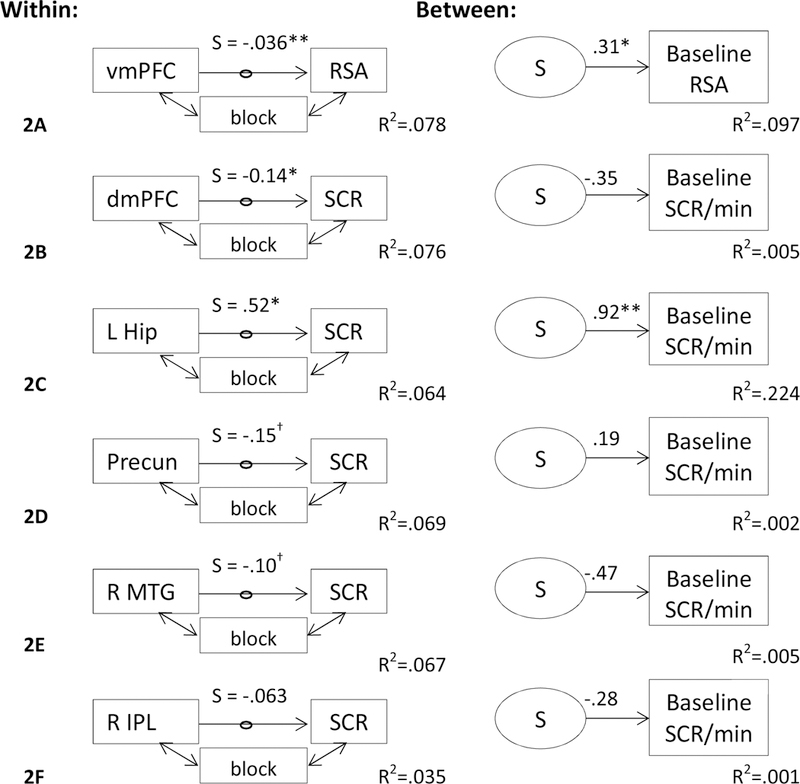
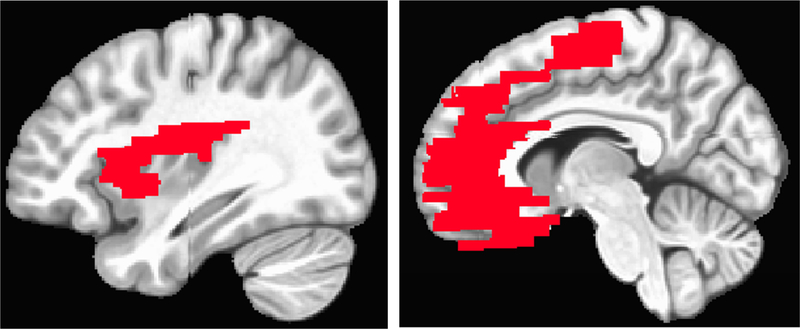
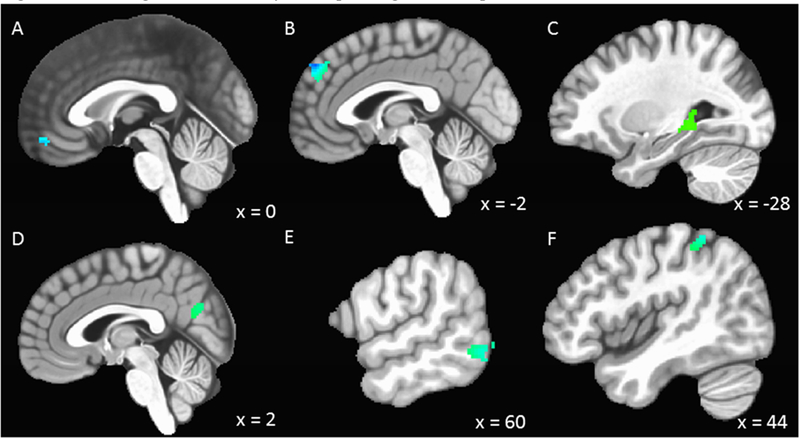
Autonomic nervous system (ANS) activity is a core component of emotion processing. The limbic system and medial prefrontal cortex play important roles in the regulation of ANS activity. However, the integration of brain activity and ANS activity has yet to be investigated in adolescents despite independent evidence of adolescents' heightened neural and physiological sensitivity to emotional stimuli. The present study examined the relations of ANS activity in the parasympathetic nervous system (PNS) and sympathetic nervous system (SNS) with brain activity during emotional face processing in adolescents. 135 adolescents (65 female; M = 17.15 yr, SD = 0.42) completed an emotional faces task during an fMRI scan while electrocardiography and skin conductance were recorded simultaneously. Using linear mixed-effect modelling, we tested the effect of change in respiratory sinus arrhythmia (RSA), a measure of PNS activity, and number of skin conductance responses (SCRs), a measure of SNS activity, on neural activity while adolescents viewed emotional faces. Greater RSA withdrawal, indicating decreased PNS activity, was associated with increased activation in the ventromedial prefrontal cortex (vmPFC). More SCRs, indicating greater SNS activity, were associated with decreased activation in several regions including the dorsomedial prefrontal cortex and increased activation in the left hippocampus. Left hippocampus-SCR coupling and vmPFC-RSA coupling predicted baseline SCR and RSA respectively. These findings implicate the hippocampus for potentiating SNS activity, document that regulation of SNS and PNS activity are coordinated with distinct regions of the medial prefrontal cortex, and suggest potential developmental differences in vmPFC regulation of PNS activity between adolescents and adults.
自主神经系统(ANS)活动是情绪处理的核心组成部分。边缘系统和内侧前额叶皮层在调节 ANS 活动方面发挥着重要作用。然而,尽管有独立的证据表明青少年对情绪刺激的神经和生理敏感性增强,但大脑活动和 ANS 活动的整合在青少年中尚未得到研究。本研究考察了自主神经系统(ANS)中副交感神经系统(PNS)和交感神经系统(SNS)的活动与青少年情绪面孔处理过程中的大脑活动之间的关系。135 名青少年(女性 65 名;M=17.15 岁,SD=0.42)在 fMRI 扫描期间完成了一项情绪面孔任务,同时记录心电图和皮肤电导率。使用线性混合效应模型,我们测试了呼吸窦性心律失常(RSA)变化(PNS 活动的一种衡量标准)和皮肤电导率反应(SCR)数量(SNS 活动的一种衡量标准)对青少年观看情绪面孔时大脑活动的影响。RSA 下降(表示 PNS 活动降低)与腹内侧前额叶皮层(vmPFC)的激活增加有关。更多的 SCRs(表示 SNS 活动增加)与几个区域的激活减少有关,包括背内侧前额叶皮层和左侧海马体的激活增加。左侧海马体-SCR 耦合和 vmPFC-RSA 耦合分别预测了基线 SCR 和 RSA。这些发现暗示了海马体在增强 SNS 活动中的作用,证明了 SNS 和 PNS 活动的调节与内侧前额叶皮层的不同区域相协调,并表明 vmPFC 对 PNS 活动的调节在青少年和成年人之间存在潜在的发育差异。