Wang Bao, Man Wenkuan, Yu Haiyang, Li Yang, Zheng Feng
The State Key Laboratory of Refractories and Metallurgy, Key Laboratory for Ferrous Metallurgy and Resources Utilization of Ministry of Education, Wuhan University of Science and Technology, Wuhan 430081, China.
School of Metallurgical and Ecological Engineering, University of Science and Technology Beijing, Beijing 100083, China.
Materials (Basel). 2018 Sep 5;11(9):1627. doi: 10.3390/ma11091627.
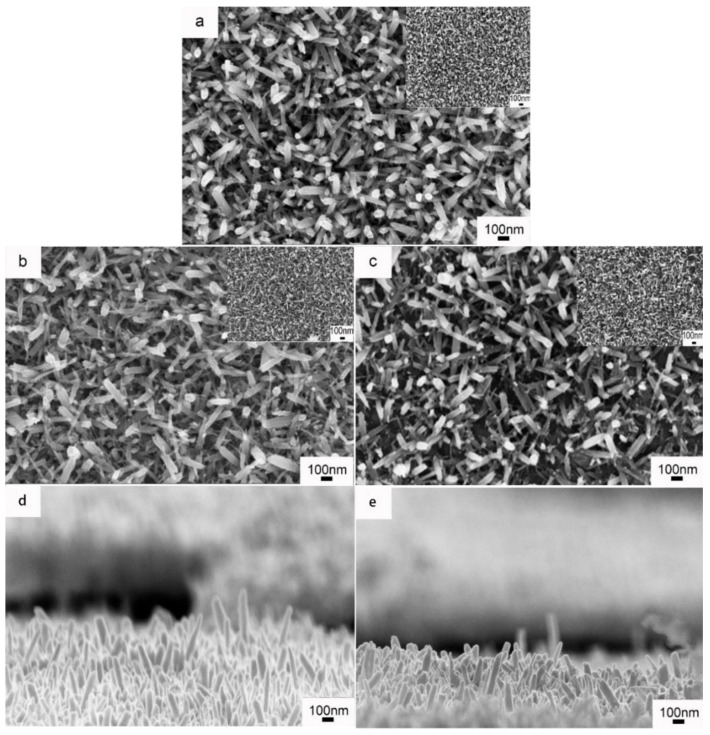
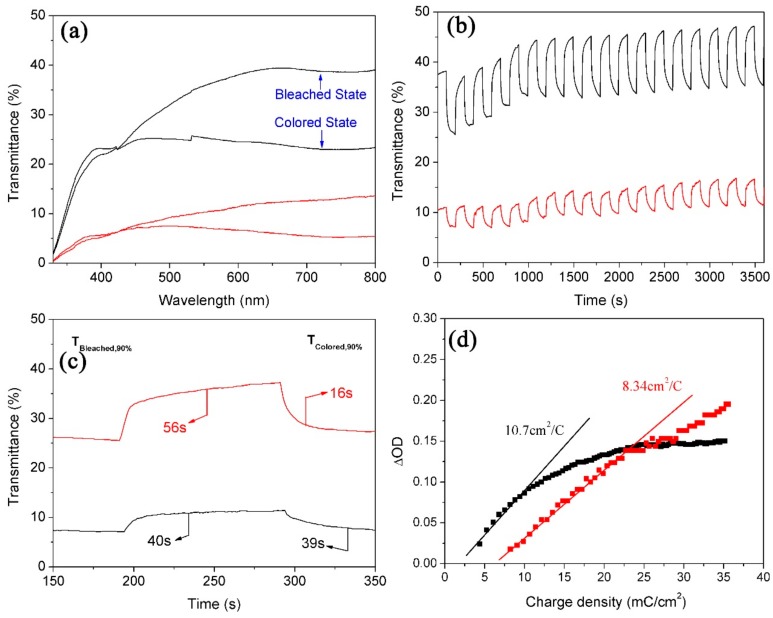
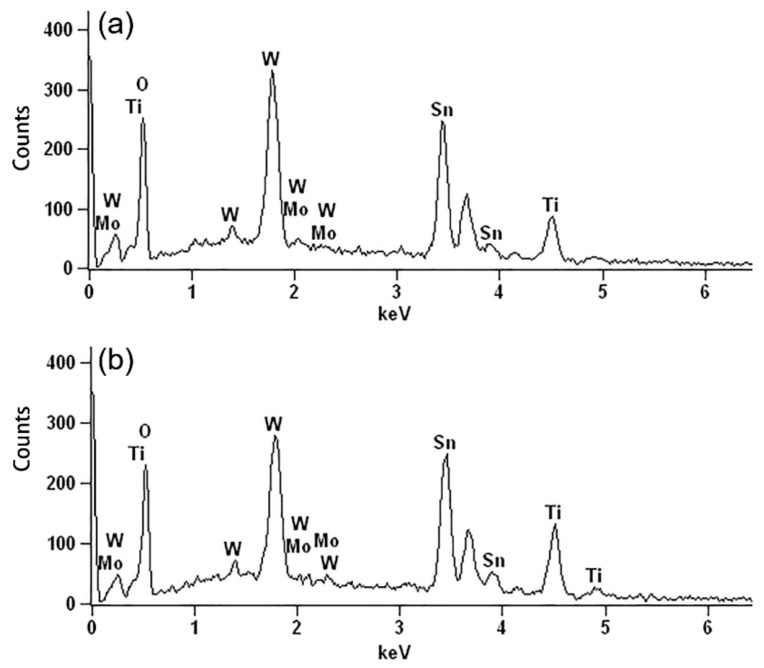
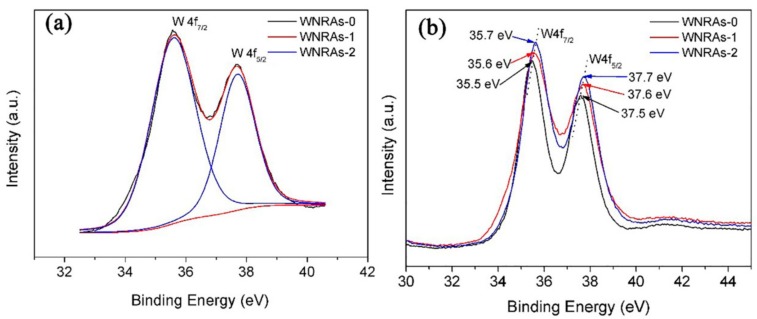
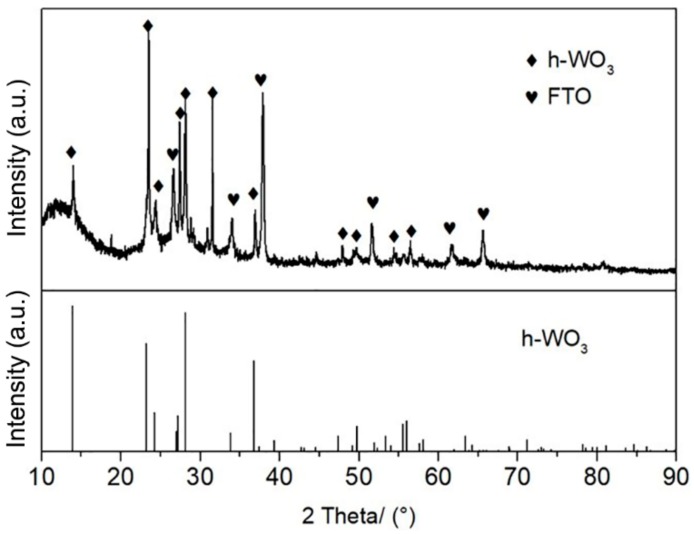
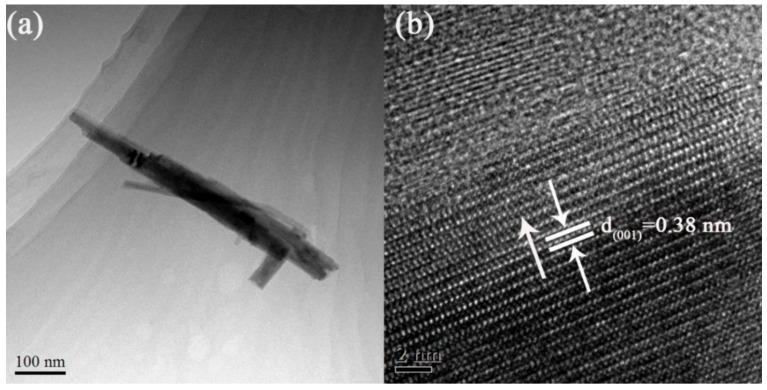
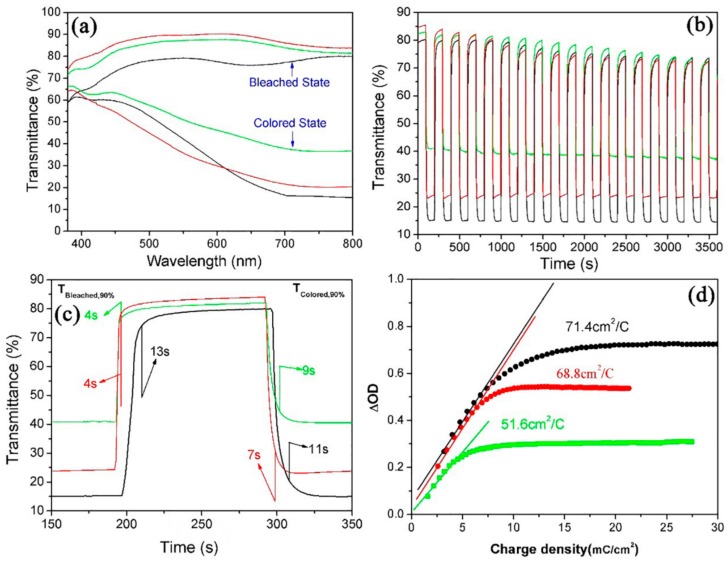
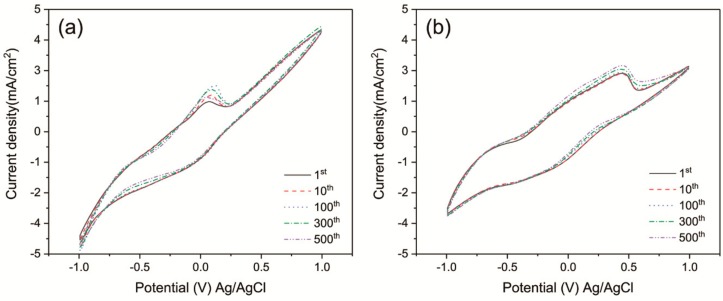
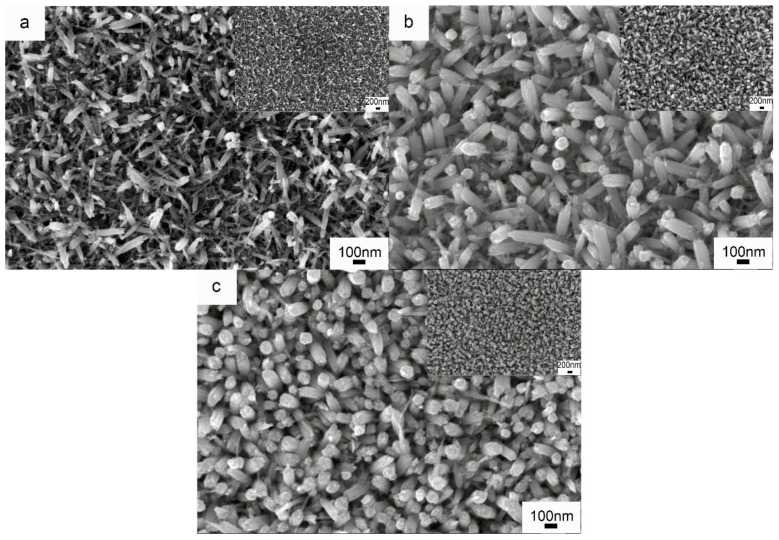
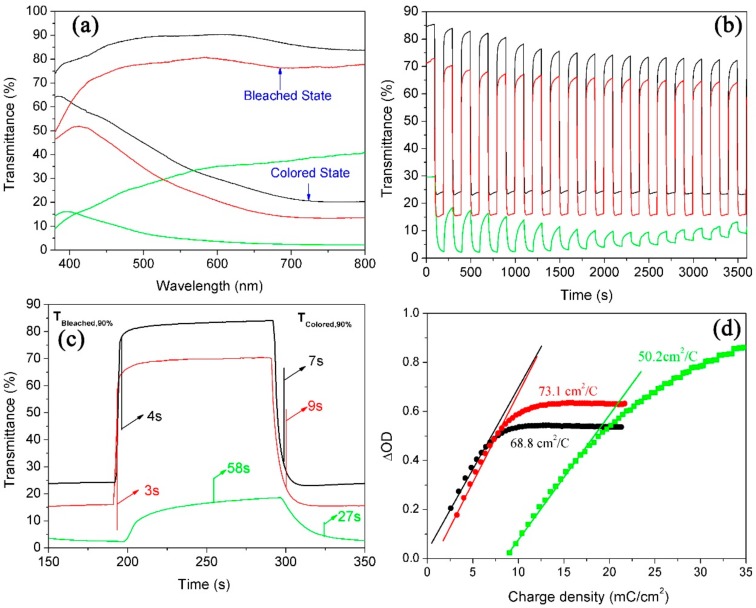
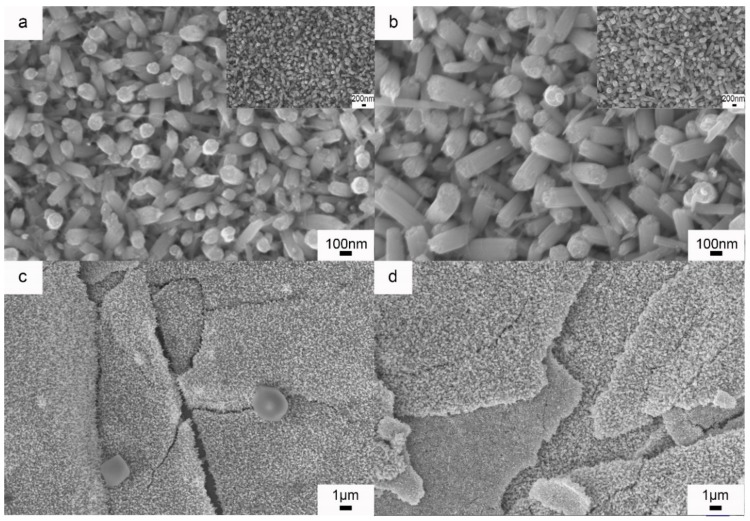
Well-oriented and crystalline WO₃ nanorod arrays (WNRAs) decorated with Mo were synthesized on fluorine doped tin oxide (FTO) substrate by the hydrothermal method. The effects of Mo doping, hydrothermal reaction time, and hydrothermal temperature on the morphologies and electrochromic properties of as-prepared WNRAs were studied thoroughly. Scanning electron microscopy (SEM), energy dispersive spectrometry (EDS), X-ray diffraction (XRD), X-ray photoelectron spectroscopy (XPS), and chronoamperometry techniques were used to characterize the structures and properties of obtained WNRAs. The results demonstrate that the average diameter of the as-prepared WNRAs ranged from 30 to 70 nm. During the decoration of Mo on the WNRAs, the growth density of as-prepared WNRAs decreased and the surfaces became rough. However, the decorated Mo on WNRAs synthesized at 180 °C for 5 h with a Mo/W mole ratio of 1:40 exhibited better electrochromic properties than single WNRAs. They exhibited high optical modulation (61.7%), fast bleaching/coloring response times (3 s/9 s), high coloration efficiency values (73.1 cm²/C), and good cycling stability.
采用水热法在氟掺杂氧化锡(FTO)衬底上合成了取向良好且结晶的Mo修饰的WO₃纳米棒阵列(WNRAs)。深入研究了Mo掺杂、水热反应时间和水热温度对所制备WNRAs的形貌和电致变色性能的影响。利用扫描电子显微镜(SEM)、能量色散光谱(EDS)、X射线衍射(XRD)、X射线光电子能谱(XPS)和计时电流法技术对所获得的WNRAs的结构和性能进行了表征。结果表明,所制备的WNRAs的平均直径在30至70nm范围内。在WNRAs上修饰Mo的过程中,所制备的WNRAs的生长密度降低且表面变得粗糙。然而,在180℃下反应5h、Mo/W摩尔比为1:40时合成的WNRAs上修饰的Mo表现出比单一WNRAs更好的电致变色性能。它们具有高光学调制率(61.7%)、快速的漂白/着色响应时间(3s/9s)、高显色效率值(73.1cm²/C)以及良好的循环稳定性。