Division of Plant Physiology, Department of Biology and Chemistry, Osnabrück University, Barbarastr. 11, 49076, Osnabrück, Germany.
Division of Biophysics, Department of Biology and Chemistry, Osnabrück University, Barbarastr. 11, 49076, Osnabrück, Germany.
BMC Plant Biol. 2018 Sep 6;18(1):184. doi: 10.1186/s12870-018-1390-6.
Plant cytosolic NAD-dependent glyceraldehyde-3-phosphate dehydrogenase (GapC) displays redox-dependent changes in its subcellular localizations and activity. Apart from its fundamental role in glycolysis, it also exhibits moonlighting properties. Since the exceptional redox-sensitivity of GapC has been suggested to play a crucial role in its various functions, we here studied its redox-dependent subcellular localization and the influence of the redox-state on GapC protein interactions.
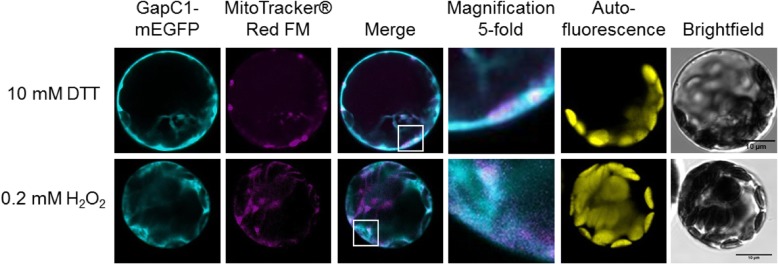
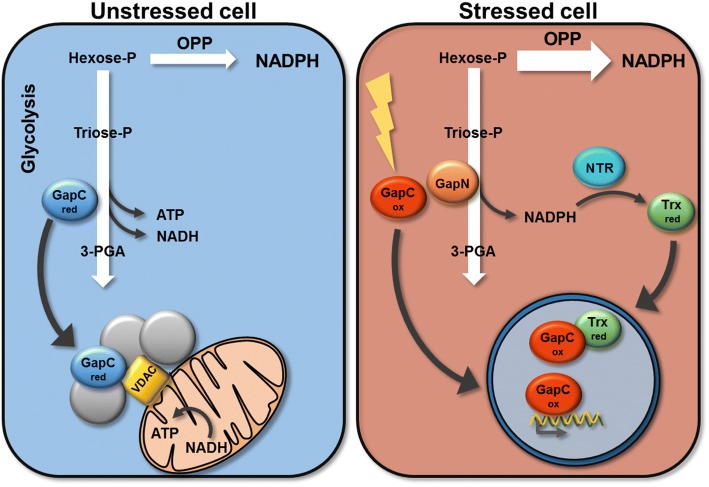
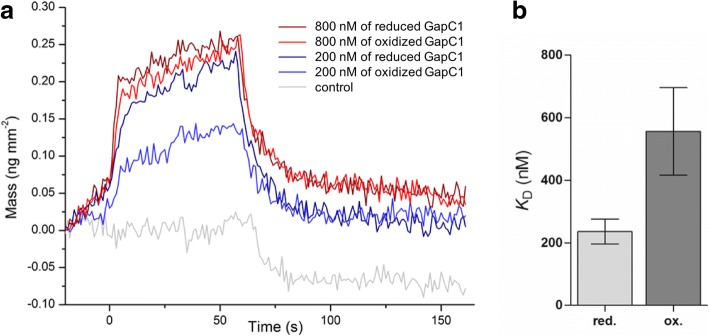
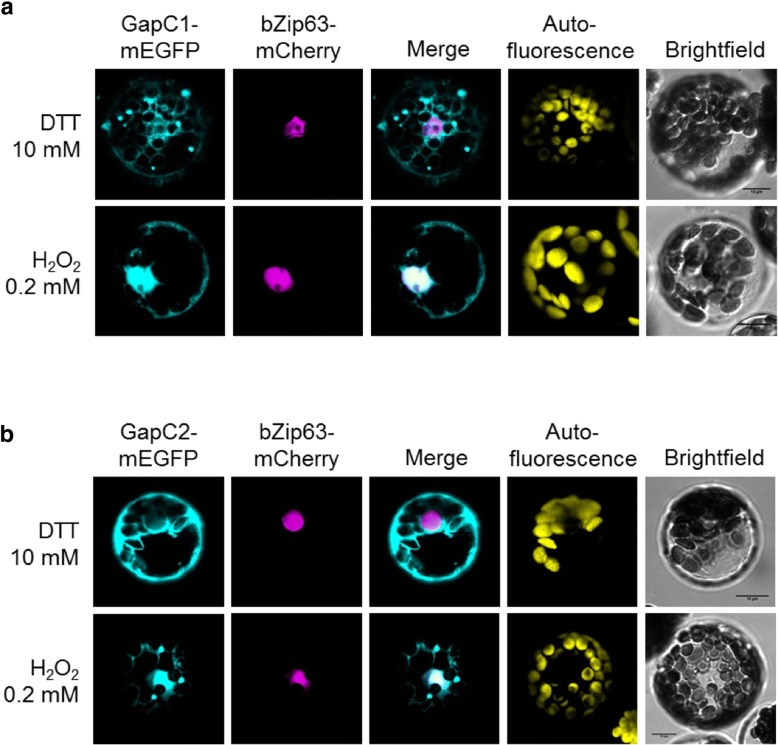
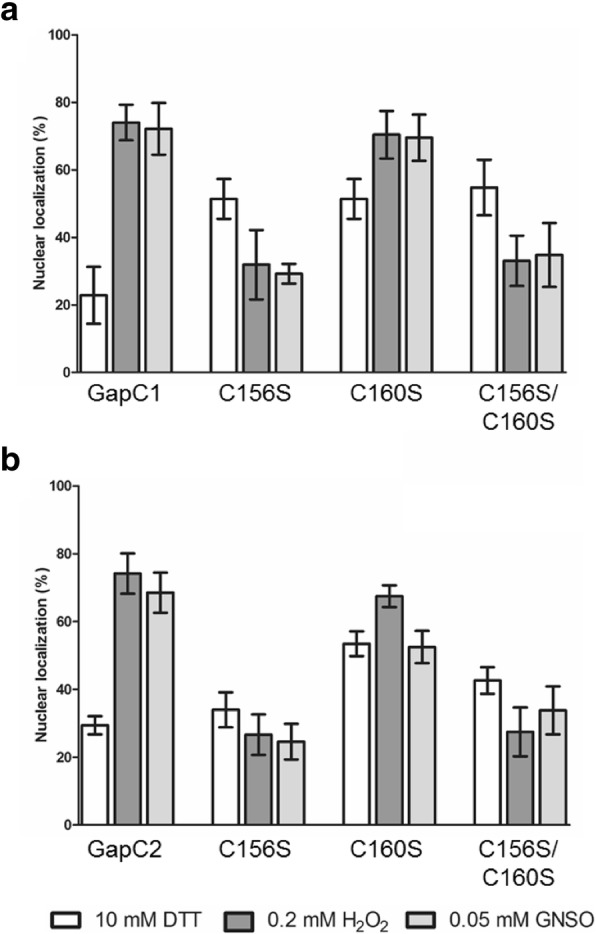
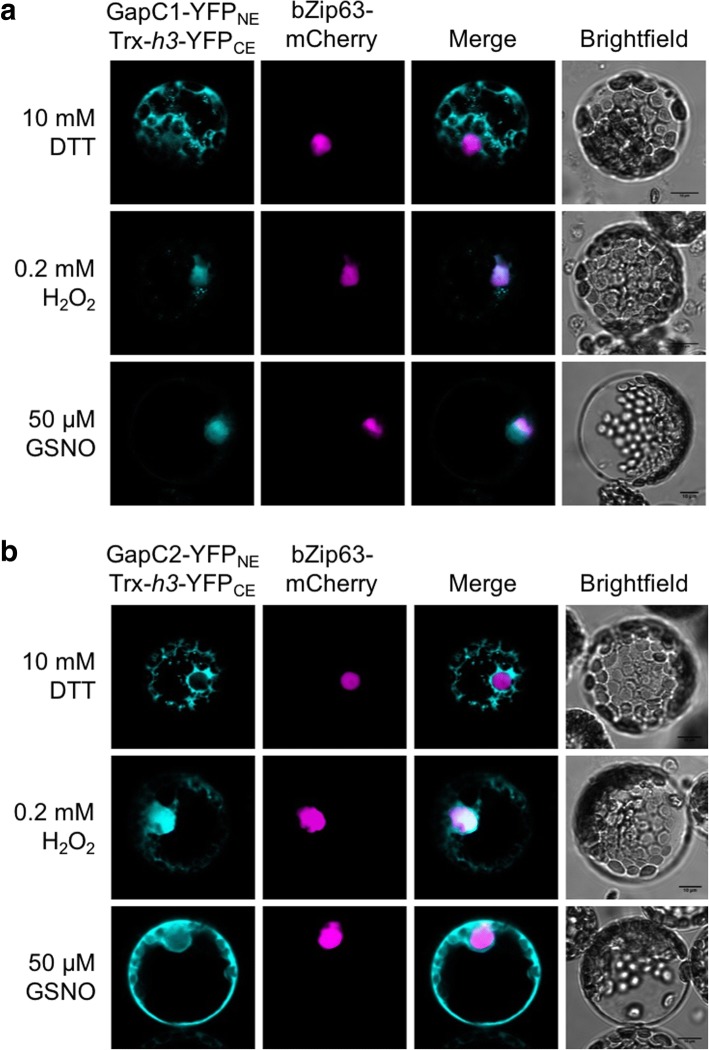
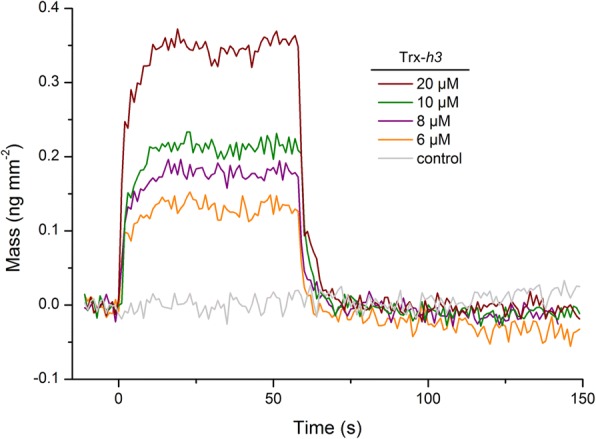
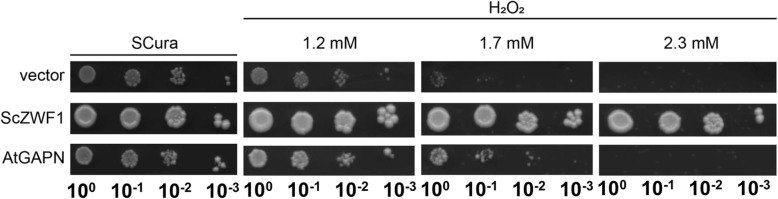
In mesophyll protoplasts from Arabidopsis thaliana, colocalization of GapC with mitochondria was more pronounced under reducing conditions than upon oxidative stress. In accordance, reduced GapC showed an increased affinity to the mitochondrial voltage-dependent anion-selective channel (VDAC) compared to the oxidized one. On the other hand, nuclear localization of GapC was increased under oxidizing conditions. The essential role of the catalytic cysteine for nuclear translocation was shown by using the corresponding cysteine mutants. Furthermore, interaction of GapC with the thioredoxin Trx-h3 as a candidate to revert the redox-modifications, occurred in the nucleus of oxidized protoplasts. In a yeast complementation assay, we could demonstrate that the plant-specific non-phosphorylating glyceraldehyde 3-P dehydrogenase (GapN) can substitute for glucose 6-P dehydrogenase to generate NADPH for re-reduction of the Trx system and ROS defense.
The preferred association of reduced, glycolytically active GapC with VDAC suggests a substrate-channeling metabolon at the mitochondrial surface for efficient energy generation. Increased occurrence of oxidized GapC in the nucleus points to a function in signal transduction and gene expression. Furthermore, the interaction of GapC with Trx-h3 in the nucleus indicates reversal of the oxidative cysteine modification after re-establishment of cellular homeostasis. Both, energy metabolism and signal transfer for long-term adjustment and protection from redox-imbalances are mediated by the various functions of GapC. The molecular properties of GapC as a redox-switch are key to its multiple roles in orchestrating energy metabolism.
植物细胞质 NAD 依赖性甘油醛-3-磷酸脱氢酶(GapC)的亚细胞定位和活性会发生氧化还原依赖性变化。除了在糖酵解中的基本作用外,它还具有多功能性。由于 GapC 的异常氧化还原敏感性被认为在其各种功能中起着关键作用,因此我们在这里研究了其氧化还原依赖性亚细胞定位以及氧化还原状态对 GapC 蛋白相互作用的影响。
在拟南芥的叶肉原生质体中,与线粒体的共定位在还原条件下比氧化应激下更为明显。相应地,与氧化的 GapC 相比,还原的 GapC 显示出对线粒体电压依赖性阴离子选择性通道(VDAC)的亲和力增加。另一方面,在氧化条件下 GapC 的核定位增加。通过使用相应的半胱氨酸突变体,证明了催化半胱氨酸对于核易位的重要作用。此外,GapC 与作为候选物以逆转氧化还原修饰的硫氧还蛋白 Trx-h3 的相互作用发生在氧化原生质体的核中。在酵母互补测定中,我们可以证明植物特异性非磷酸化甘油醛 3-P 脱氢酶(GapN)可以替代葡萄糖 6-P 脱氢酶产生 NADPH,以重新还原硫氧还蛋白系统和 ROS 防御。
还原的、具有糖酵解活性的 GapC 与 VDAC 的优先结合表明在线粒体表面存在用于有效能量产生的底物通道代谢物。氧化的 GapC 在核中更频繁地出现表明其在信号转导和基因表达中的功能。此外,GapC 在核中与 Trx-h3 的相互作用表明在细胞内稳态重建后,氧化的半胱氨酸修饰得到逆转。能量代谢和信号传递对于长期的调整和防止氧化还原失衡都是由 GapC 的各种功能介导的。GapC 作为氧化还原开关的分子特性是其在协调能量代谢中多种作用的关键。