University of California, 3333 California St, San Francisco, CA, 94118, USA.
San Francisco VA Health Care System, 4150 Clement St, Box 181G, San Francisco, CA, 94121, USA.
BMC Geriatr. 2018 Sep 6;18(1):207. doi: 10.1186/s12877-018-0905-1.
Medication-related problems are common in older adults with multiple chronic conditions. We evaluated the impact of a nurse-based primary care intervention, based on the Guided Care model of care, on patient-centered aspects of medication use.
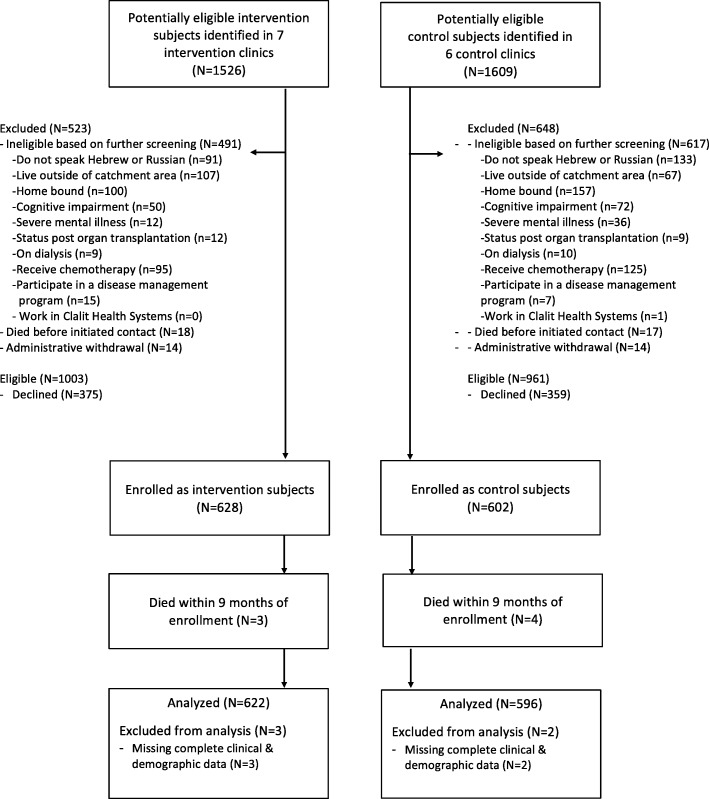
Controlled clinical trial of the Comprehensive Care for Multimorbid Adults Project (CC-MAP), conducted among 1218 participants in 7 intervention clinics and 6 control (usual care) clinics. Inclusion criteria included age 45-94, presence of ≥3 chronic conditions, and Adjusted Clinical Groups (ACG) score > 0.19. The co-primary outcomes were number of changes to the medication regimen between baseline and 9 month followup, and number of changes to symptom-focused medications, markers of attentiveness to medication-related issues.
Mean age in the intervention group was 72 years, 59% were women, and participants used a mean of 6.6 medications at baseline. The control group was slightly older (73 years) and used more medications (mean 7.1). Between baseline and 9 months, intervention subjects had more changes to their medication regimen than control subjects (mean 4.04 vs. 3.62 medication changes; adjusted difference 0.55, p = 0.001). Similarly, intervention subjects had more changes to their symptomatic medications (mean 1.38 vs. 1.26 changes, adjusted difference 0.20, p = 0.003). The total number of medications in use remained stable between baseline and follow-up in both groups (p > 0.18).
This nurse-based, primary care intervention resulted in substantially more changes to patients' medication regimens than usual care, without increasing the total number of medications used. This enhanced rate of change likely reflects greater attentiveness to the medication-related needs of patients.
This trial is registered at https://clinicaltrials.gov , trial number NCT01811173 .
患有多种慢性病的老年人普遍存在药物相关问题。我们评估了基于护理指导模式的护士主导的初级保健干预对药物使用的以患者为中心方面的影响。
对 1218 名参与者进行了综合多病成年人护理项目(CC-MAP)的对照临床试验,这些参与者来自 7 个干预诊所和 6 个对照组(常规护理)诊所。纳入标准包括年龄 45-94 岁,存在≥3 种慢性病,调整后的临床分组(ACG)评分>0.19。主要结局是在基线和 9 个月随访期间药物治疗方案的改变数量,以及改变针对症状的药物、关注药物相关问题的标记物的数量。
干预组的平均年龄为 72 岁,59%为女性,参与者在基线时使用了平均 6.6 种药物。对照组年龄稍大(73 岁),使用的药物更多(平均 7.1 种)。与基线相比,干预组在 9 个月内的药物治疗方案变化多于对照组(平均 4.04 次与 3.62 次药物变化;调整后的差异 0.55,p=0.001)。同样,干预组对症状性药物的改变更多(平均 1.38 次与 1.26 次变化,调整后的差异 0.20,p=0.003)。两组的用药总数在基线和随访期间均保持稳定(p>0.18)。
与常规护理相比,这种基于护士的初级保健干预显著增加了患者的药物治疗方案的改变,而不增加使用的药物总数。这种更高的改变率可能反映了对患者药物相关需求的更高关注度。
该试验在 https://clinicaltrials.gov 上注册,试验编号为 NCT01811173。