Department of Neonatology, Children's Hospital of Chongqing Medical University, Ministry of Education Key Laboratory of Child Development and Disorders, China International Science and Technology Cooperation base of Child development and Critical Disorders, Chongqing Key Laboratory of Child Infection and Immunity, Chongqing, 40014, China.
Department of Microbiology, Immunology, and Parasitology, Louisiana State University Health Sciences Center, New Orleans, LA, 70112, USA.
Sci Rep. 2018 Sep 6;8(1):13344. doi: 10.1038/s41598-018-30813-y.
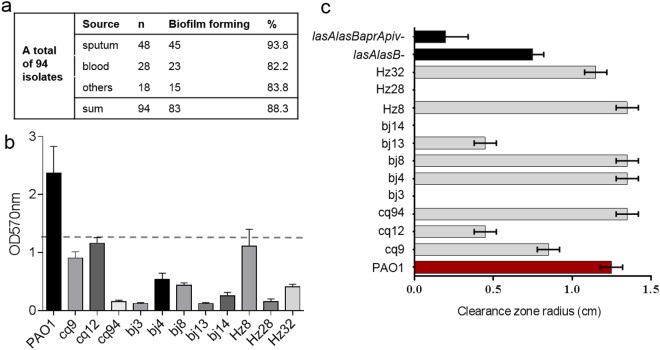
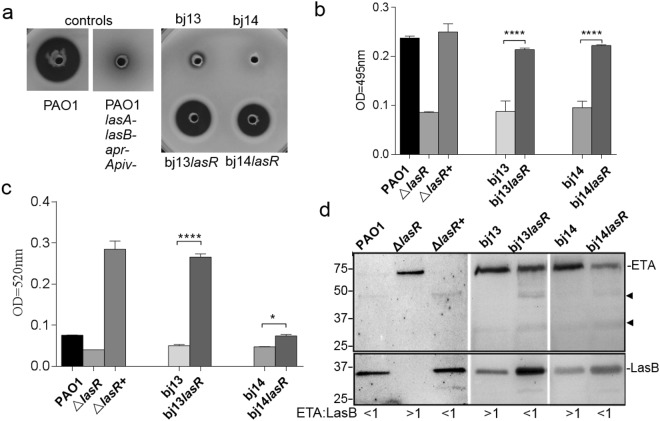
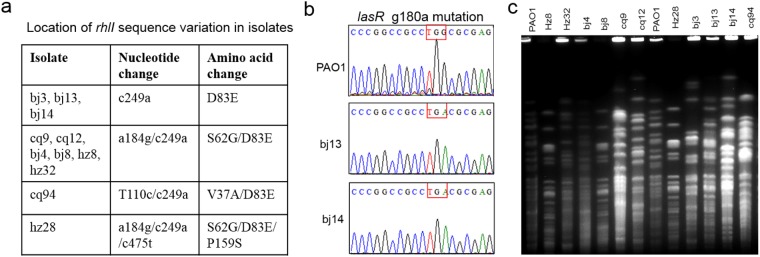
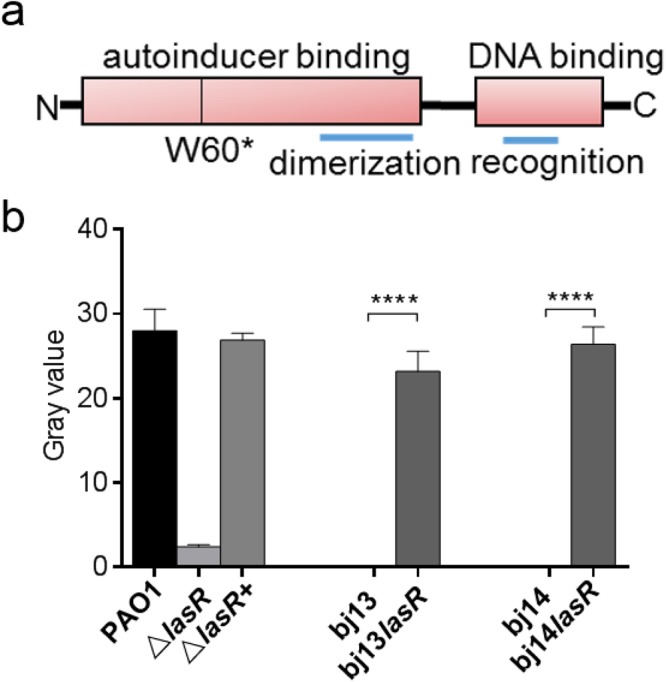
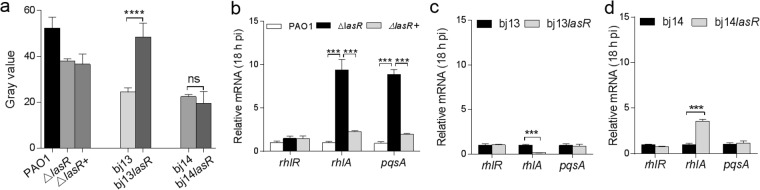
Pseudomonas aeruginosa is a prevalent opportunistic pathogen that causes fatal infections in immunocompromised individuals. Quorum sensing (QS) is a cell-to-cell communication process that controls virulence gene expression and biofilm formation in P. aeruginosa. Here, the QS systems and the relevant virulence traits in clinical P. aeruginosa isolates were characterized. Eleven out of the ninety-four P. aeruginosa isolates exhibited a biofilm-deficient phenotype. Two biofilm-deficient isolates, one from blood and the one from pleural effusion, appeared to carry a same mutation in lasR. These two isolates differed in the ability to produce QS-regulated virulence factors, but contained the same functionally deficient LasR with the truncated C-terminal domains and belonged to the same multilocus sequence type (ST227). Chromosomal lasR complementation in these lasR mutants verified that lasR inactivation was the sole cause of las deficiency. LasR was not absolutely required for rhl signal in these lasR mutants, suggesting the presence of lasR-independent QS systems. We provided evidence that the virulence gene expression are not regulated in the same manner in these isolates. These results support the hypothesis that conventional QS hierarchy can be smashed by naturally occurring lasR mutation in clinical P. aeruginosa isolates and that complex QS hierarchy may play a role in maintaining infection of this opportunistic pathogen.
铜绿假单胞菌是一种普遍存在的机会性病原体,可导致免疫功能低下的个体发生致命感染。群体感应(QS)是一种细胞间通讯过程,可控制铜绿假单胞菌中毒力基因的表达和生物膜的形成。在这里,我们对临床分离的铜绿假单胞菌中的 QS 系统和相关毒力特征进行了描述。94 株铜绿假单胞菌中有 11 株表现出生物膜缺陷表型。两株生物膜缺陷株,一株来自血液,一株来自胸腔积液,似乎携带相同的 lasR 突变。这两个分离株在产生 QS 调节的毒力因子的能力上存在差异,但含有相同功能缺陷的 LasR,其 C 端结构域缺失,并属于相同的多位点序列型(ST227)。对这些 lasR 突变体中的染色体 lasR 进行互补,证实了 lasR 失活是 las 缺乏的唯一原因。在这些 lasR 突变体中,LasR 不是 rhl 信号所必需的,这表明存在 lasR 独立的 QS 系统。我们提供的证据表明,这些分离株中的毒力基因表达不是以相同的方式受到调控的。这些结果支持了这样一种假设,即在临床分离的铜绿假单胞菌中,天然发生的 lasR 突变可以打破传统的 QS 等级制度,而复杂的 QS 等级制度可能在维持这种机会性病原体的感染中发挥作用。