
牙周炎患者血清中的抗心磷脂抗体(aCL)可激活 Toll 样受体 4 (TLR4)。
Anticardiolipin (aCL) in sera from periodontitis subjects activate Toll-like receptor 4 (TLR4).
机构信息
Department of Periodontics, Virginia Commonwealth University School of Dentistry, Richmond, Virginia, United States of America.
出版信息
PLoS One. 2018 Sep 7;13(9):e0203494. doi: 10.1371/journal.pone.0203494. eCollection 2018.
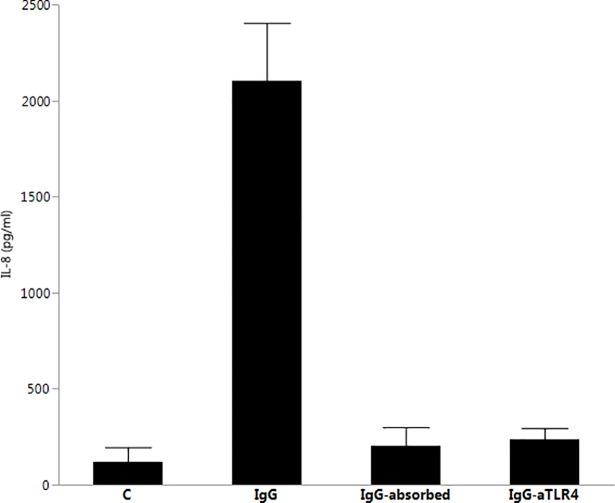
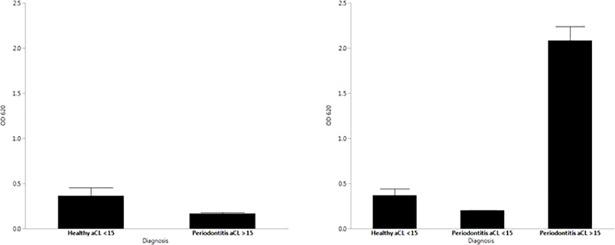
Anticardiolipin antibodies (aCL) have been reported to be present in 15-20% of sera from subjects with periodontitis at concentrations exceeding those found in 95% of the healthy adult population. These antibodies, albeit at concentrations exceeding those generally found in periodontitis subjects, are typically present in patients with the antiphospholipid syndrome (APS), an autoimmune disease characterized by thrombosis and recurrent pregnancy loss. aCL from APS patients are proinflammatory and can activate trophoblasts, macrophages, and platelets via cell-surface interactions with their target antigen beta-2-glycoprotein-I (β2GPI). β2GPI is an anionic phospholipid-binding serum protein that can associate with toll-like receptors (TLR's) on the cell-surface, leading to cell activation following interaction with autoimmune aCL. We examined an expanded series of 629 sera from clinically characterized subjects for aCL content, and observed that 14-19% of these sera contained elevated (>95th %-tile) levels of aCL. We purified IgG from 16 subjects with elevated or normal levels of aCL and examined their ability to activate TLR2- or TLR4-transfected human embryonic kidney (HEK) cells, and observed that IgG from periodontitis patients with elevated aCL activated HEK-TLR4 cells, but not HEK-TLR2 cells. Prior removal of aCL by immunoabsorption significantly reduced the ability of IgG preparations from these sera to activate TLR4. Further experiments using a human first trimester trophoblastic cell line (HTR8 sv/neo) revealed that aCL from periodontitis patients stimulated IL-8 production, which was profoundly decreased if aCL was removed by immunoabsorption or if HTR8 sv/neo were pretreated with blocking anti-TLR4 antibodies. Thus, it appears that aCL from periodontitis patients can be proinflammatory, activating cells via TLR4. Since these antibodies are likely produced via molecular mimicry due to similarities between oral bacterial antigens and β2GPI, the data indicate that circulating serum aCL may induce or influence inflammatory responses at sites distant from the oral cavity.
抗心磷脂抗体 (aCL) 已被报道存在于 15-20%的牙周炎患者血清中,其浓度超过 95%健康成年人的浓度。这些抗体虽然浓度超过牙周炎患者的一般水平,但通常存在于抗磷脂综合征 (APS) 患者中,APS 是一种自身免疫性疾病,其特征是血栓形成和反复妊娠丢失。APS 患者的 aCL 具有促炎作用,可通过与靶抗原 β2-糖蛋白-I (β2GPI) 的细胞表面相互作用激活滋养层细胞、巨噬细胞和血小板。β2GPI 是一种阴离子磷脂结合血清蛋白,可与细胞表面的 Toll 样受体 (TLR) 结合,与自身免疫性 aCL 相互作用后导致细胞激活。我们检查了 629 份临床特征明确的患者血清中的 aCL 含量,发现其中 14-19%的血清含有升高 (>95%分位数) 的 aCL。我们从 16 名 aCL 升高或正常的患者中纯化 IgG,并检查其激活 TLR2 或 TLR4 转染的人胚肾 (HEK) 细胞的能力,观察到来自牙周炎患者的升高 aCL 的 IgG 激活 HEK-TLR4 细胞,但不激活 HEK-TLR2 细胞。免疫吸附预先去除 aCL 显著降低了这些血清 IgG 制剂激活 TLR4 的能力。使用人早孕滋养层细胞系 (HTR8 sv/neo) 的进一步实验表明,牙周炎患者的 aCL 刺激 IL-8 的产生,如果通过免疫吸附去除 aCL 或如果 HTR8 sv/neo 用阻断性抗 TLR4 抗体预处理,则会显著降低 aCL 的产生。因此,牙周炎患者的 aCL 似乎可以通过 TLR4 激活细胞发挥促炎作用。由于这些抗体由于口腔细菌抗原和 β2GPI 之间的相似性可能通过分子模拟产生,因此数据表明循环血清 aCL 可能在远离口腔的部位诱导或影响炎症反应。

 Zotero 插件