Zhou Jun, Wang Chenghai, Gong Weijuan, Wu Yandan, Xue Huimin, Jiang Zewei, Shi Minhua
Department of Respiratory Medicine, The 2nd Affiliated Hospital of Soochow University, 1055 Sanxiang Road, Suzhou, Jiangsu 215004, China; Department of Respiratory Medicine, The Affiliated Hospital of Yangzhou University, Yangzhou University, 368 Hanjiang Middle Road, Yangzhou 225009, China.
Department of Pathology, The Affiliated Hospital of Yangzhou University, Yangzhou University, 368 Hanjiang Middle Road, Yangzhou 225009, China.
Mol Ther Nucleic Acids. 2018 Sep 7;12:174-183. doi: 10.1016/j.omtn.2018.05.004. Epub 2018 May 29.
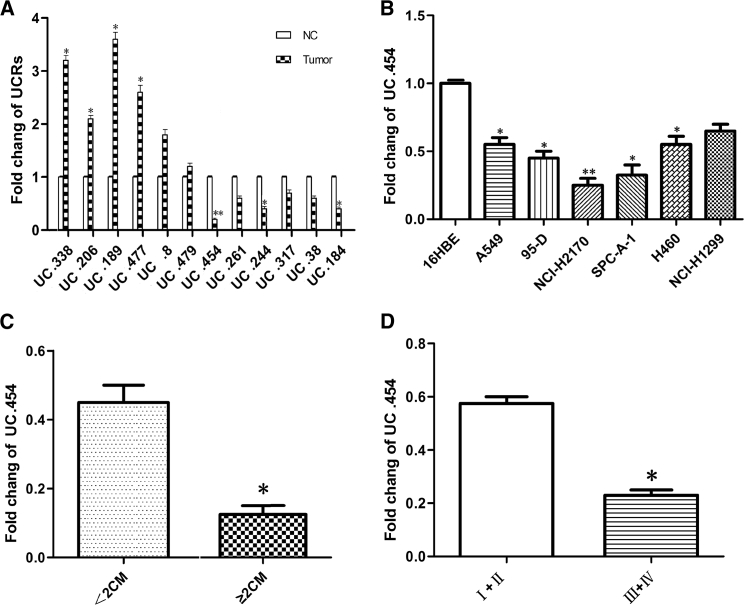
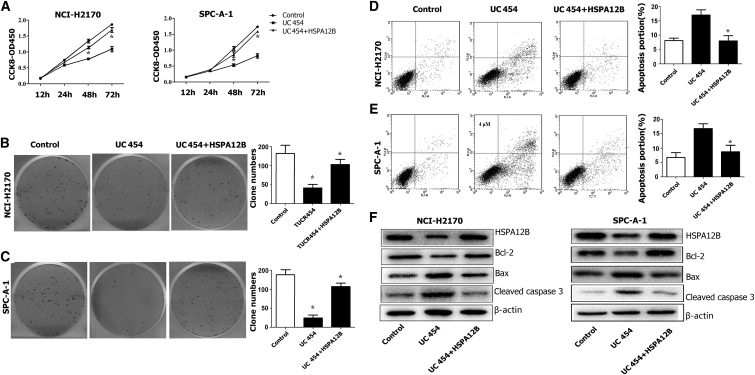
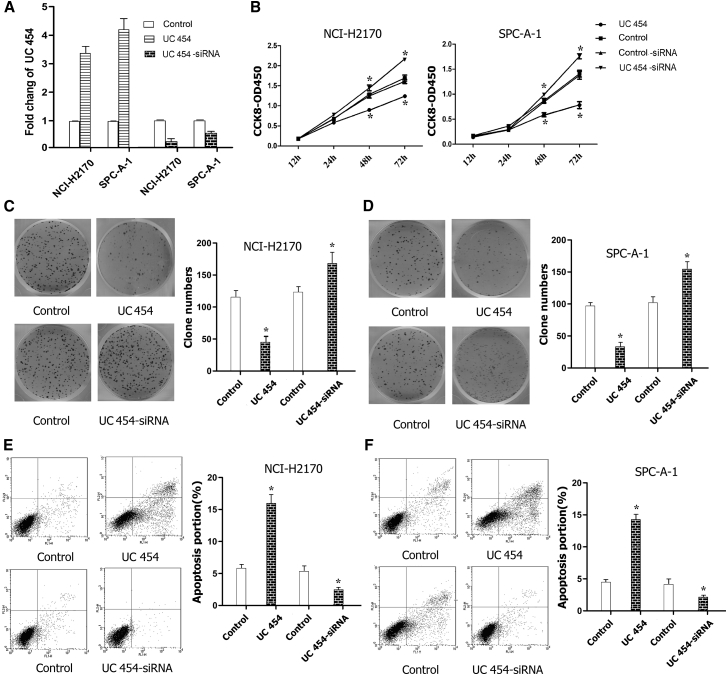
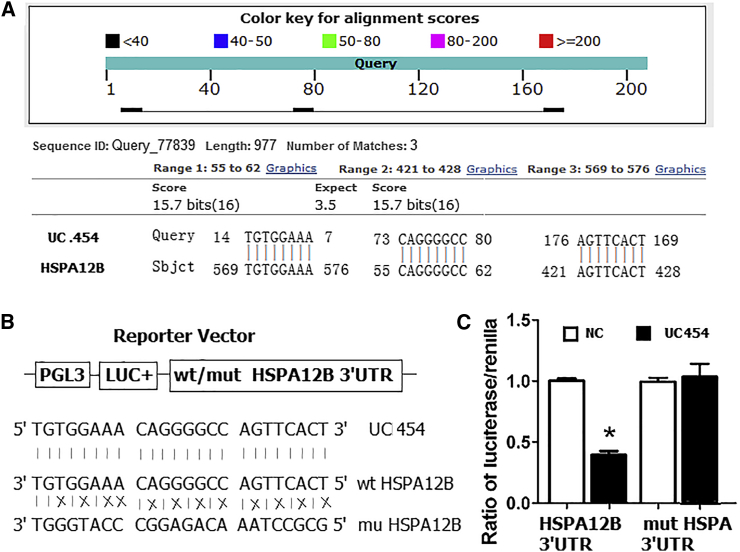
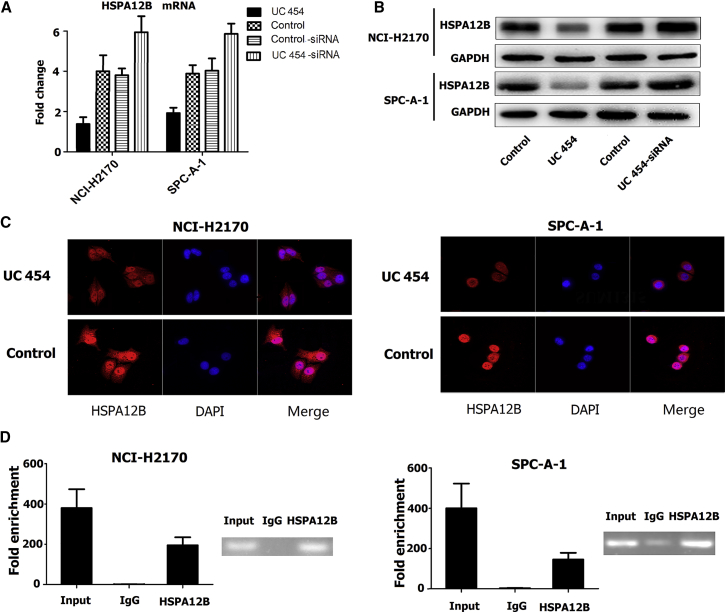
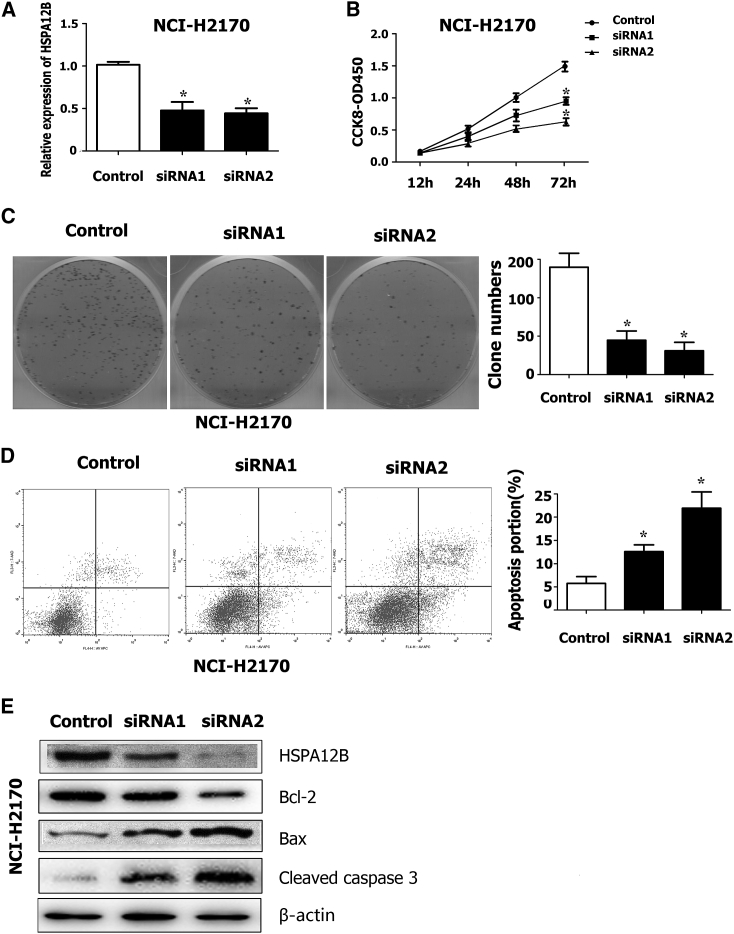
Transcribed ultraconserved regions (T-UCRs) classified as long non-coding RNAs (Lnc-RNAs) are transcripts longer than 200-nt RNA with no protein-coding capacity. Previous studies showed that T-UCRs serve as novel oncogenes, or tumor suppressors are involved in tumorigenesis and cancer progressive. Nevertheless, the clinicopathologic significance and regulatory mechanism of T-UCRs in lung cancer (LC) remain largely unknown. We found that uc.454 was downregulated in both non-small-cell LC (NSCLC) tissues and LC cell lines, and the downregulated uc.454 is associated with tumor size and tumors with more advanced stages. Transfection with uc.454 markedly induced apoptosis and inhibited cell proliferation in SPC-A-1 and NCI-H2170 LC cell lines. Above results suggested that uc.454 played a suppressive role in LC. Heat shock protein family A member 12B (HSPA12B) protein was negatively regulated by uc.454 at the posttranscriptional level by dual-luciferase reporter assay and affected the expressions of Bcl-2 family members, which finally induced LC apoptosis. The uc.454/HSPA12B axis furthers our understanding of the molecular mechanisms involved in tumor apoptosis, which may potentially serve as a therapeutic target for lung carcinoma.
被归类为长链非编码RNA(Lnc-RNAs)的转录超保守区域(T-UCRs)是长度超过200个核苷酸且无蛋白质编码能力的RNA转录本。先前的研究表明,T-UCRs作为新型癌基因或肿瘤抑制因子参与肿瘤发生和癌症进展。然而,T-UCRs在肺癌(LC)中的临床病理意义和调控机制仍 largely未知。我们发现uc.454在非小细胞肺癌(NSCLC)组织和LC细胞系中均下调,且下调的uc.454与肿瘤大小和更晚期肿瘤相关。用uc.454转染显著诱导SPC-A-1和NCI-H2170 LC细胞系中的细胞凋亡并抑制细胞增殖。上述结果表明uc.454在LC中发挥抑制作用。通过双荧光素酶报告基因检测发现,热休克蛋白家族A成员12B(HSPA12B)蛋白在转录后水平受到uc.454的负调控,并影响Bcl-2家族成员的表达,最终诱导LC细胞凋亡。uc.454/HSPA12B轴进一步加深了我们对肿瘤细胞凋亡相关分子机制的理解,这可能潜在地作为肺癌的治疗靶点。