Zhu Lin-Nan, Qiao Hong-Hua, Chen Ling, Sun Le-Ping, Hui Jia-Liang, Lian Yong-Ling, Xie Wei-Bing, Ding Jiu-Yang, Meng Yun-le, Zhu Bo-Feng, Qiu Ping-Ming
School of Forensic Medicine, Southern Medical University, Guangzhou, China.
First Clinical Medical College, Southern Medical University, Guangzhou, China.
Front Cell Neurosci. 2018 Aug 24;12:262. doi: 10.3389/fncel.2018.00262. eCollection 2018.
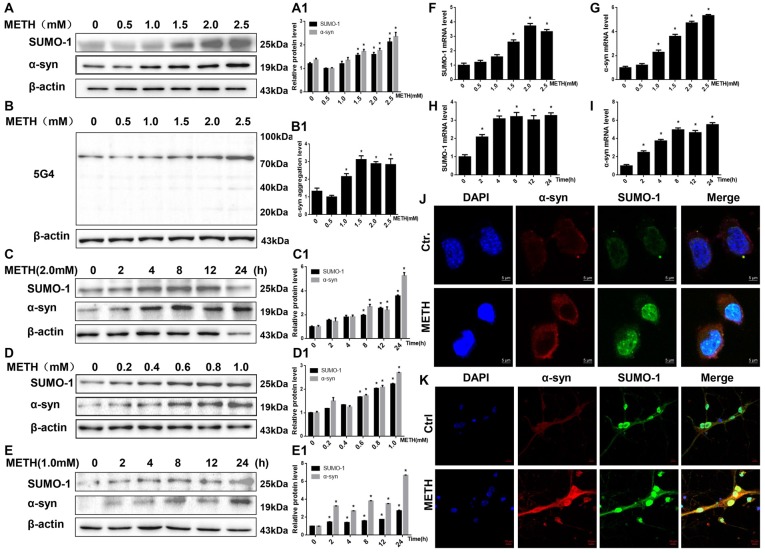
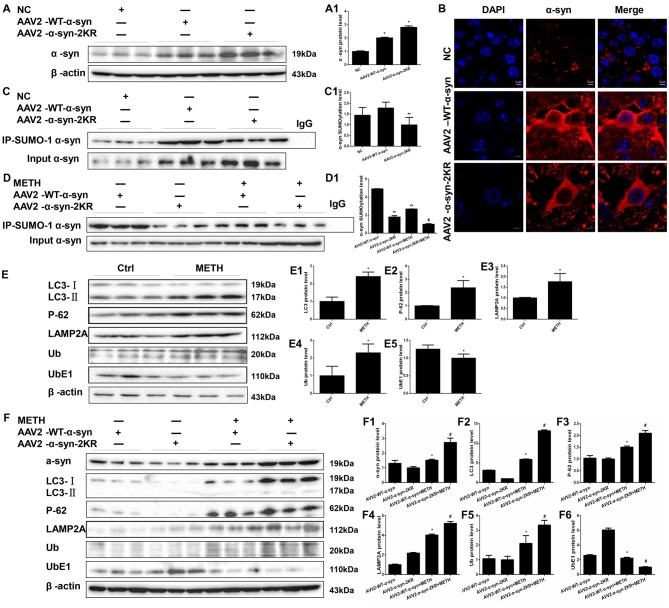
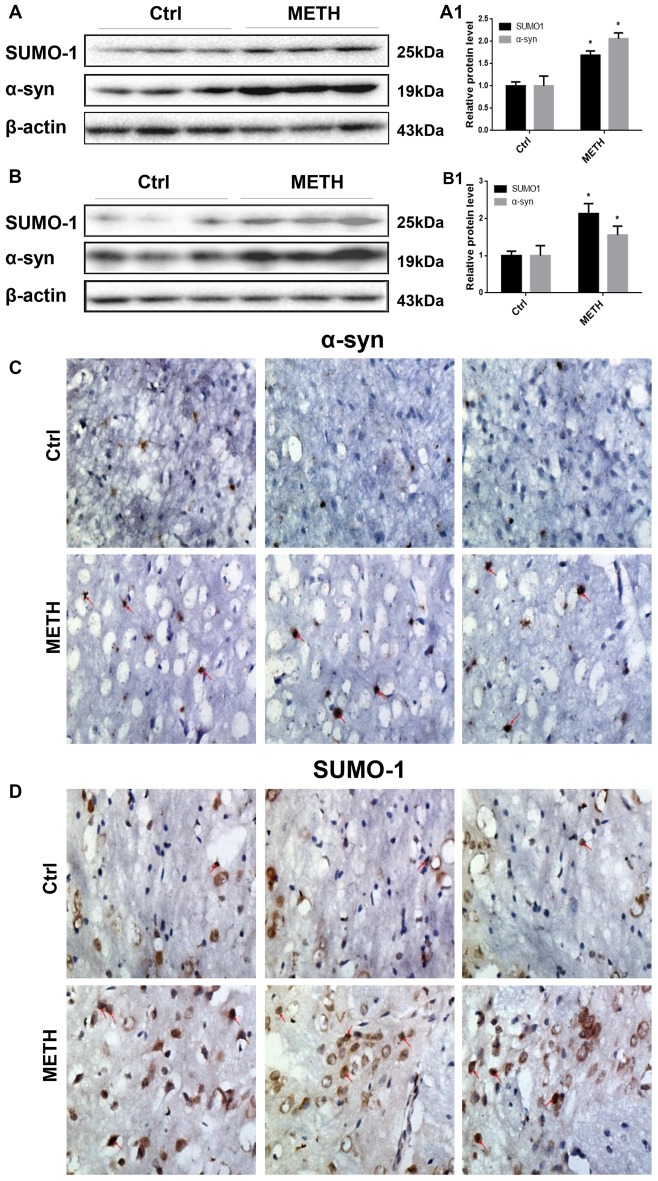
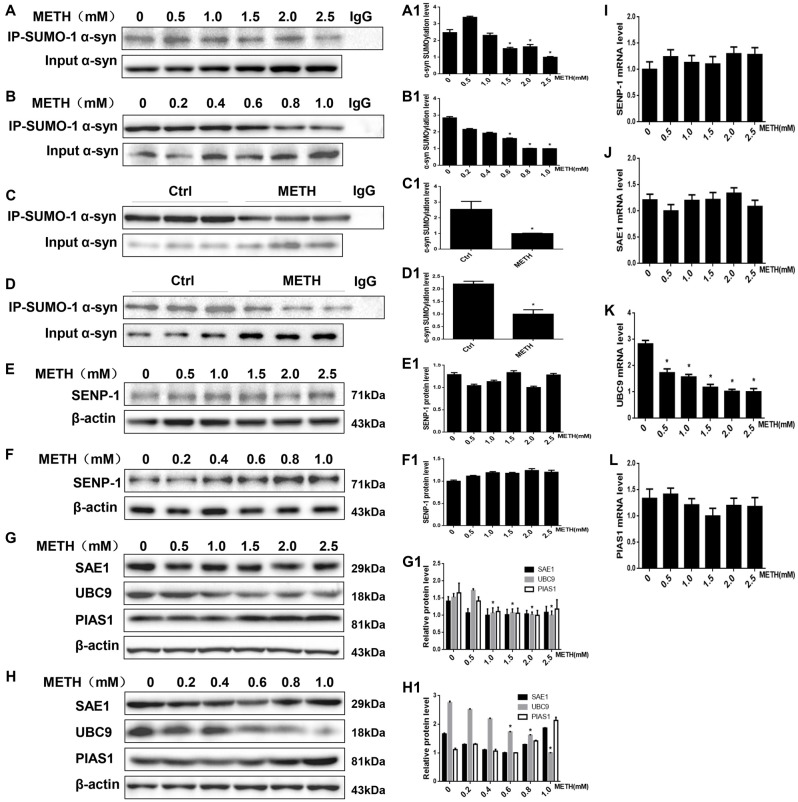
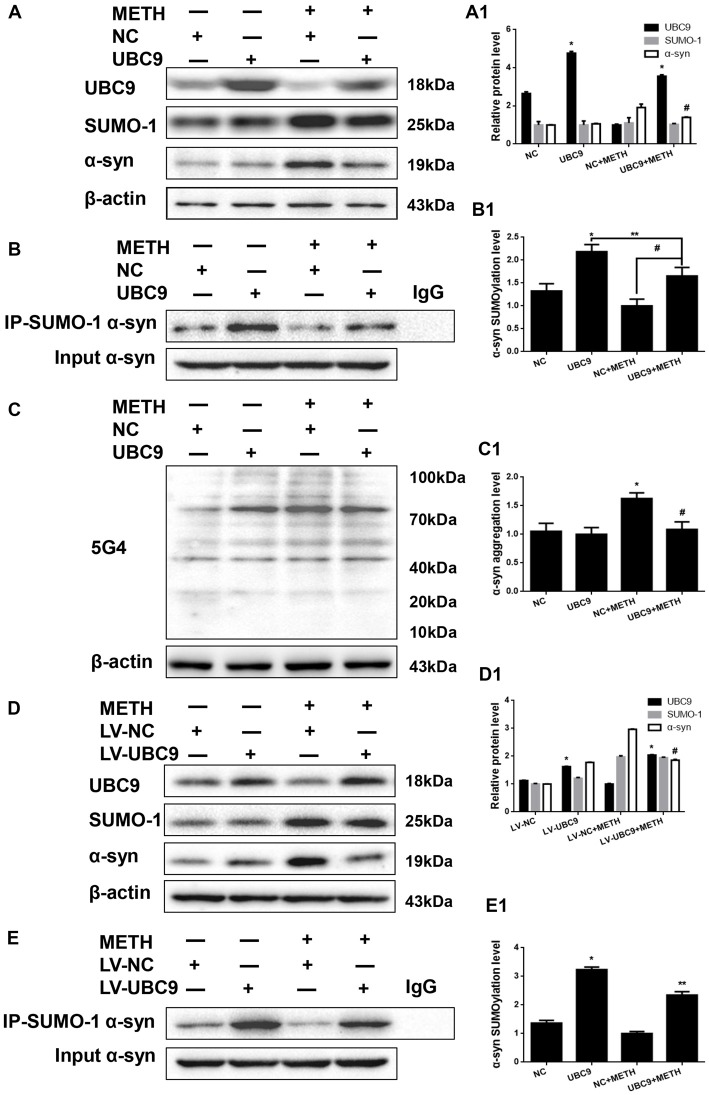
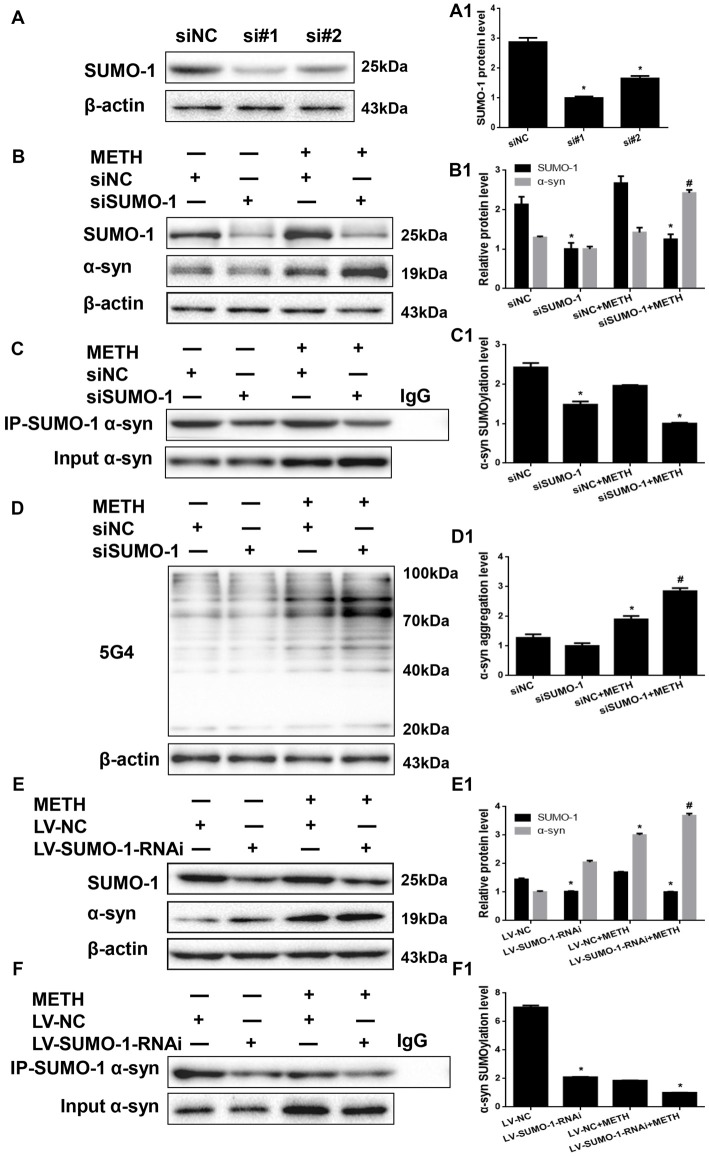
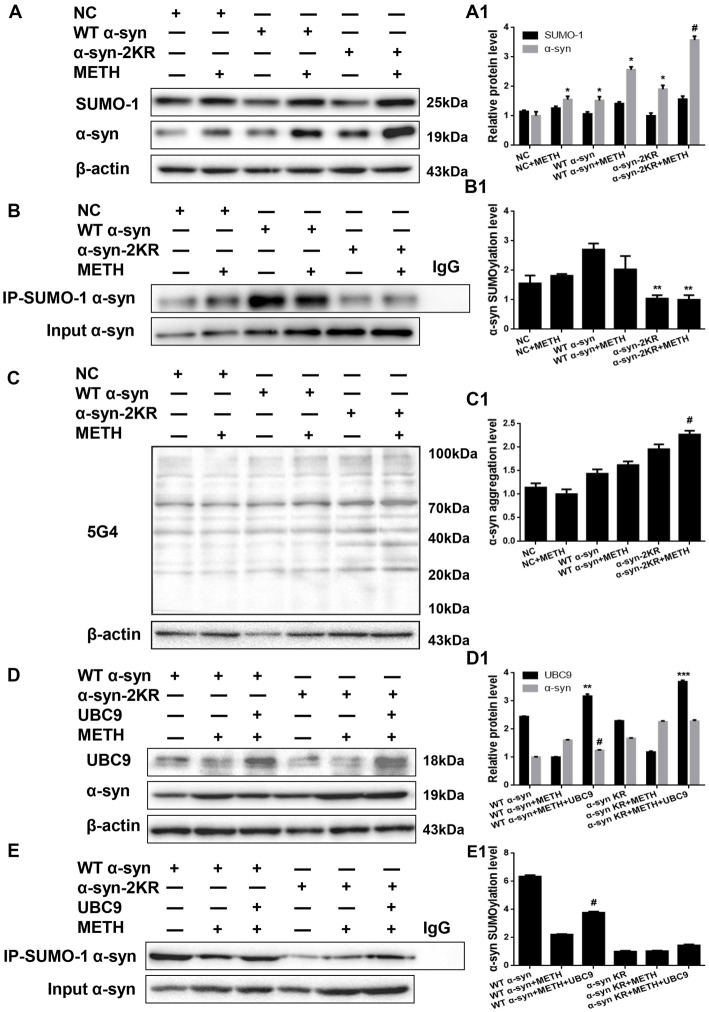
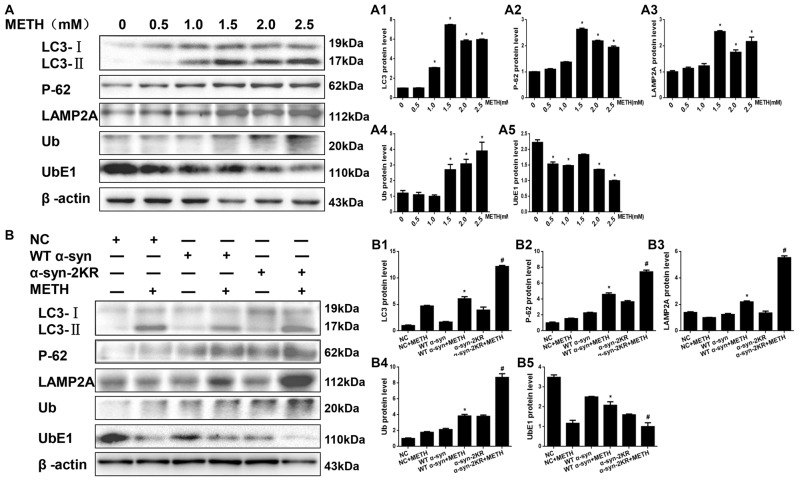
Methamphetamine (METH) is an illegal and widely abused psychoactive stimulant. METH abusers are at high risk of neurodegenerative disorders, including Parkinson's disease (PD). Previous studies have demonstrated that METH causes alpha-synuclein (α-syn) aggregation in the both laboratory animal and human. In this study, exposure to high METH doses increased the expression of α-syn and the small ubiquitin-related modifier 1 (SUMO-1). Therefore, we hypothesized that SUMOylation of α-syn is involved in high-dose METH-induced α-syn aggregation. We measured the levels of α-syn SUMOylation and these enzymes involved in the SUMOylation cycle in SH-SY5Y human neuroblastoma cells (SH-SY5Y cells), in cultures of C57 BL/6 primary mouse neurons and in brain tissues of mice exposure to METH. We also demonstrated the effect of α-syn SUMOylation on α-syn aggregation after METH exposure by overexpressing the key enzyme of the SUMOylation cycle or silencing SUMO-1 expression . Then, we make introduced mutations in the major SUMOylation acceptor sites of α-syn by transfecting a lentivirus containing the sequence of WT α-syn or K96/102R α-syn into SH-SY5Y cells and injecting an adenovirus containing the sequence of WT α-syn or K96/102R α-syn into the mouse striatum. Levels of the ubiquitin-proteasome system (UPS)-related makers ubiquitin (Ub) and UbE1, as well as the autophagy-lysosome pathway (ALP)-related markers LC3, P62 and lysosomal associated membrane protein 2A (LAMP2A), were also measured in SH-SY5Y cells transfected with lentivirus and mice injected with adenovirus. The results showed that METH exposure decreases the SUMOylation level of α-syn, although the expression of α-syn and SUMO-1 are increased. One possible cause is the reduction of UBC9 level. The increase in α-syn SUMOylation by UBC9 overexpression relieves METH-induced α-syn overexpression and aggregation, whereas the decrease in α-syn SUMOylation by SUMO-1 silencing exacerbates the same pathology. Furthermore, mutations in the major SUMOylation acceptor sites of α-syn also aggravate α-syn overexpression and aggregation by impairing degradation through the UPS and the ALP and . These results suggest that SUMOylation of α-syn plays a fundamental part in α-syn overexpression and aggregation induced by METH and could be a suitable target for the treatment of neurodegenerative diseases.
甲基苯丙胺(METH)是一种非法且被广泛滥用的精神活性兴奋剂。METH滥用者患神经退行性疾病的风险很高,包括帕金森病(PD)。先前的研究表明,METH在实验动物和人类中均会导致α-突触核蛋白(α-syn)聚集。在本研究中,高剂量METH暴露会增加α-syn和小泛素相关修饰物1(SUMO-1)的表达。因此,我们推测α-syn的SUMO化参与了高剂量METH诱导的α-syn聚集。我们在SH-SY5Y人神经母细胞瘤细胞(SH-SY5Y细胞)、C57 BL/6原代小鼠神经元培养物以及暴露于METH的小鼠脑组织中测量了α-syn SUMO化水平以及参与SUMO化循环的这些酶的水平。我们还通过过表达SUMO化循环的关键酶或沉默SUMO-1表达,证明了METH暴露后α-syn SUMO化对α-syn聚集的影响。然后,我们通过将含有野生型α-syn或K96/102R α-syn序列的慢病毒转染到SH-SY5Y细胞中,并将含有野生型α-syn或K96/102R α-syn序列的腺病毒注射到小鼠纹状体中,在α-syn的主要SUMO化受体位点引入突变。在转染慢病毒的SH-SY5Y细胞和注射腺病毒的小鼠中,还测量了泛素-蛋白酶体系统(UPS)相关标志物泛素(Ub)和UbE1以及自噬-溶酶体途径(ALP)相关标志物LC3、P62和溶酶体相关膜蛋白2A(LAMP2A)的水平。结果表明,尽管α-syn和SUMO-1的表达增加,但METH暴露会降低α-syn的SUMO化水平。一个可能的原因是UBC9水平的降低。通过过表达UBC9增加α-syn SUMO化可减轻METH诱导的α-syn过表达和聚集,而通过沉默SUMO-1降低α-syn SUMO化则会加剧相同的病理过程。此外,α-syn主要SUMO化受体位点的突变还会通过损害UPS和ALP介导的降解来加剧α-syn的过表达和聚集。这些结果表明,α-syn的SUMO化在METH诱导的α-syn过表达和聚集中起重要作用,可能是治疗神经退行性疾病的合适靶点。