Zhao Rui, Zhang Tongtong, Xi Weidong, Sun Xiaobin, Zhou Lingxiao, Guo Yuanbiao, Zhao Cong, Bao Yu
Department of Endoscopy Center, Sichuan Cancer Hospital, Chengdu, Sichuan 610041, P.R. China.
Medical Research Center, The Third People's Hospital of Chengdu, Chengdu, Sichuan 610031, P.R. China.
Oncol Lett. 2018 Oct;16(4):4271-4278. doi: 10.3892/ol.2018.9215. Epub 2018 Jul 25.
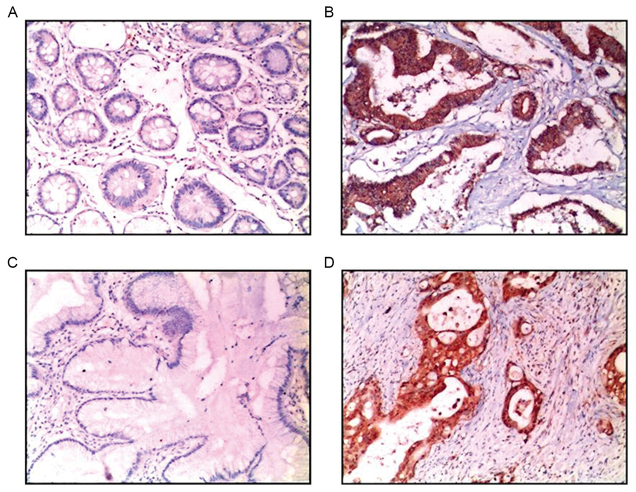
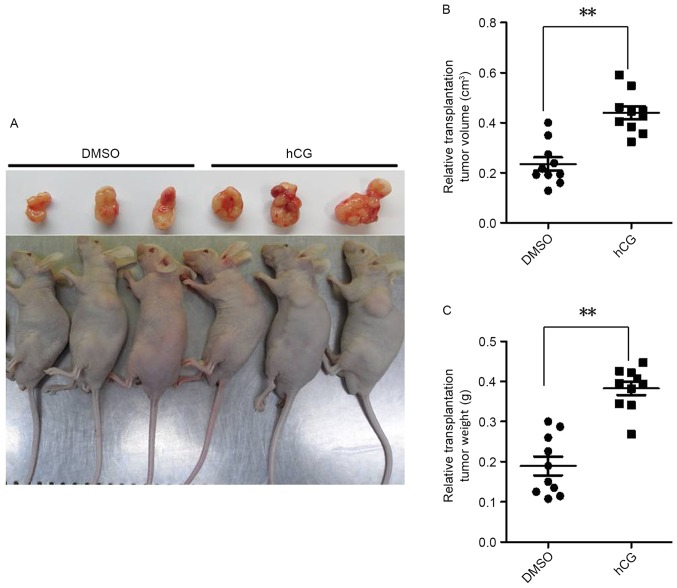
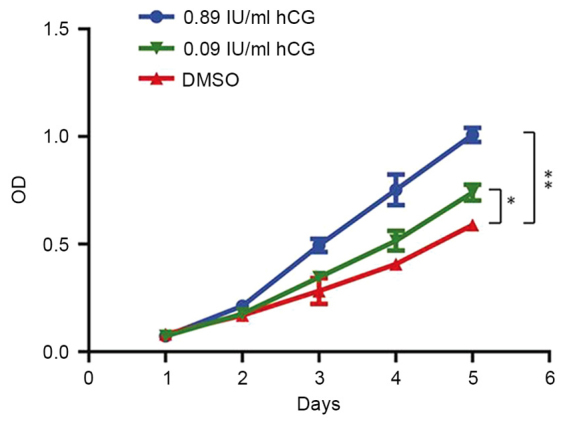
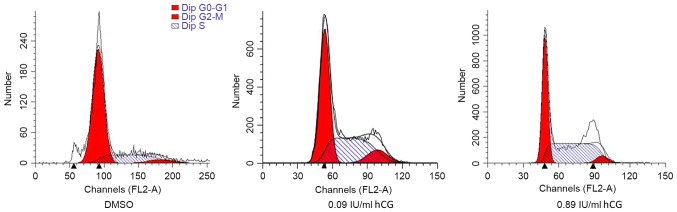
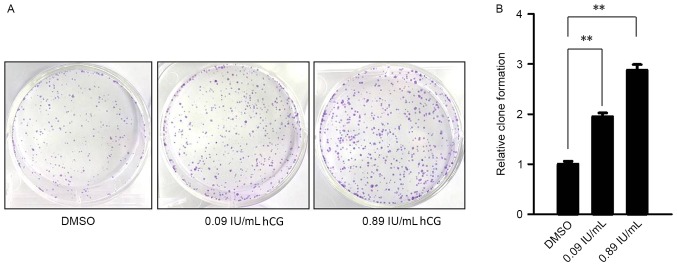
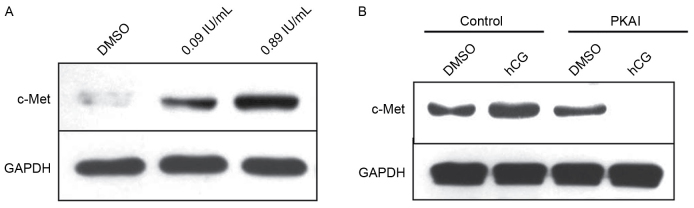
Hormones and their receptors affect the development process of gastric cancer. Previous studies have revealed that human chorionic gonadotropin (hCG) is expressed in gastric cancer tissue. However, the mechanism by which hCG exerts its effects on gastric cancer cells had not been reported. In the present study, the expression of hCG and its receptor was detected in gastric cancer tissues and para-carcinoma tissues of 62 patients with gastric carcinoma. Following the treatment of gastric cancer cells SGC-7901 with hCG, a cell counting kit-8 assay, flow cytometry, a colony formation assay and a xenograft tumor model in nude mice were used to detect the effect of hCG on cell proliferation; and the expression of c-Met was determined by western blot analysis. The expression of hCG and its receptor were significantly higher in gastric cancer tissues compared with that of the matched para-carcinoma tissue (P<0.01). Proliferation of SGC-7901 cells treated with hCG was significant higher and the number of cells at the G/M phase of the cell cycle increased compared with the control cells. Hepatocyte growth factor transmembrane protein receptor expression was increased in hCG-treated cells compared with the control cells, which relies on the protein kinase A signaling pathway. The present study revealed the potential function of hCG in the development of gastric cancer, suggesting that hCG may be a molecular marker and potential drug target in gastric cancer.
激素及其受体影响胃癌的发展进程。既往研究显示,人绒毛膜促性腺激素(hCG)在胃癌组织中表达。然而,hCG对胃癌细胞发挥作用的机制尚未见报道。在本研究中,检测了62例胃癌患者的胃癌组织及癌旁组织中hCG及其受体的表达。用hCG处理胃癌细胞SGC-7901后,采用细胞计数试剂盒-8检测、流式细胞术、集落形成实验及裸鼠异种移植瘤模型检测hCG对细胞增殖的影响;通过蛋白质印迹分析测定c-Met的表达。与配对的癌旁组织相比,胃癌组织中hCG及其受体的表达显著更高(P<0.01)。与对照细胞相比,用hCG处理的SGC-7901细胞增殖显著更高,且细胞周期G/M期的细胞数量增加。与对照细胞相比,hCG处理的细胞中肝细胞生长因子跨膜蛋白受体表达增加,这依赖于蛋白激酶A信号通路。本研究揭示了hCG在胃癌发展中的潜在作用,提示hCG可能是胃癌的分子标志物和潜在的药物靶点。