Zhang Jia-Qiang, Yang Quan-Yong, Xue Fu-Shan, Zhang Wei, Yang Gui-Zhen, Liao Xu, Meng Fan-Min
Department of Anesthesiology, Henan Provincial People's Hospital of Zhengzhou University, Zhengzhou Department of Anesthesiology, Plastic Surgery Hospital, Chinese Academy of Medical Sciences and Peking Union Medical College Department of Anesthesiology, Beijing Friendship Hospital, Capital Medical University, Beijing, People's Republic of China.
Medicine (Baltimore). 2018 Sep;97(36):e12100. doi: 10.1097/MD.0000000000012100.
Both euthyroid sick syndrome and myocardial ischemia-reperfusion injury are common and have been significantly associated with morbidity and mortality after pediatric cardiac surgery with cardiopulmonary bypass. This single-center, prospective, double-blind, randomized placebo-controlled clinical pilot trial was designed to assess if preoperative oral thyroid hormone therapy could prevent the occurrence of euthyroid sick syndrome (ESS) and attenuate myocardial ischemia-reperfusion injury (IRI) after cardiac surgery with cardiopulmonary bypass (CPB) in children.
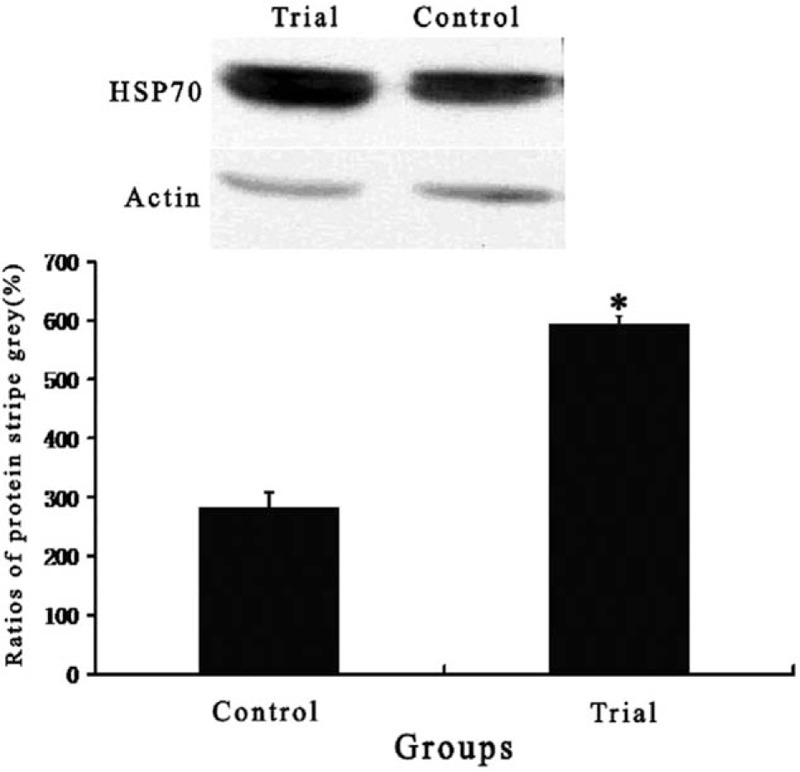
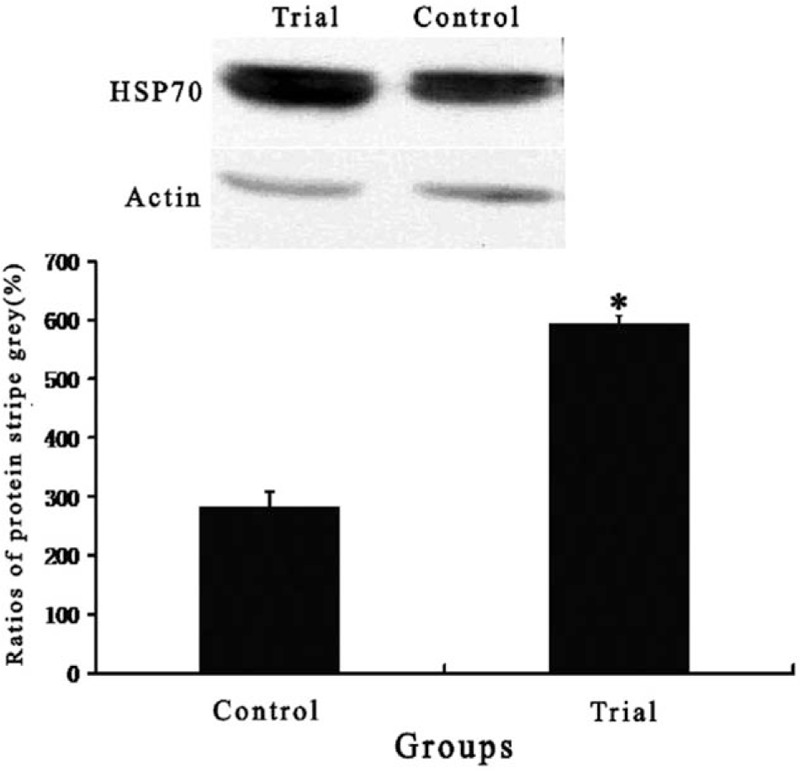
Forty children aged 3 to 12 year, scheduled for elective congenital heart disease repair surgery with CPB, were randomized into 2 groups of equal size to receive the following treatments in a double-blind manner: placebo (control group) and thyroid tablet 0.4 mg/kg (trial group) taken orally once a day for 4 days before surgery. The perioperative serum thyroid hormone levels and hemodynamic variables were determined. The extubation time, duration of intensive care unit (ICU) stay, and use of inotropic drugs in the ICU were recorded. The myocardial expressions of heat shock protein 70 (HSP70), myosin heavy chain (MHC) mRNA, and thyroid hormone receptor (TR) mRNA were detected. The serum creatine kinase-MB (CK-MB) activity and troponin I (TnI) positive ratio at 24 hour after surgery were assessed.
There were no significant differences in hemodynamic variables at all observed points, extubation time, and duration of ICU stay between groups. As compared with baselines on administration, serum triiodothyronine (T3) and free T3 (FT3) levels on the first, second, and fourth postoperative day, and serum thyrotropic-stimulating hormone (TSH), tetraiodothyronine (T4), and free T4 (FT4) levels on the first postoperative day were significantly decreased in the 2 groups. Serum T3, FT3, and T4 levels on the first and second postoperative day, and serum FT4 level on the first postoperative day were significantly higher in the trial group than in control group. As compared with the control group, the number of patients requiring inotropic drugs in the ICU, serum CK-MB activity, serum positive TnI ratio, and myocardial expression of MHCβ mRNA were significantly decreased, and myocardial expressions of both HSP70 and MHCα mRNA were significantly increased in the trial group.
In children undergoing cardiac surgery with CPB, preoperative oral small-dose thyroid hormone therapy reduces severity of postoperative ESS and provides a protection against myocardial IRI by increasing HSP70 and MHCα expression.
甲状腺功能正常的病态综合征和心肌缺血-再灌注损伤均很常见,且与小儿体外循环心脏手术后的发病率和死亡率显著相关。本单中心、前瞻性、双盲、随机安慰剂对照临床试验旨在评估术前口服甲状腺激素治疗能否预防小儿体外循环(CPB)心脏手术后甲状腺功能正常的病态综合征(ESS)的发生,并减轻心肌缺血-再灌注损伤(IRI)。
40例年龄在3至12岁、计划行择期先天性心脏病CPB修复手术的儿童被随机分为两组,每组人数相等,以双盲方式接受以下治疗:安慰剂(对照组)和甲状腺片0.4mg/kg(试验组),术前连续4天每天口服1次。测定围手术期血清甲状腺激素水平和血流动力学变量。记录拔管时间、重症监护病房(ICU)住院时间以及ICU中使用的强心药物。检测热休克蛋白70(HSP70)、肌球蛋白重链(MHC)mRNA和甲状腺激素受体(TR)mRNA的心肌表达。评估术后24小时血清肌酸激酶-MB(CK-MB)活性和肌钙蛋白I(TnI)阳性率。
两组在所有观察点的血流动力学变量、拔管时间和ICU住院时间方面均无显著差异。与给药时的基线相比,两组术后第1、2和4天的血清三碘甲状腺原氨酸(T3)和游离T3(FT3)水平,以及术后第1天的血清促甲状腺激素(TSH)、四碘甲状腺原氨酸(T4)和游离T4(FT4)水平均显著降低。试验组术后第1和2天的血清T3、FT3和T4水平,以及术后第1天的血清FT4水平均显著高于对照组。与对照组相比,试验组ICU中需要强心药物的患者数量、血清CK-MB活性、血清TnI阳性率以及MHCβ mRNA的心肌表达均显著降低,而HSP70和MHCα mRNA的心肌表达均显著增加。
在接受CPB心脏手术的儿童中,术前口服小剂量甲状腺激素治疗可降低术后ESS的严重程度,并通过增加HSP70和MHCα表达对心肌IRI起到保护作用。