Department of Food Science and Nutrition and Kimchi Research Institute, Pusan National University, Busan 46241, Korea.
Yeongsan Skate Co., Ltd., Busan 48520, Korea.
Mar Drugs. 2018 Aug 30;16(9):306. doi: 10.3390/md16090306.
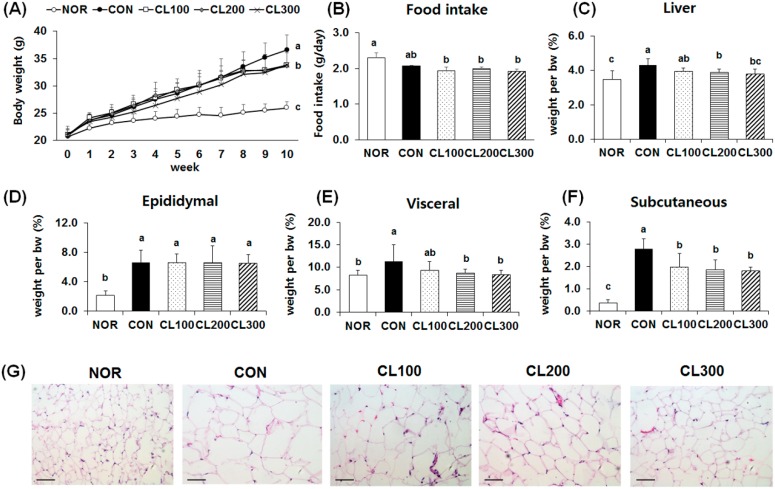
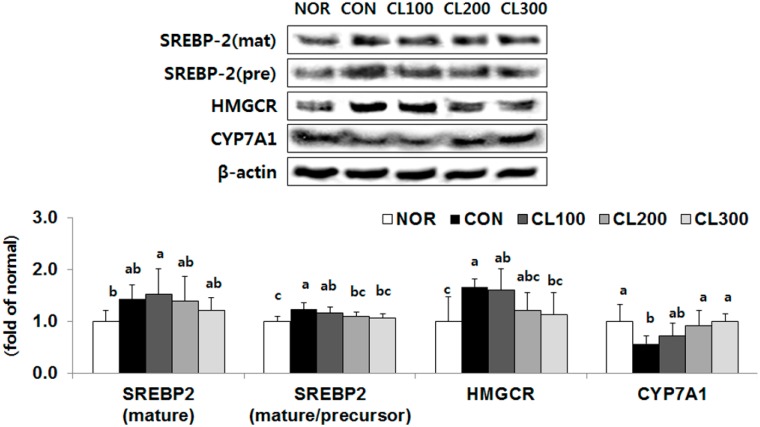
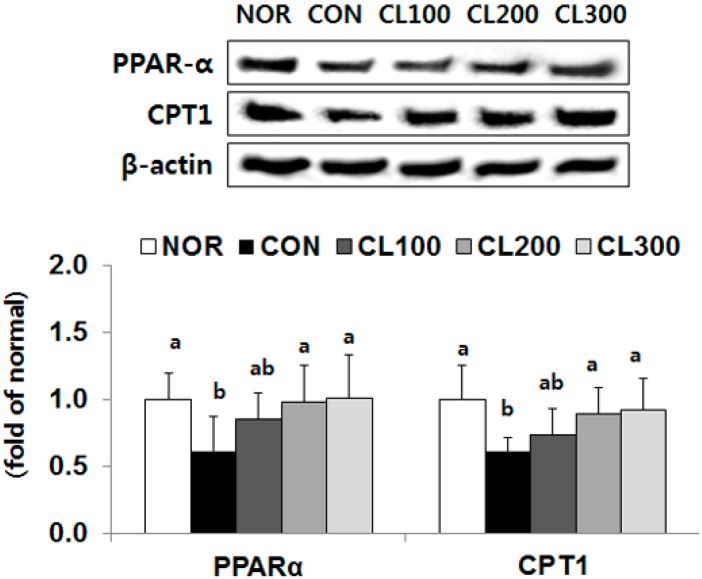
This study investigated the anti-obesity effects of collagen peptide derived from skate skin on lipid metabolism in high-fat diet (HFD)-fed mice. All C57BL6/J male mice were fed a HFD with 60% kcal fat except for mice in the normal group which were fed a chow diet. The collagen-fed groups received collagen peptide (1050 Da) orally (100, 200, or 300 mg/kg body weight per day) by gavage, whereas the normal and control groups were given water ( = 9 per group). The body weight gain and visceral adipose tissue weight were lower in the collagen-fed groups than in the control group ( < 0.05). Plasma and hepatic lipid levels were significantly reduced by downregulating the hepatic protein expression levels for fatty acid synthesis (sterol regulatory element binding protein-1 (SREBP-1), fatty acid synthase (FAS), and acetyl-CoA carboxylase (ACC)) and cholesterol synthesis (SREBP-2 and 3-hydroxy-3-methylglutaryl-CoA reductase (HMGCR)) and upregulating those for β-oxidation (peroxisome proliferator-activated receptor alpha (PPAR-α) and carnitine palmitoyltransferase 1 (CPT1)) and synthesis of bile acid (cytochrome P450 family 7 subfamily A member 1 (CYP7A1)) ( < 0.05). In the collagen-fed groups, the hepatic protein expression level of phosphorylated 5' adenosine monophosphate-activated protein kinase (p-AMPK) and plasma adiponectin levels were higher, and the leptin level was lower ( < 0.05). Histological analysis revealed that collagen treatment suppressed hepatic lipid accumulation and reduced the lipid droplet size in the adipose tissue. These effects were increased in a dose-dependent manner. The findings indicated that skate collagen peptide has anti-obesity effects through suppression of fat accumulation and regulation of lipid metabolism.
本研究旨在探讨源自鱼皮的胶原蛋白肽对高脂饮食喂养小鼠脂代谢的肥胖抑制作用。除正常组外,所有 C57BL6/J 雄性小鼠均给予高脂肪饮食(60%卡路里来自脂肪),正常组给予标准饮食。实验组通过灌胃给予胶原蛋白肽(1050 Da,100、200 或 300 mg/kg 体重/天),正常组和对照组给予水(每组 9 只)。与对照组相比,实验组的体重增加和内脏脂肪组织重量降低(<0.05)。胶原蛋白降低了肝内脂肪酸合成(固醇调节元件结合蛋白-1(SREBP-1)、脂肪酸合成酶(FAS)和乙酰辅酶 A 羧化酶(ACC))和胆固醇合成(SREBP-2 和 3-羟-3-甲基戊二酰辅酶 A 还原酶(HMGCR))的蛋白表达水平,上调了β-氧化(过氧化物酶体增殖物激活受体α(PPAR-α)和肉碱棕榈酰转移酶 1(CPT1))和胆汁酸合成(细胞色素 P450 家族 7 亚家族 A 成员 1(CYP7A1))的蛋白表达水平(<0.05),从而降低了血浆和肝内脂质水平。在实验组中,肝内磷酸化 5'腺苷单磷酸激活蛋白激酶(p-AMPK)的蛋白表达水平和血浆脂联素水平升高,瘦素水平降低(<0.05)。组织学分析表明,胶原蛋白处理抑制了肝内脂质堆积,并减少了脂肪组织中的脂滴大小,且这种作用呈剂量依赖性。这些结果表明,鱼皮胶原蛋白肽具有抑制脂肪堆积和调节脂代谢的肥胖抑制作用。