Computational Biology Branch, National Center for Biotechnology Information, National Library of Medicine, National Institutes of Health, 8600 Rockville Pike, Bethesda, MD, 20894, USA.
BMC Bioinformatics. 2018 Sep 10;19(1):316. doi: 10.1186/s12859-018-2343-7.
Transcription factor binding site (TFBS) loss, gain, and reshuffling within the sequence of a regulatory element could alter the function of that regulatory element. Some of the changes will be detrimental to the fitness of the species and will result in gradual removal from a population, while other changes would be either beneficial or just a part of genetic drift and end up being fixed in a population. This "reprogramming" of regulatory elements results in modification of the gene regulatory landscape during evolution.
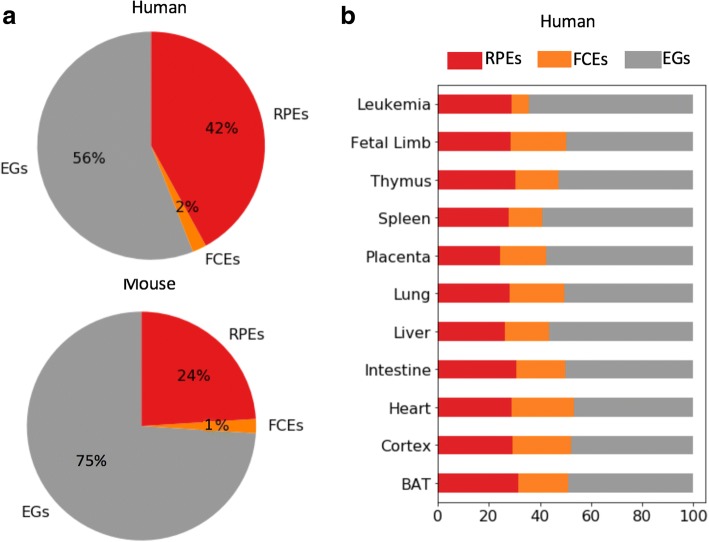
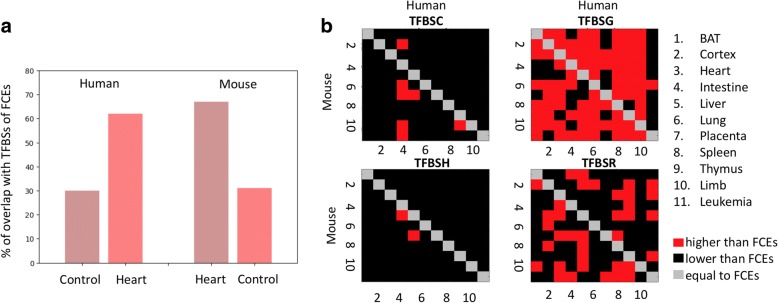
We identified reprogrammed enhancers (RPEs) by comparing the distribution of tissue-specific enhancers in the human and mouse genomes. We observed that around 30% of mammalian enhancers have been reprogrammed after the human-mouse speciation. In 79% of cases, the reprogramming of an enhancer resulted in a quantifiably different expression of a flanking gene. In the case of the Thy-1 cell surface antigen gene, for example, enhancer reprogramming is associated with cortex to thymus change in gene expression. To understand the mechanisms of enhancer reprogramming, we profiled the evolutionary changes in the TFBS enhancer content and found that enhancer reprogramming took place through the acquisition of new TFBSs in 72% of reprogramming events.
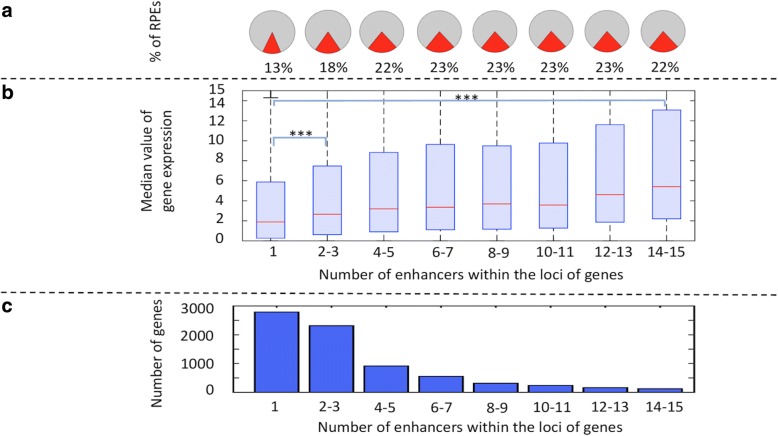
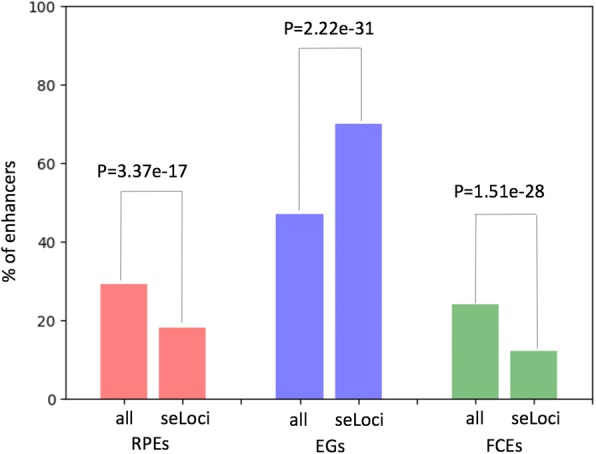
Our results suggest that enhancer reprogramming takes place within well-established regulatory loci with RPEs contributing additively to fine-tuning of the gene regulatory program in mammals. We also found evidence for acquisition of novel gene function through enhancer reprogramming, which allows expansion of gene regulatory landscapes into new regulatory domains.
转录因子结合位点(TFBS)在调控元件序列内的缺失、获得和重排可能改变该调控元件的功能。其中一些变化对物种的适应性有害,会导致其逐渐从种群中消失,而其他一些变化则可能是有益的,或者只是遗传漂变的一部分,并最终在种群中固定下来。这种调控元件的“重新编程”导致了进化过程中基因调控景观的改变。
我们通过比较人类和小鼠基因组中组织特异性增强子的分布,鉴定了重新编程的增强子(RPEs)。我们观察到,在人类和小鼠物种形成后,大约 30%的哺乳动物增强子已经被重新编程。在 79%的情况下,增强子的重新编程导致了相邻基因表达的可量化差异。例如,在 Thy-1 细胞表面抗原基因的情况下,增强子的重新编程与基因表达从皮质到胸腺的变化有关。为了理解增强子重新编程的机制,我们对 TFBS 增强子含量的进化变化进行了分析,发现增强子重新编程是通过在 72%的重新编程事件中获得新的 TFBS 来实现的。
我们的研究结果表明,增强子的重新编程发生在已建立的调控位点内,RPEs 为哺乳动物基因调控程序的微调做出了额外的贡献。我们还发现了通过增强子重新编程获得新基因功能的证据,这使得基因调控景观能够扩展到新的调控域。