Ludwig Cancer Research Oxford, University of Oxford, Old Road Campus Research Building, Oxford, OX3 7DQ, UK.
Department of Physiology, Anatomy and Genetics, University of Oxford, Oxford, OX1 3PT, UK.
Genome Biol. 2018 Sep 10;19(1):129. doi: 10.1186/s13059-018-1509-y.
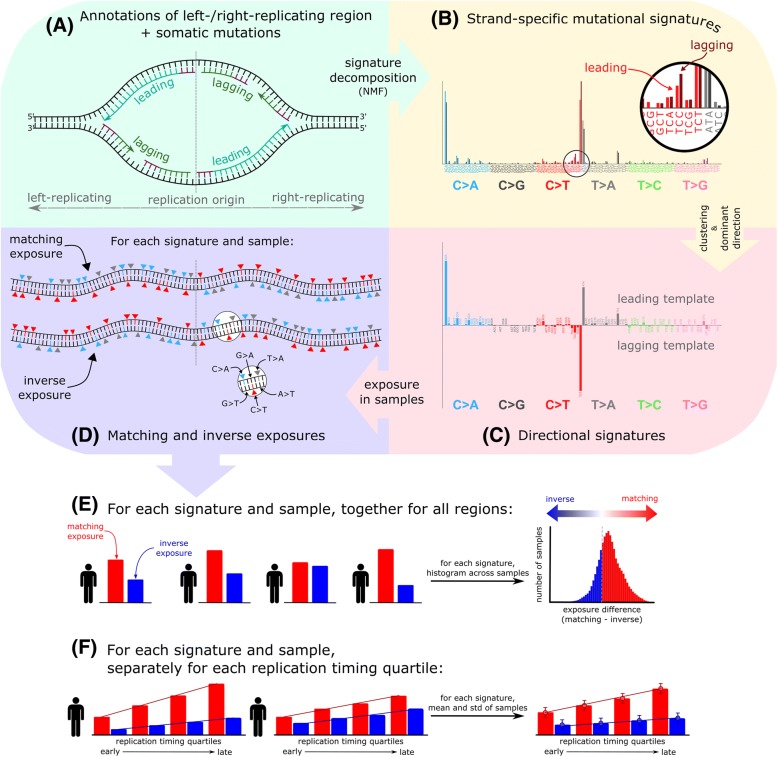
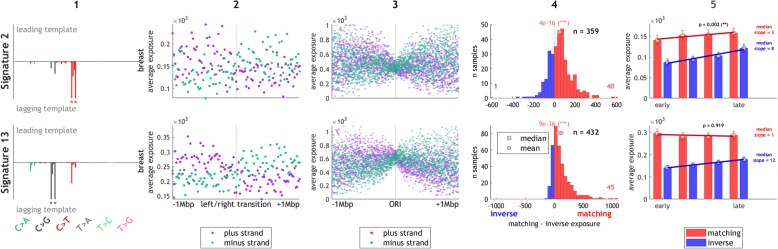
DNA replication plays an important role in mutagenesis, yet little is known about how it interacts with other mutagenic processes. Here, we use somatic mutation signatures-each representing a mutagenic process-derived from 3056 patients spanning 19 cancer types to quantify the strand asymmetry of mutational signatures around replication origins and between early and late replicating regions.
We observe that most of the detected mutational signatures are significantly correlated with the timing or direction of DNA replication. The properties of these associations are distinct for different signatures and shed new light on several mutagenic processes. For example, our results suggest that oxidative damage to the nucleotide pool substantially contributes to the mutational landscape of esophageal adenocarcinoma.
Together, our results indicate an interaction between DNA replication, the associated damage repair, and most mutagenic processes.
DNA 复制在诱变中起着重要作用,但人们对其如何与其他诱变过程相互作用知之甚少。在这里,我们使用体细胞突变特征——每个特征代表一种诱变过程——来自跨越 19 种癌症类型的 3056 名患者,来量化复制起点周围和早期与晚期复制区域之间突变特征的链不对称性。
我们观察到,大多数检测到的突变特征与 DNA 复制的时间或方向显著相关。这些关联的性质因不同的特征而不同,为几种诱变过程提供了新的见解。例如,我们的结果表明,核苷酸池的氧化损伤对食管腺癌的突变景观有很大贡献。
总的来说,我们的结果表明 DNA 复制、相关的损伤修复以及大多数诱变过程之间存在相互作用。