Gilkerson Jill, Richards Jeffrey A, Warren Steven F, Oller D Kimbrough, Russo Rosemary, Vohr Betty
LENA Foundation, Boulder, Colorado;
LENA Foundation, Boulder, Colorado.
Pediatrics. 2018 Oct;142(4). doi: 10.1542/peds.2017-4276. Epub 2018 Sep 10.
Quantity of talk and interaction in the home during early childhood is correlated with socioeconomic status (SES) and can be used to predict early language and cognitive outcomes. We tested the effectiveness of automated early language environment estimates for children 2 to 36 months old to predict cognitive and language skills 10 years later and examined effects for specific developmental age periods.
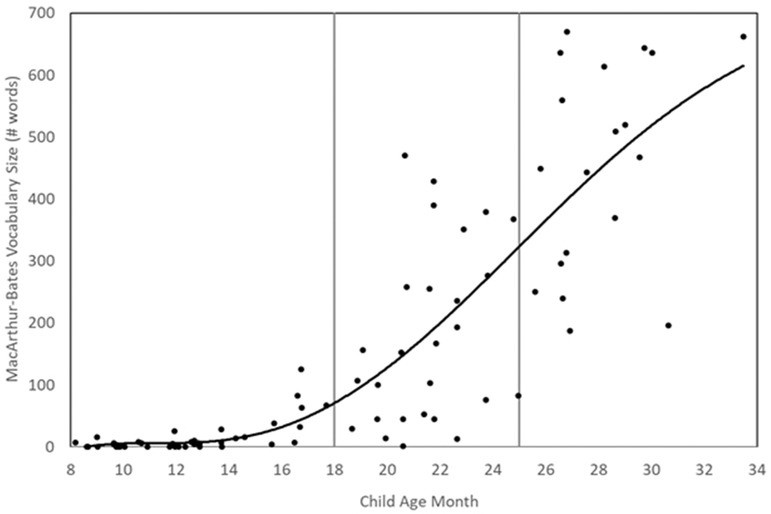
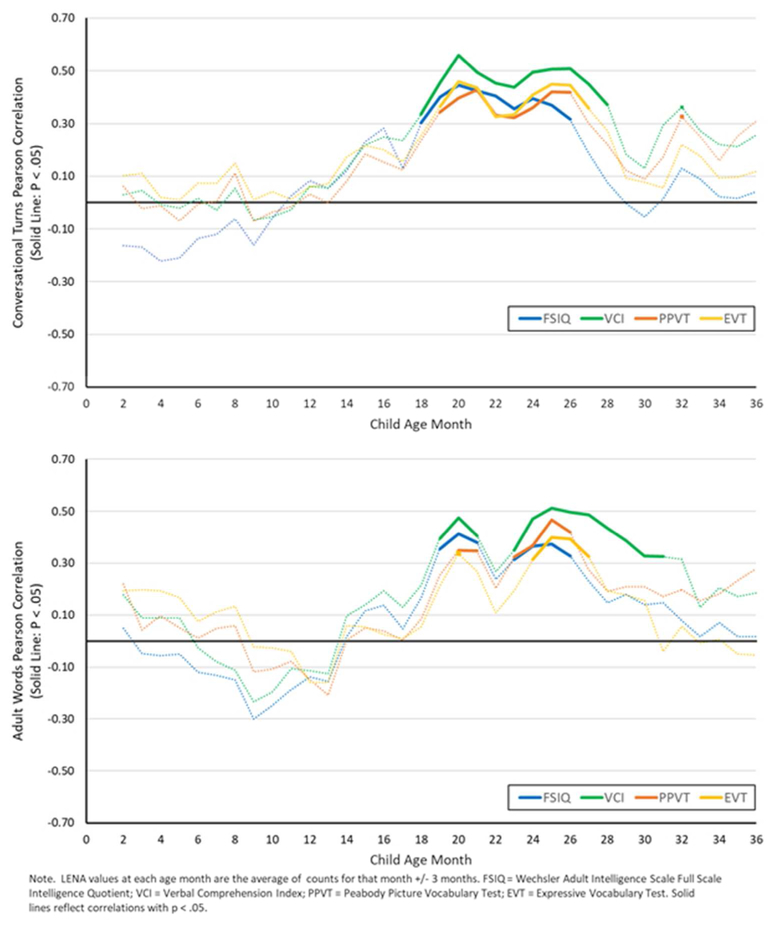
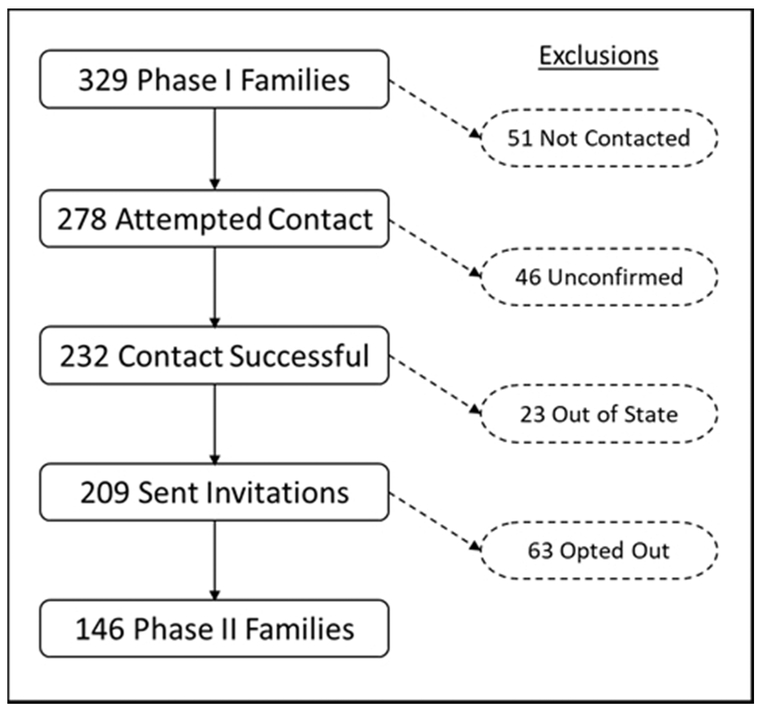
Daylong audio recordings for 146 infants and toddlers were completed monthly for 6 months, and the total number of daily adult words and adult-child conversational turnswere automatically estimated with Language Environment Analysis software. Follow-up evaluations at 9 to 14 years of age included language and cognitive testing. Language exposure for 3 age groups was assessed: 2 to 17 months, 18 to 24 months, and ≥25 months. Pearson correlations and multiple linear regression analyses were conducted.
Conversational turn counts at 18 to 24 months of age accounted for 14% to 27% of the variance in IQ, verbal comprehension, and receptive and/or expressive vocabulary scores 10 years later after controlling for SES. Adult word counts between 18 and 24 months were correlated with language outcomes but were considerably weakened after controlling for SES.
These data support the hypothesis that early talk and interaction, particularly during the relatively narrow developmental window of 18 to 24 months of age, can be used to predict school-age language and cognitive outcomes. With these findings, we underscore the need for effective early intervention programs that support parents in creating an optimal early language learning environment in the home.
幼儿期家庭中的谈话和互动量与社会经济地位(SES)相关,可用于预测早期语言和认知发展结果。我们测试了针对2至36个月大儿童的自动化早期语言环境评估对预测10年后认知和语言技能的有效性,并研究了特定发育年龄阶段的影响。
对146名婴幼儿进行为期6个月的每月一整天的音频录制,并使用语言环境分析软件自动估算每日成人话语总数和成人与儿童对话轮次。在9至14岁时进行随访评估,包括语言和认知测试。评估了3个年龄组的语言接触情况:2至17个月、18至24个月和≥25个月。进行了Pearson相关性分析和多元线性回归分析。
在控制SES后,18至24个月龄时的对话轮次计数占10年后智商、语言理解以及接受性和/或表达性词汇分数变异的14%至27%。18至24个月期间的成人话语计数与语言结果相关,但在控制SES后显著减弱。
这些数据支持以下假设,即早期谈话和互动,尤其是在18至24个月这一相对狭窄的发育窗口期内,可以用于预测学龄期的语言和认知发展结果。基于这些发现,我们强调需要有有效的早期干预项目来支持家长在家中创造最佳的早期语言学习环境。