WHO Collaborating Centre for Reference and Research on Influenza, Peter Doherty Institute for Infection and Immunity, Melbourne, Victoria, Australia.
Department of Microbiology and Immunology, The University of Melbourne, Peter Doherty Institute for Infection and Immunity, Melbourne, Victoria, Australia.
Antimicrob Agents Chemother. 2018 Oct 24;62(11). doi: 10.1128/AAC.01081-18. Print 2018 Nov.
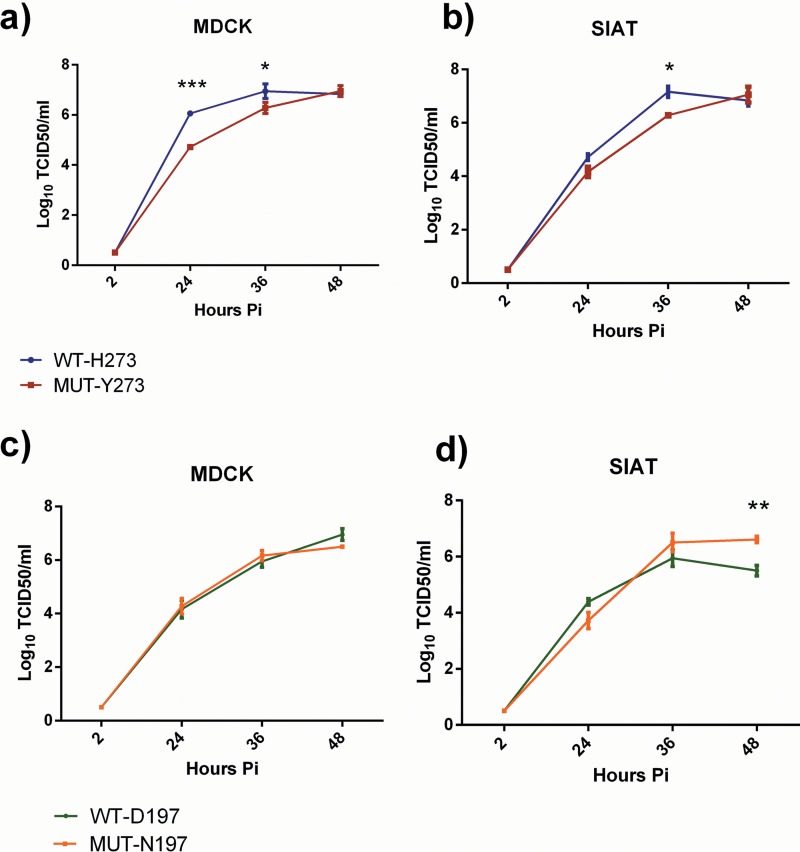
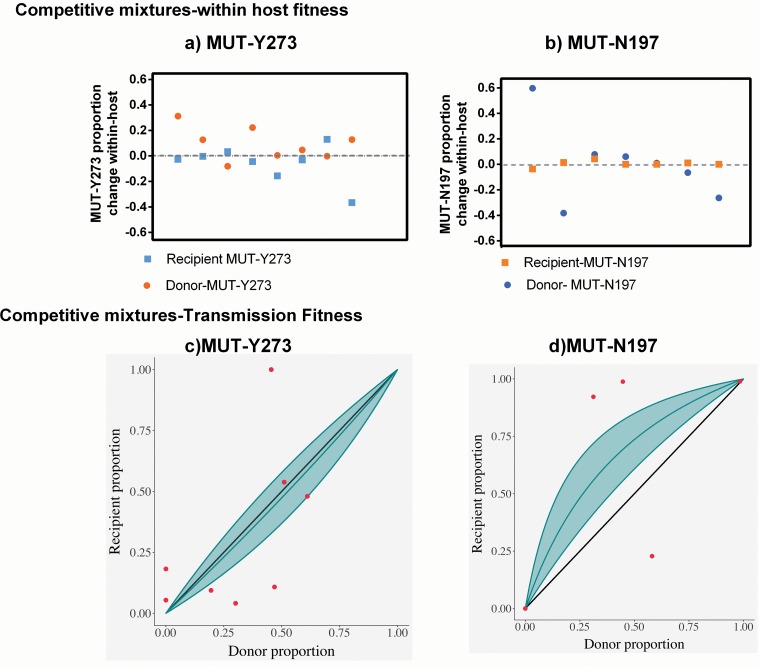
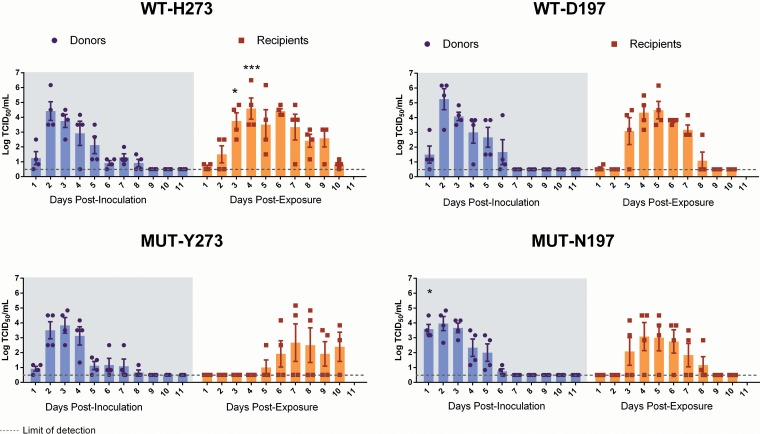
Treatment options for influenza B virus infections are limited to neuraminidase inhibitors (NAIs), which block the neuraminidase (NA) glycoprotein on the virion surface. The development of NAI resistance would therefore result in a loss of antiviral treatment options for influenza B virus infections. This study characterized two contemporary influenza B viruses with known resistance-conferring NA amino acid substitutions, D197N and H273Y, detected during routine surveillance. The D197N and H273Y variants were characterized by assessing NA enzyme activity and affinity, as well as replication in cell culture compared to those of NAI-sensitive wild-type viruses. studies were also performed in ferrets to assess the replication and transmissibility of each variant. Mathematical models were used to analyze within-host and between-host fitness of variants relative to wild-type viruses. The data revealed that the H273Y variant had NA enzyme function similar to that of its wild type but had slightly reduced replication and transmission efficiency The D197N variant had impaired NA enzyme function, but there was no evidence of reduction in replication or transmission efficiency in ferrets. Our data suggest that the influenza B virus variant with the H273Y NA substitution had a more notable reduction in fitness compared to wild-type viruses than the influenza B variant with the D197N NA substitution. Although a D197N variant is yet to become widespread, it is the most commonly detected NAI-resistant influenza B virus in surveillance studies. Our results highlight the need to carefully monitor circulating viruses for the spread of influenza B viruses with the D197N NA substitution.
流感 B 病毒感染的治疗选择有限,仅限于神经氨酸酶抑制剂(NAIs),它可以阻断病毒表面的神经氨酸酶(NA)糖蛋白。因此,NAI 耐药的发展将导致流感 B 病毒感染的抗病毒治疗选择丧失。本研究对在常规监测中发现的具有已知耐药性 NA 氨基酸取代的两种当代流感 B 病毒进行了特征描述。通过评估 NA 酶活性和亲和力,以及与 NAI 敏感野生型病毒相比在细胞培养中的复制情况,对 D197N 和 H273Y 变体进行了特征描述。还在雪貂中进行了研究,以评估每种变体的复制和传播能力。使用数学模型来分析变体相对于野生型病毒在体内和宿主间的适应性。数据显示,H273Y 变体的 NA 酶功能与野生型相似,但复制和传播效率略有降低。D197N 变体的 NA 酶功能受损,但在雪貂中没有证据表明复制或传播效率降低。我们的数据表明,与野生型病毒相比,具有 H273Y NA 取代的流感 B 病毒变体的适应性降低更为明显,而具有 D197N NA 取代的流感 B 变体则没有。尽管尚未广泛出现 D197N 变体,但它是监测研究中最常检测到的具有 NAI 耐药性的流感 B 病毒。我们的研究结果强调需要仔细监测循环病毒中具有 D197N NA 取代的流感 B 病毒的传播。