Pánek Miloš, Oberhofnerová Eliška, Hýsek Štěpán, Šedivka Přemysl, Zeidler Aleš
Department of Wood Processing and Biomaterials, Faculty of Forestry and Wood Sciences, Czech University of Life Sciences Prague, Kamýcká 129, 165 00 Prague, Czech Republic.
Materials (Basel). 2018 Sep 7;11(9):1653. doi: 10.3390/ma11091653.
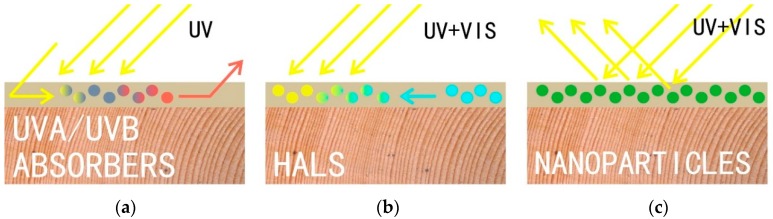
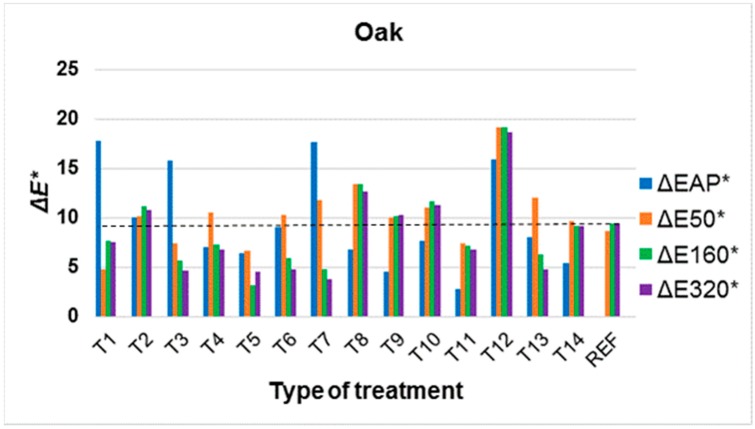
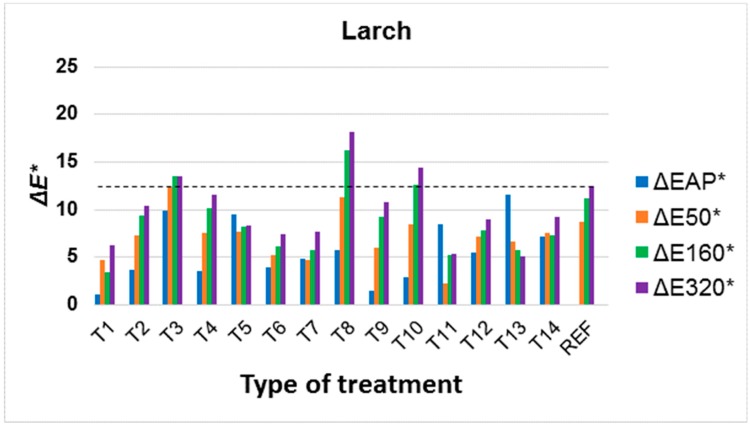
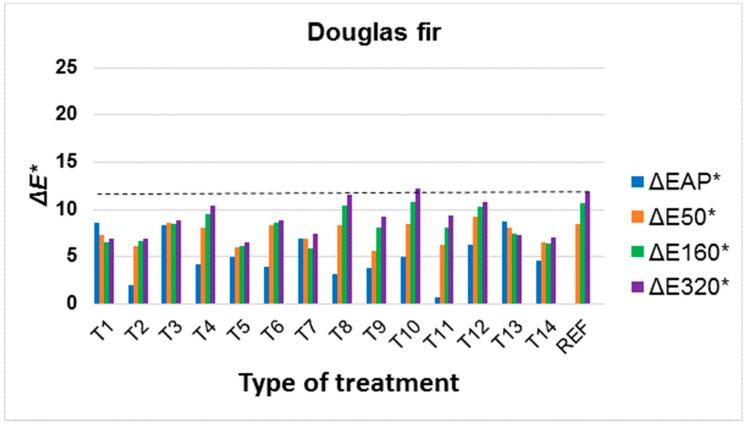
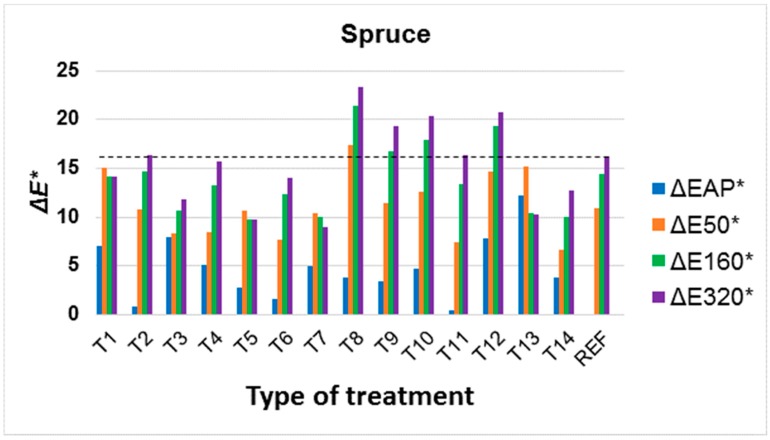
Colour changes and associated wood degradation in exterior and interior applications influenced by ultraviolet (UV) and visible radiation (VIS) decreases the aesthetic value of the products and shortens the overall life of transparent coatings. The aim of the paper is to achieve colour stabilization of oak, larch, Douglas fir and spruce heartwood via surface treatment with UV stabilizers, hindered amine light stabilizers (HALS), nanoparticles TiO₂, ZnO, and mixtures thereof, during exposure to UV and VIS radiation. Colour changes were evaluated during accelerated artificial ageing testing in Xenotest. The distinctly individual character of colour changes in surface treatments due to the underlying wood species was confirmed. A synergistic effect was found when using a combination of active substances compared to substances used individually. The mixture of benzotriazoles with HALS (Tinuvin 5151) in combination with TiO₂ and ZnO nanoparticles was confirmed as one of the most effective treatments for colour stabilization of wood due to UV and VIS spectrums.
紫外线(UV)和可见光辐射(VIS)对室内外应用中木材的颜色变化及相关降解产生影响,降低了产品的美学价值,并缩短了透明涂层的整体使用寿命。本文的目的是在暴露于UV和VIS辐射期间,通过用紫外线稳定剂、受阻胺光稳定剂(HALS)、纳米颗粒TiO₂、ZnO及其混合物进行表面处理,实现橡木、落叶松、花旗松和云杉心材的颜色稳定。在氙灯试验箱中进行加速人工老化测试期间评估颜色变化。证实了由于基础木材种类的不同,表面处理中颜色变化具有明显的个体特征。与单独使用的物质相比,当使用活性物质组合时发现了协同效应。苯并三唑与HALS(Tinuvin 5151)的混合物与TiO₂和ZnO纳米颗粒的组合被确认为由于UV和VIS光谱而对木材颜色稳定最有效的处理方法之一。