Mantelakis Angelos, Iosifidis Michalis, Al-Bitar Zaid B, Antoniadis Vyron, Wertheim David, Garagiola Umberto, Naini Farhad B
London and South East Foundation School, London, UK.
2St George's University of London, London, UK.
Maxillofac Plast Reconstr Surg. 2018 Sep 5;40(1):20. doi: 10.1186/s40902-018-0161-5. eCollection 2018 Dec.
In the absence of clear guidelines for facial aesthetic surgery, most surgeons rely on expert intuitive judgement when planning aesthetic and reconstructive surgery. One of the most famous theories regarding "ideal" facial proportions is that of the golden proportion. However, there are conflicting opinions as to whether it can be used to assess facial attractiveness. The aim of this investigation was to assess facial ratios of professional black models and to compare the ratios with the golden proportion.
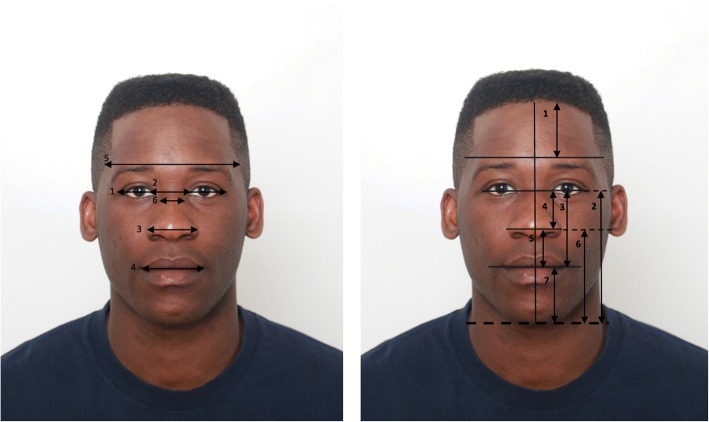
Forty photographs of male and female professional black models were collected. Observers were asked to assign a score from 1 to 10 (1 = not very attractive, 10 = very attractive). A total of 287 responses were analysed for grading behaviour according to various demographic factors by two groups of observers. The best graded photographs were compared with the least well-graded photographs to identify any differences in their facial ratios. The models' facial ratios were calculated and compared with the golden proportion.
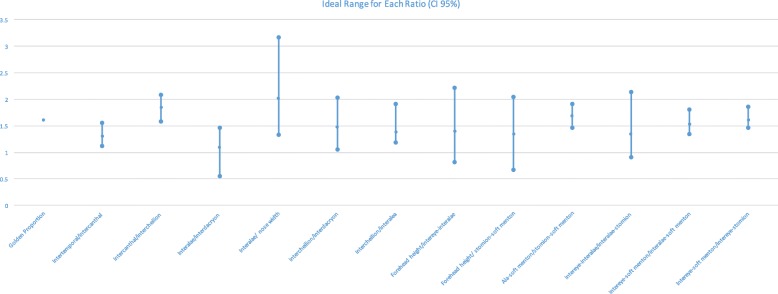
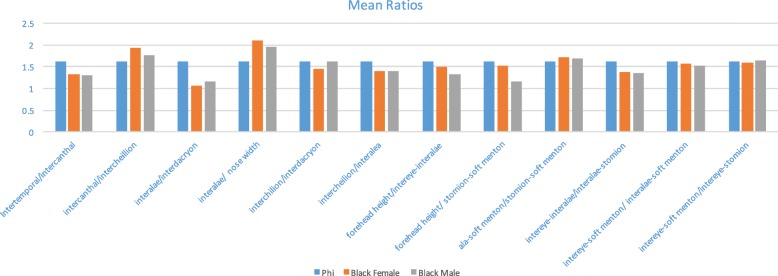
Differences in grading behaviour were observed amongst the two assessment groups. Only one out of the 12 facial ratios was not significantly different from the golden proportion.
Only one facial ratio was observed to be similar to the golden proportion in professional model facial photographs. No correlation was found between facial ratios in professional black models with the golden proportion. It is proposed that an individualistic treatment for each ratio is a rather better method to guide future practice.
在缺乏面部美容手术明确指南的情况下,大多数外科医生在规划美容和重建手术时依赖专家的直观判断。关于“理想”面部比例最著名的理论之一是黄金比例。然而,对于它是否可用于评估面部吸引力存在相互矛盾的观点。本研究的目的是评估职业黑人模特的面部比例,并将这些比例与黄金比例进行比较。
收集了40张职业黑人模特的男性和女性照片。要求观察者从1到10分进行评分(1分 = 不太有吸引力,10分 = 非常有吸引力)。两组观察者根据各种人口统计学因素对总共287份回复进行了分级行为分析。将评分最高的照片与评分最低的照片进行比较,以确定它们面部比例的任何差异。计算模特的面部比例并与黄金比例进行比较。
在两个评估组之间观察到分级行为的差异。12个面部比例中只有一个与黄金比例没有显著差异。
在职业模特面部照片中,仅观察到一个面部比例与黄金比例相似。职业黑人模特的面部比例与黄金比例之间未发现相关性。建议针对每个比例采用个性化治疗是指导未来实践的更好方法。