Howard Hughes Medical Institute, University of California, Los Angeles, CA 90095-1662.
Department of Biological Chemistry, University of California, Los Angeles, CA 90095-1662.
Proc Natl Acad Sci U S A. 2018 Sep 25;115(39):E9135-E9144. doi: 10.1073/pnas.1812117115. Epub 2018 Sep 12.
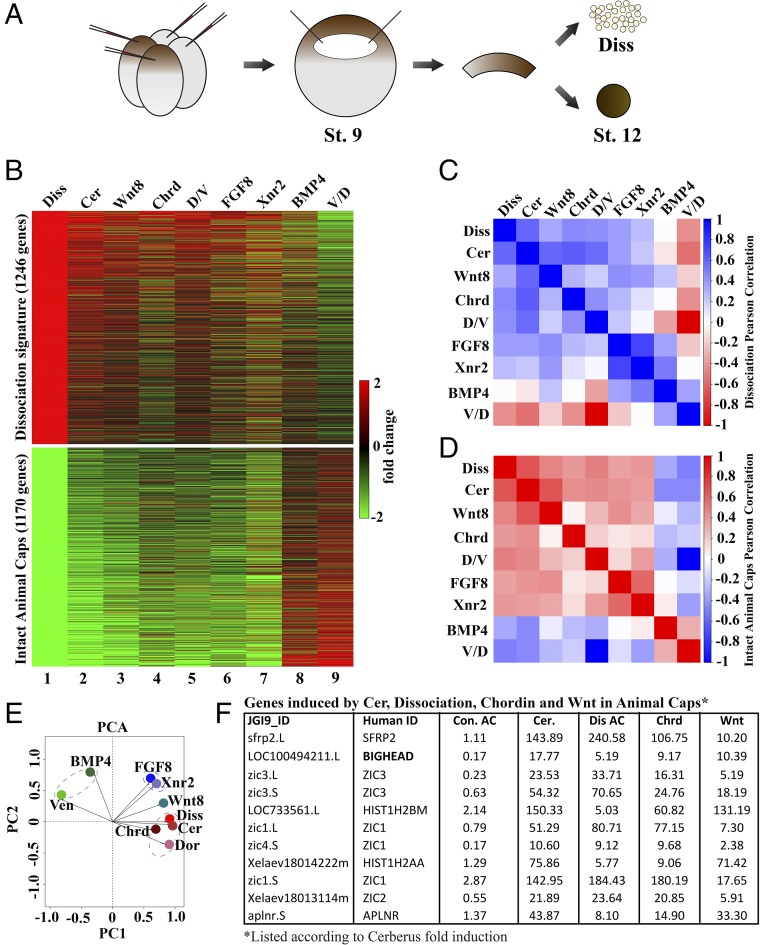
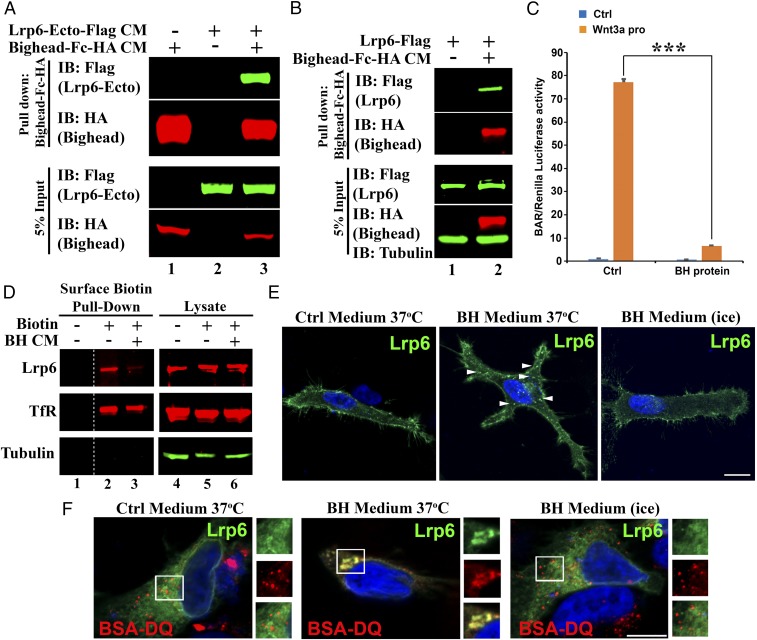
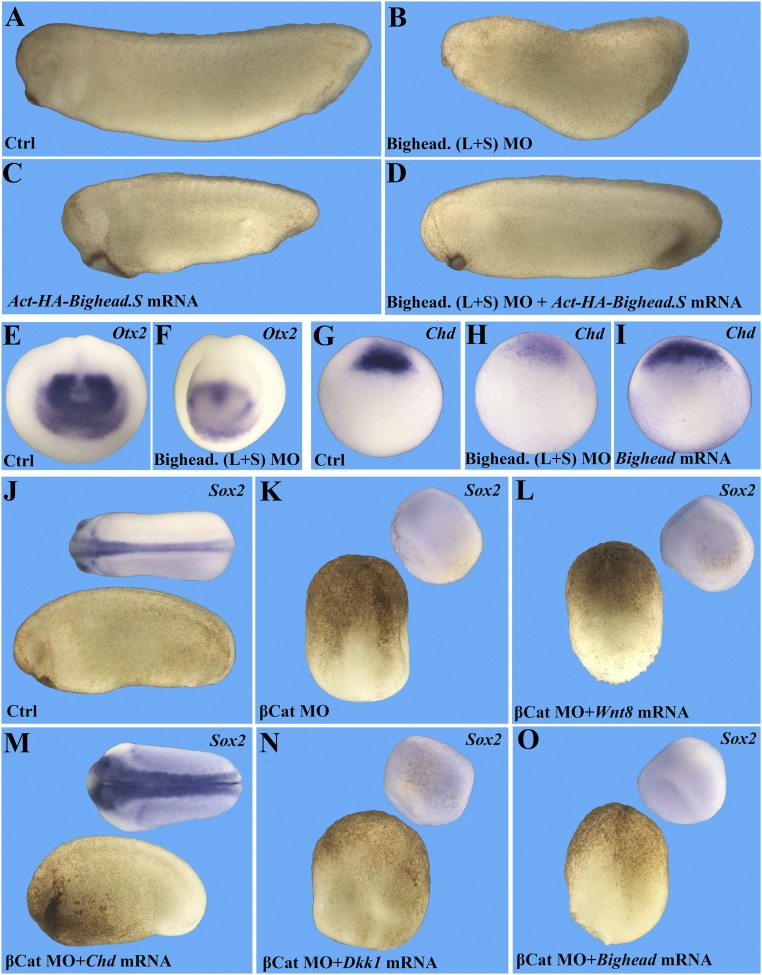
The embryo has been subjected to almost saturating screens for molecules specifically expressed in dorsal Spemann organizer tissue. In this study, we performed high-throughput RNA sequencing of ectodermal explants, called animal caps, which normally give rise to epidermis. We analyzed dissociated animal cap cells that, through sustained activation of MAPK, differentiate into neural tissue. We also microinjected mRNAs for Cerberus, Chordin, FGF8, BMP4, Wnt8, and Xnr2, which induce neural or other germ layer differentiations. The searchable database provided here represents a valuable resource for the early vertebrate cell differentiation. These analyses resulted in the identification of a gene present in frog and fish, which we call Bighead. Surprisingly, at gastrula, it was expressed in the Spemann organizer and endoderm, rather than in ectoderm as we expected. Despite the plethora of genes already mined from Spemann organizer tissue, Bighead encodes a secreted protein that proved to be a potent inhibitor of Wnt signaling in a number of embryological and cultured cell signaling assays. Overexpression of Bighead resulted in large head structures very similar to those of the well-known Wnt antagonists Dkk1 and Frzb-1. Knockdown of Bighead with specific antisense morpholinos resulted in embryos with reduced head structures, due to increased Wnt signaling. Bighead protein bound specifically to the Wnt coreceptor lipoprotein receptor-related protein 6 (Lrp6), leading to its removal from the cell surface. Bighead joins two other Wnt antagonists, Dkk1 and Angptl4, which function as Lrp6 endocytosis regulators. These results suggest that endocytosis plays a crucial role in Wnt signaling.
胚胎已经接受了几乎饱和的筛选,以寻找在背部 Spemann 组织者组织中特异性表达的分子。在这项研究中,我们对称为动物帽的外胚层外植体进行了高通量 RNA 测序,动物帽通常会产生表皮。我们分析了分离的动物帽细胞,这些细胞通过持续激活 MAPK 分化为神经组织。我们还微注射了 Cerberus、Chordin、FGF8、BMP4、Wnt8 和 Xnr2 的 mRNA,这些 mRNA 诱导神经或其他胚层分化。这里提供的可搜索数据库是早期脊椎动物细胞分化的宝贵资源。这些分析确定了一个在青蛙和鱼类中存在的基因,我们称之为大头。令人惊讶的是,在原肠胚期,它在 Spemann 组织者和内胚层中表达,而不是我们预期的外胚层中表达。尽管已经从 Spemann 组织者组织中挖掘出了大量的基因,但大头编码一种分泌蛋白,该蛋白在许多胚胎学和培养细胞信号转导测定中被证明是 Wnt 信号的有效抑制剂。大头的过表达导致头部结构非常大,类似于众所周知的 Wnt 拮抗剂 Dkk1 和 Frzb-1。用特异性反义 morpholino 敲低大头会导致头部结构减少,这是由于 Wnt 信号增加所致。大头蛋白特异性结合 Wnt 核心受体脂蛋白受体相关蛋白 6 (Lrp6),导致其从细胞表面去除。大头加入了另外两种 Wnt 拮抗剂 Dkk1 和 Angptl4,它们作为 Lrp6 内吞作用调节剂发挥作用。这些结果表明内吞作用在 Wnt 信号转导中起着至关重要的作用。