Wang Xia, Guan Ruijuan, Zhao Xiaomei, Zhu Danian, Song Nana, Shen Linlin
Department of Physiology and Pathophysiology, School of Basic Medical Sciences, Fudan University, Shanghai, China.
Division of Nephrology, Zhongshan Hospital, Fudan University, Shanghai, China.
Front Cell Neurosci. 2018 Aug 29;12:285. doi: 10.3389/fncel.2018.00285. eCollection 2018.
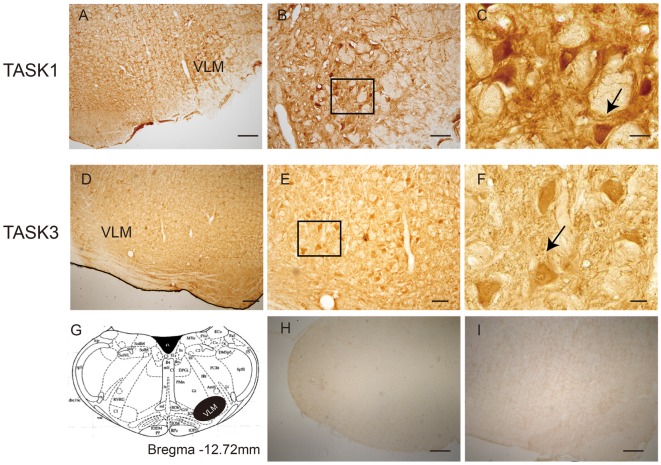
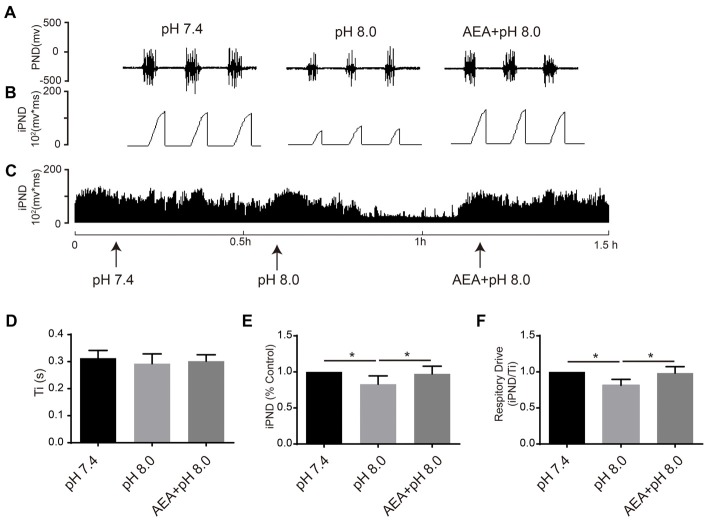
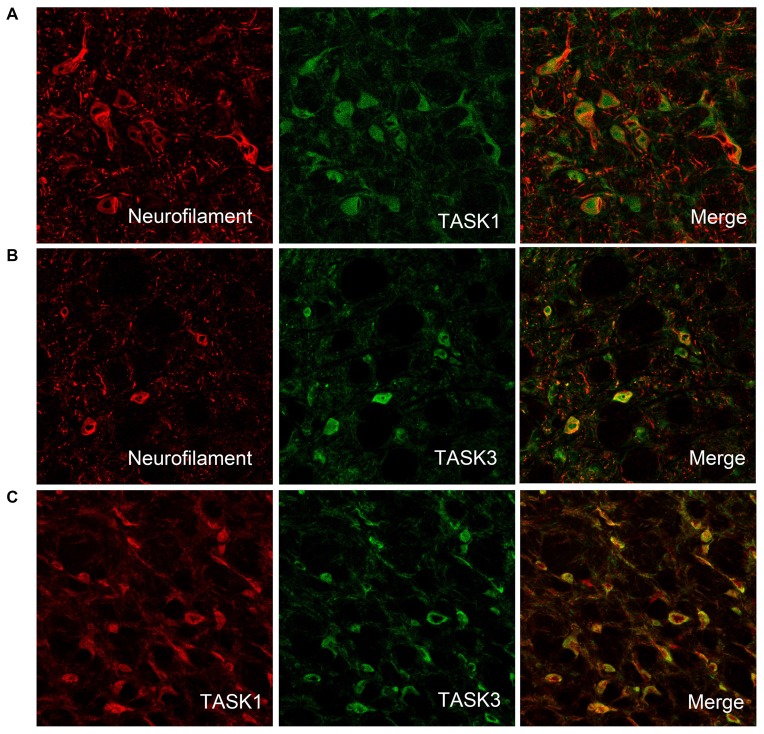
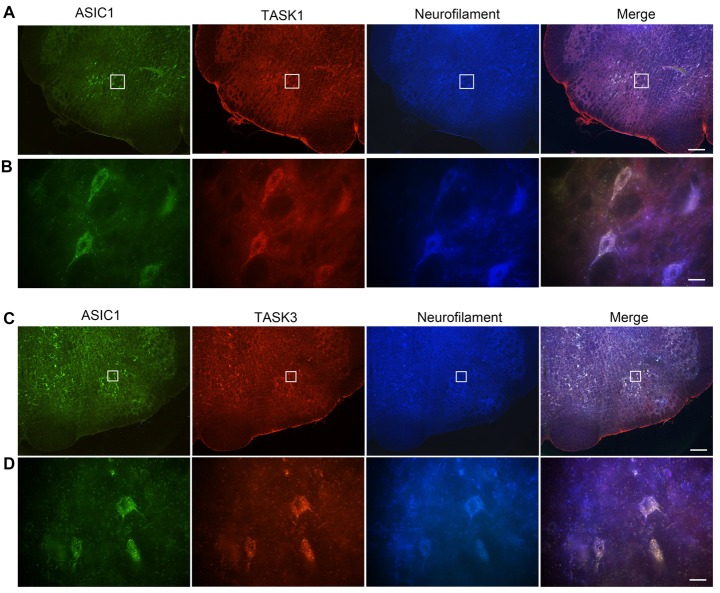
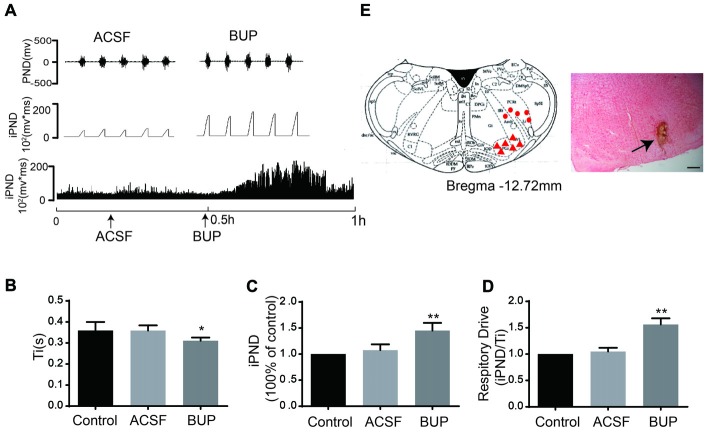
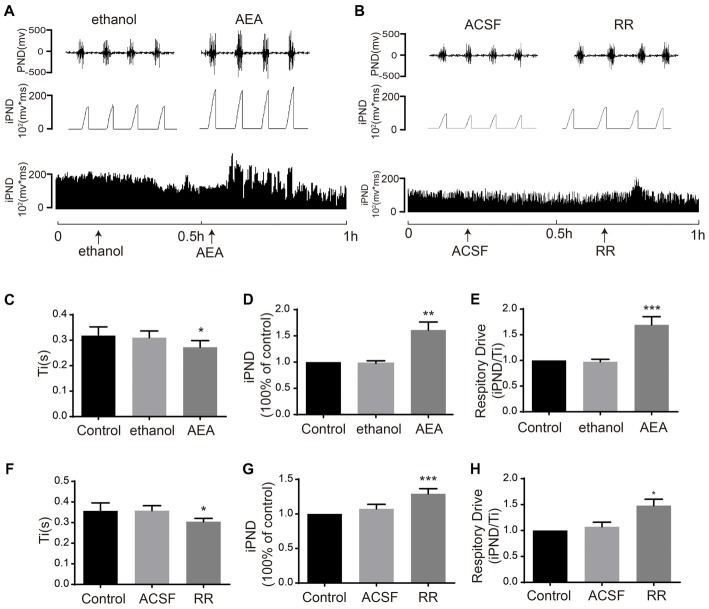
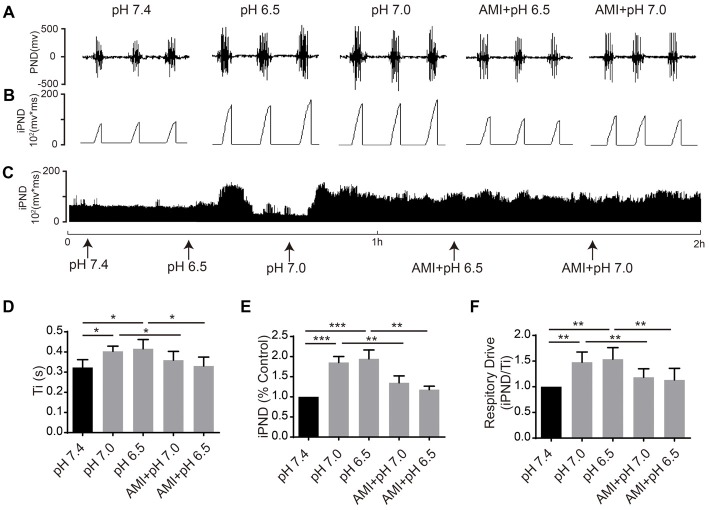
The ventrolateral medulla (VLM), including the lateral paragigantocellular nucleus (LPGi) and rostral VLM (RVLM), is commonly considered to be a chemosensitive region. However, the specific mechanism of chemoreception in the VLM remains elusive. Acid-sensing ion channels (ASICs), a family of voltage-independent proton-gated cation channels, can be activated by an external pH decrease to cause Na entry and induce neuronal excitability. TWIK-related acid-sensitive potassium channels (TASKs) are members of another group of pH-sensitive channels; in contrast to AISICs, they can be stimulated by pH increases and are inhibited by pH decreases in the physiological range. Our previous study demonstrated that ASICs take part in chemoreception. The aims of this study are to explore whether TASKs participate in the acid sensitivity of neurons in the VLM, thereby cooperating with ASICs. Our research demonstrated that TASKs, including TASK1 and TASK3, are colocalized with ASIC1 in VLM neurons. Blocking TASKs by microinjection of the non-selective TASK antagonist bupivacaine (BUP), specific TASK1 antagonist anandamide (AEA) or specific TASK3 antagonist ruthenium red (RR) into the VLM increased the integrated phrenic nerve discharge (iPND), shortened the inspiratory time (Ti) and enhanced the respiratory drive (iPND/Ti). In addition, microinjection of artificial cerebrospinal fluid (ACSF) at a pH of 7.0 or 6.5 prolonged Ti, increased iPND and enhanced respiratory drive, which were inhibited by the ASIC antagonist amiloride (AMI). By contrast, microinjection of alkaline ACSF decreased iPND and respiratory drive, which were inhibited by AEA. Taken together, our data suggest that TASK1 and TASK3 are coexpressed with ASIC1 in the VLM. Moreover, TASK1 and TASK3 contribute to the central regulation of breathing by coordinating with each other to perceive local pH changes; these results indicate a novel chemosensitive mechanism of the VLM.
延髓腹外侧区(VLM),包括外侧巨细胞旁核(LPGi)和延髓头端腹外侧区(RVLM),通常被认为是一个化学感受区。然而,VLM中化学感受的具体机制仍不清楚。酸敏感离子通道(ASICs)是一类非电压依赖性质子门控阳离子通道,可被细胞外pH值降低激活,导致钠离子内流并诱导神经元兴奋性。TWIK相关酸敏感钾通道(TASKs)是另一类pH敏感通道的成员;与ASICs不同,它们可被pH值升高刺激,并在生理范围内被pH值降低抑制。我们之前的研究表明ASICs参与化学感受。本研究的目的是探讨TASKs是否参与VLM中神经元的酸敏感性,从而与ASICs协同作用。我们的研究表明,包括TASK1和TASK3在内的TASKs与ASIC1在VLM神经元中共定位。通过向VLM中微量注射非选择性TASK拮抗剂布比卡因(BUP)、特异性TASK1拮抗剂花生四烯乙醇胺(AEA)或特异性TASK3拮抗剂钌红(RR)来阻断TASKs,可增加膈神经放电积分(iPND)、缩短吸气时间(Ti)并增强呼吸驱动(iPND/Ti)。此外,微量注射pH值为7.0或6.5的人工脑脊液(ACSF)可延长Ti、增加iPND并增强呼吸驱动,这些作用被ASIC拮抗剂阿米洛利(AMI)抑制。相比之下,微量注射碱性ACSF可降低iPND和呼吸驱动,这些作用被AEA抑制。综上所述,我们的数据表明TASK1和TASK3与ASIC1在VLM中共表达。此外,TASK1和TASK3通过相互协调以感知局部pH值变化,从而对呼吸进行中枢调节;这些结果表明VLM存在一种新的化学感受机制。