Qian Shehua, Yang Yongmei, Li Na, Cheng Tingting, Wang Xiaowei, Liu Jianping, Li Xuejun, Desiderio Dominic M, Zhan Xianquan
Key Laboratory of Cancer Proteomics of Chinese Ministry of Health, Xiangya Hospital, Central South University, Changsha, China.
Hunan Engineering Laboratory for Structural Biology and Drug Design, Xiangya Hospital, Central South University, Changsha, China.
Front Endocrinol (Lausanne). 2018 Aug 28;9:468. doi: 10.3389/fendo.2018.00468. eCollection 2018.
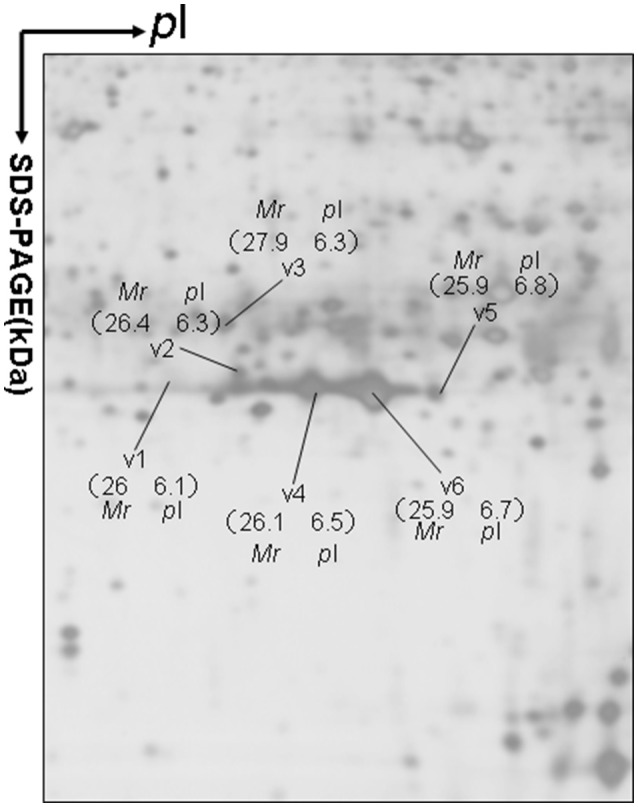
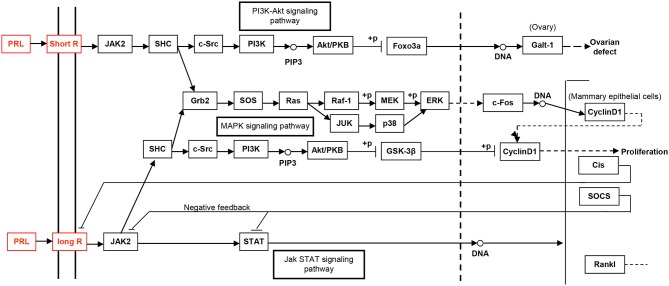
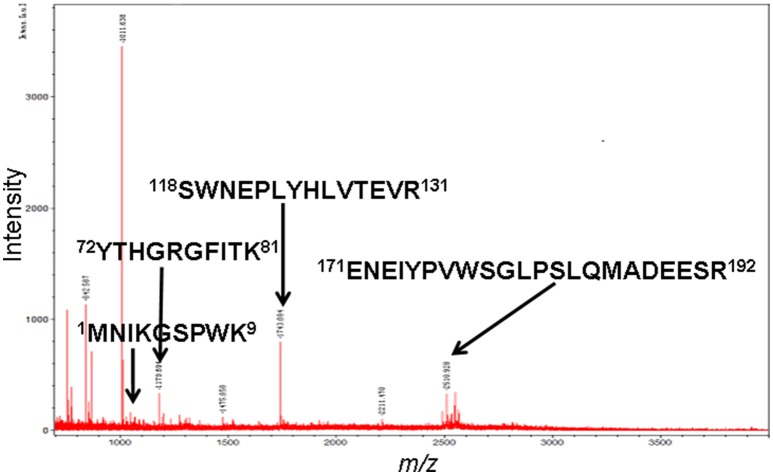
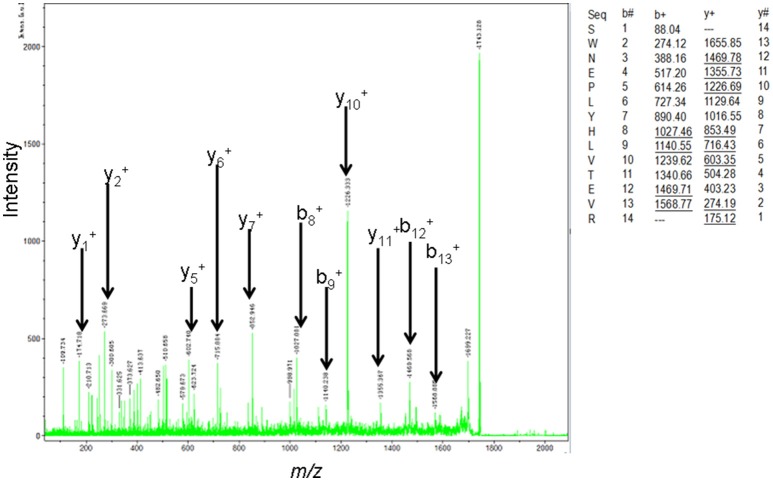
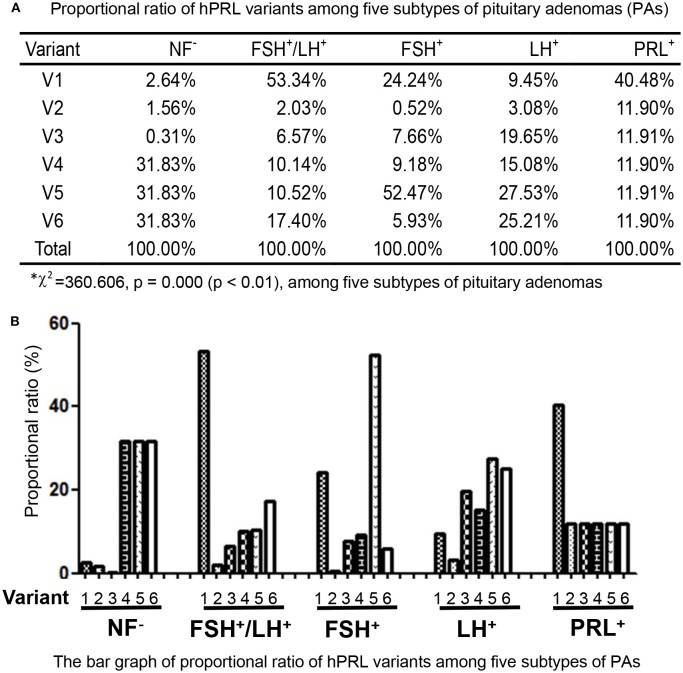
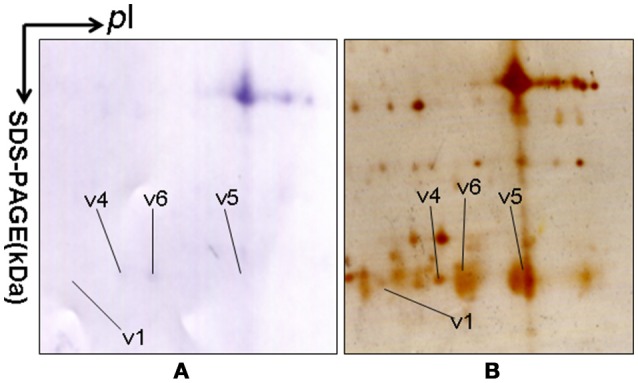
Human prolactin (hPRL) plays multiple roles in growth, metabolism, development, reproduction, and immunoregulation, which is an important protein synthesized in a pituitary. Two-dimensional gel electrophoresis (2DE) is an effective method in identity of protein variants for in-depth insight into functions of that protein. 2DE, 2DE-based PRL-immunoblot, mass spectrometry, and bioinformatics were used to analyze hPRL variants in human normal (control; = 8) pituitaries and in five subtypes of pituitary adenomas [NF ( = 3)-, FSH ( = 3)-, LH ( = 3)-, FSH/LH ( = 3)-, and PRL ( = 3)-adenomas]. Six hPRL variants were identified with different isoelectric point (I)-relative molecular mass ( ) distribution on a 2DE pattern, including variants V1 (I 6.1; 26.0 kDa), V2 (I 6.3; 26.4 kDa), V3 (I 6.3; 27.9 kDa), V4 (I 6.5; 26.1 kDa), V5 (I 6.8; 25.9 kDa), and V6 (I 6.7; 25.9 kDa). Compared to controls, except for variants V2-V6 in PRL-adenomas, V2 in FSH-adenomas, and V3 in NF-adenomas, the other PRL variants were significantly downregulated in each subtype of pituitary adenomas. Moreover, the pattern of those six PRL variants was significantly different among five subtypes of pituitary adenomas relative to control pituitaries. Different hPRL variants might be involved in different types of PRL receptor-signaling pathways in a given condition. Those findings clearly revealed the existence of six hPRL variants in human pituitaries, and the pattern changes of six hPRL variants among different subtypes of pituitary adenomas, which provide novel clues to further study the functions, and mechanisms of action, of hPRL in human pituitary and in PRL-related diseases, and the potential clinical value in pituitary adenomas.
人催乳素(hPRL)在生长、代谢、发育、生殖和免疫调节中发挥多种作用,它是在垂体中合成的一种重要蛋白质。二维凝胶电泳(2DE)是鉴定蛋白质变体的有效方法,有助于深入了解该蛋白质的功能。采用2DE、基于2DE的PRL免疫印迹、质谱分析和生物信息学方法,分析人正常垂体(对照组;n = 8)以及五种垂体腺瘤亚型[无功能型(n = 3)、促卵泡激素型(n = 3)、促黄体生成素型(n = 3)、促卵泡激素/促黄体生成素混合型(n = 3)和催乳素型(n = 3)腺瘤]中的hPRL变体。在2DE图谱上鉴定出六种hPRL变体,它们具有不同的等电点(I)-相对分子质量(Mr)分布,包括变体V1(I 6.1;26.0 kDa)、V2(I 6.3;26.4 kDa)、V3(I 6.3;27.9 kDa)、V4(I 6.5;26.1 kDa)、V5(I 6.8;25.9 kDa)和V6(I 6.7;25.9 kDa)。与对照组相比,除催乳素型腺瘤中的变体V2-V6、促卵泡激素型腺瘤中的V2以及无功能型腺瘤中的V3外,其他PRL变体在各垂体腺瘤亚型中均显著下调。此外,相对于对照垂体,这六种PRL变体的模式在五种垂体腺瘤亚型中存在显著差异。在特定条件下,不同的hPRL变体可能参与不同类型的PRL受体信号通路。这些发现清楚地揭示了人垂体中存在六种hPRL变体,以及六种hPRL变体在不同垂体腺瘤亚型中的模式变化,为进一步研究hPRL在人垂体和PRL相关疾病中的功能、作用机制以及垂体腺瘤的潜在临床价值提供了新线索。