Wang Zhe, Zhao Kun, Hackert Thilo, Zöller Margot
Department of Oncology, First Affiliated Hospital of Guangdong Pharmaceutical University, Guangdong, China.
Pancreas Section, University Hospital of Surgery, Heidelberg, Germany.
Front Cell Dev Biol. 2018 Aug 28;6:97. doi: 10.3389/fcell.2018.00097. eCollection 2018.
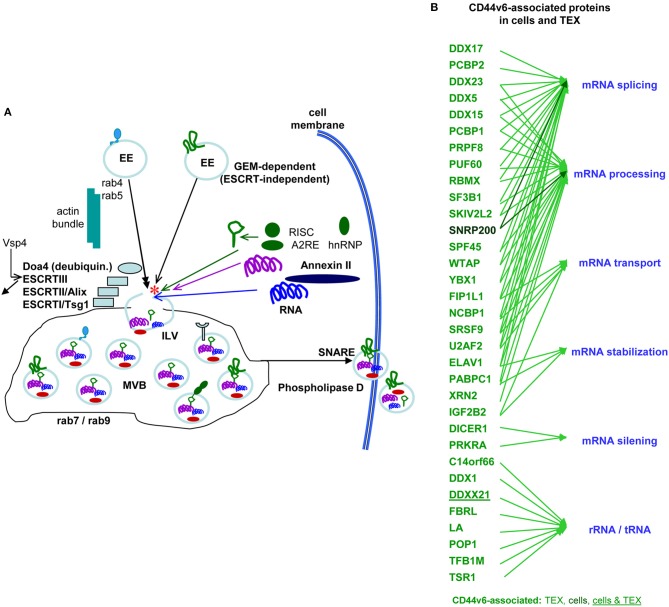
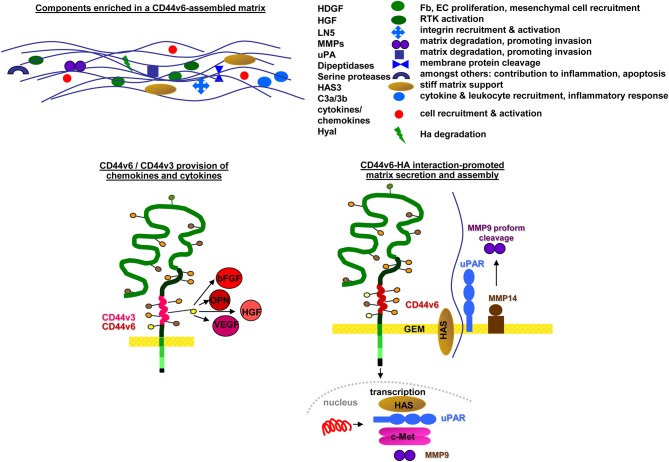
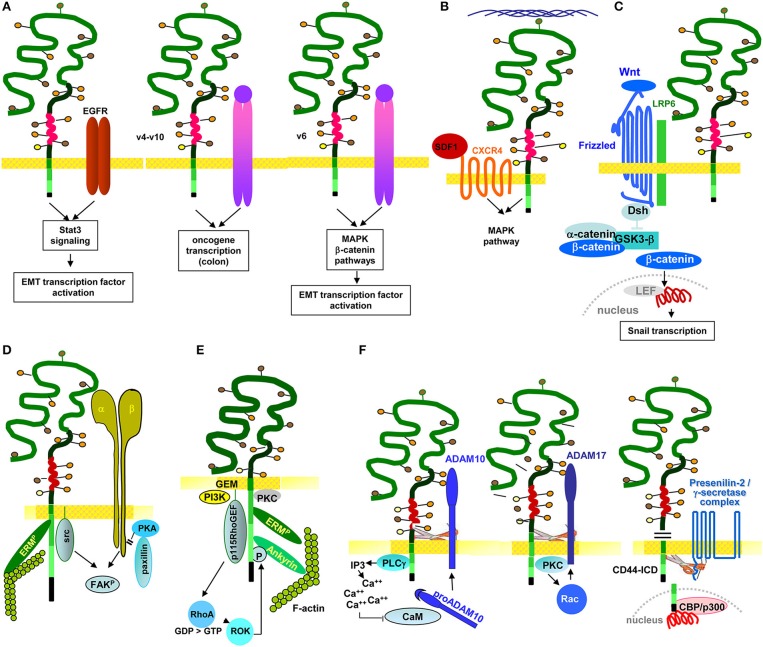
Metastasis is the leading cause of cancer death, tumor progression proceeding through emigration from the primary tumor, gaining access to the circulation, leaving the circulation, settling in distant organs and growing in the foreign environment. The capacity of a tumor to metastasize relies on a small subpopulation of cells in the primary tumor, so called cancer-initiating cells (CIC). CIC are characterized by sets of markers, mostly membrane anchored adhesion molecules, CD44v6 being the most frequently recovered marker. Knockdown and knockout models accompanied by loss of tumor progression despite unaltered primary tumor growth unraveled that these markers are indispensable for CIC. The unexpected contribution of marker molecules to CIC-related activities prompted research on underlying molecular mechanisms. This review outlines the contribution of CD44, particularly CD44v6 to CIC activities. A first focus is given to the impact of CD44/CD44v6 to inherent CIC features, including the crosstalk with the niche, apoptosis-resistance, and epithelial mesenchymal transition. Following the steps of the metastatic cascade, we report on supporting activities of CD44/CD44v6 in migration and invasion. These CD44/CD44v6 activities rely on the association with membrane-integrated and cytosolic signaling molecules and proteases and transcriptional regulation. They are not restricted to, but most pronounced in CIC and are tightly regulated by feedback loops. Finally, we discuss on the engagement of CD44/CD44v6 in exosome biogenesis, loading and delivery. exosomes being the main acteurs in the long-distance crosstalk of CIC with the host. In brief, by supporting the communication with the niche and promoting apoptosis resistance CD44/CD44v6 plays an important role in CIC maintenance. The multifaceted interplay between CD44/CD44v6, signal transducing molecules and proteases facilitates the metastasizing tumor cell journey through the body. By its engagement in exosome biogenesis CD44/CD44v6 contributes to disseminated tumor cell settlement and growth in distant organs. Thus, CD44/CD44v6 likely is the most central CIC biomarker.
转移是癌症死亡的主要原因,肿瘤进展过程包括从原发肿瘤迁移、进入循环系统、离开循环系统、在远处器官定居并在异质环境中生长。肿瘤的转移能力依赖于原发肿瘤中的一小部分细胞亚群,即所谓的癌症起始细胞(CIC)。CIC具有一系列标志物特征,大多是膜锚定黏附分子,其中CD44v6是最常检测到的标志物。敲低和敲除模型显示,尽管原发肿瘤生长未改变,但肿瘤进展却出现缺失,这表明这些标志物对CIC不可或缺。标志物分子对CIC相关活动的意外作用促使人们对其潜在分子机制展开研究。本综述概述了CD44,尤其是CD44v6对CIC活动的作用。首先关注CD44/CD44v6对CIC固有特征的影响,包括与微环境的相互作用、抗凋亡能力和上皮-间质转化。按照转移级联的步骤,我们报告了CD44/CD44v6在迁移和侵袭中的支持作用。这些CD44/CD44v6活动依赖于与膜整合和胞质信号分子、蛋白酶以及转录调控的关联。它们不仅限于CIC,但在CIC中最为显著,并受到反馈回路的严格调控。最后,我们讨论了CD44/CD44v6在外泌体生物发生、装载和传递中的作用。外泌体是CIC与宿主进行长距离相互作用的主要参与者。简而言之,通过支持与微环境的通讯并促进抗凋亡能力,CD44/CD44v6在CIC维持中发挥重要作用。CD44/CD44v6、信号转导分子和蛋白酶之间的多方面相互作用促进了转移肿瘤细胞在体内的迁移过程。通过参与外泌体生物发生,CD44/CD44v6有助于播散肿瘤细胞在远处器官的定居和生长。因此,CD44/CD44v6可能是最核心的CIC生物标志物。