Zhao Wenyi, Che Chengye, Liu Kuixiang, Zhang Jie, Jiang Nan, Yuan Kelan, Zhao Guiqiu
Department of Ophthalmology, The Affiliated Hospital of Qingdao University, Qingdao, China.
Department of Ophthalmology, The Eighth People's Hospital of Qingdao, Qingdao, China.
Cornea. 2018 Dec;37(12):1579-1585. doi: 10.1097/ICO.0000000000001756.
Fungal keratitis is a major cause of corneal ulcers, resulting in significant visual impairment and blindness. Fenretinide, a derivative of vitamin A, has been shown to suppress inflammation in a multitude of diseases. In this study, we aimed to characterize the effect of fenretinide in Aspergillus fumigatus keratitis of the eye in a mouse model.
In vivo and in vitro experiments were performed in mouse models and THP-1 macrophage cell cultures infected with A. fumigatus, respectively. Experimental subjects were first pretreated with fenretinide, and then the effect of the compound was assessed with clinical evaluation, neutrophil staining, myeloperoxidase assay, quantitative polymerase chain reaction (qRT-PCR), and western blot.
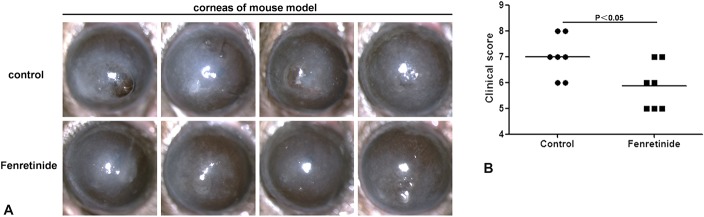
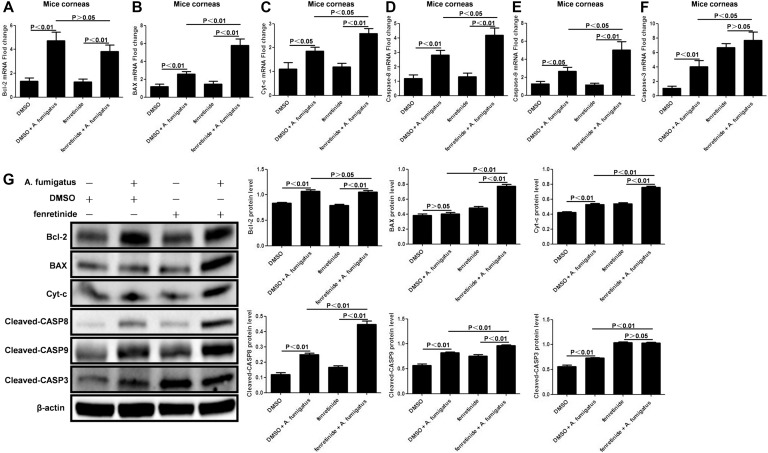
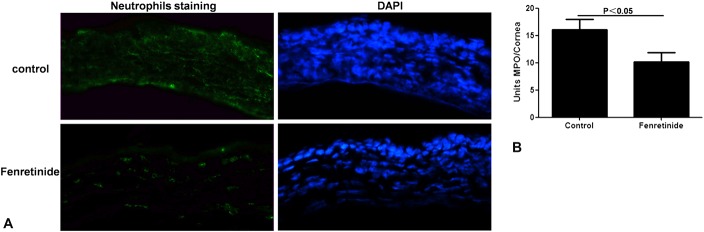
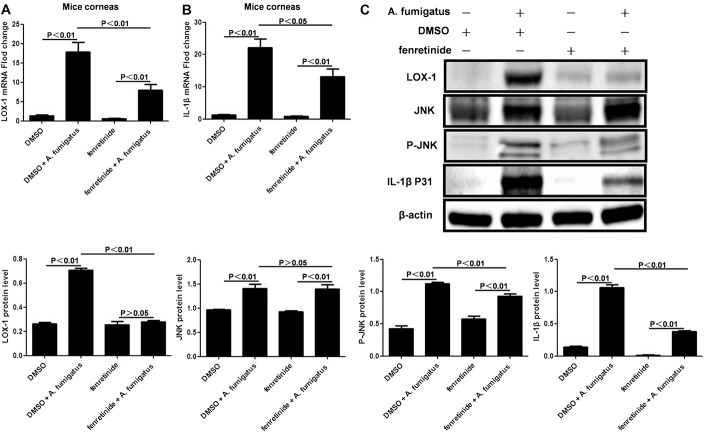
We confirmed that fenretinide contributed to protection of corneal transparency during early mouse A. fumigatus keratitis by reducing neutrophil recruitment, decreasing myeloperoxidase (MPO) levels and increasing apoptosis. Compared with controls, fenretinide impaired proinflammatory cytokine interleukin 1 beta (IL-1β) production in response to A. fumigatus exposure with contributions by lectin-type oxidized LDL receptor 1 (LOX-1) and c-Jun N-terminal kinase (JNK).
Together, these findings demonstrate that fenretinide may suppress inflammation through reduced neutrophil recruitment and inflammatory cytokine production in A. fumigatus keratitis.
真菌性角膜炎是角膜溃疡的主要病因,可导致严重的视力损害和失明。维甲酸,一种维生素A的衍生物,已被证明能抑制多种疾病中的炎症。在本研究中,我们旨在在小鼠模型中表征维甲酸对烟曲霉性角膜炎的影响。
分别在感染烟曲霉的小鼠模型和THP-1巨噬细胞培养物中进行体内和体外实验。实验对象首先用维甲酸预处理,然后通过临床评估、中性粒细胞染色、髓过氧化物酶测定、定量聚合酶链反应(qRT-PCR)和蛋白质印迹法评估该化合物的效果。
我们证实,维甲酸通过减少中性粒细胞募集、降低髓过氧化物酶(MPO)水平和增加细胞凋亡,有助于在小鼠早期烟曲霉性角膜炎期间保护角膜透明度。与对照组相比,维甲酸在烟曲霉暴露后损害促炎细胞因子白细胞介素1β(IL-1β)的产生,凝集素型氧化低密度脂蛋白受体1(LOX-1)和c-Jun氨基末端激酶(JNK)起作用。
总之,这些发现表明维甲酸可能通过减少烟曲霉性角膜炎中的中性粒细胞募集和炎性细胞因子产生来抑制炎症。