Almarzouki Hatim, Niazi Tamim, Hier Michael, Mlynarek Alex, Lavoie Isabelle, Sultanem Khalil
Oncology, McGill University Health Center, Montreal, CAN.
Oncology, Jewish General Hospital, Montreal, CAN.
Cureus. 2018 Jul 10;10(7):e2958. doi: 10.7759/cureus.2958.
Our purpose was to evaluate whether omitting high-dose clinical target volume radiation (CTV-HD) around the gross tumor volume (GTV) in patients with oropharyngeal squamous cell carcinoma (OSCC) treated with intensity-modulated radiotherapy (IMRT) was associated with increased local failure.
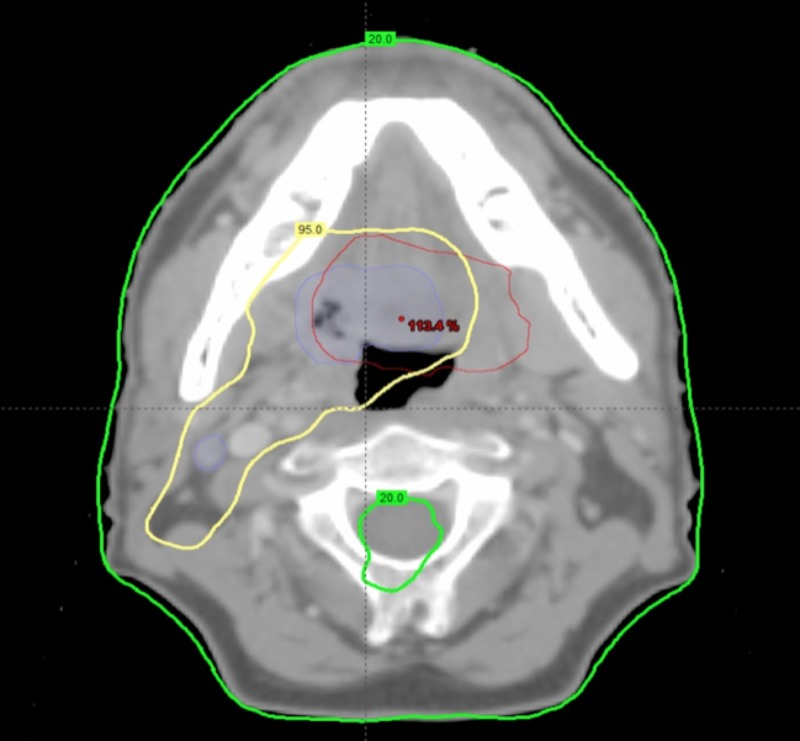
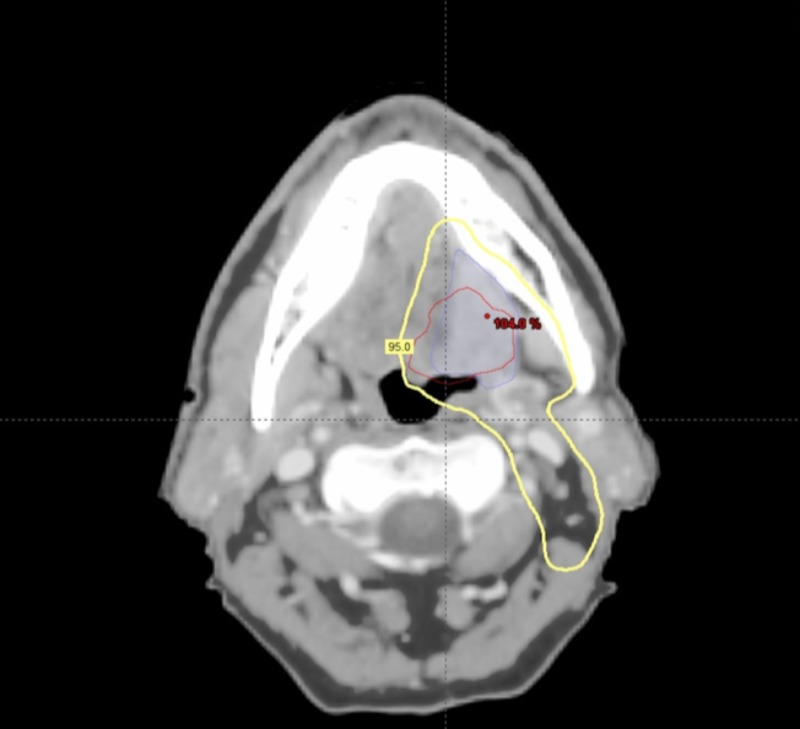
Patients diagnosed with stage I to stage IV OSCC between December 2004 and April 2017 were retrospectively reviewed. All patients were treated with radical radiotherapy using IMRT, with or without neoadjuvant or concurrent chemotherapy. In accordance with institution guidelines, CTV-HD was not used. Local failure was defined as disease persistence or reappearance at the primary tumor site. When primary failure was documented, the computed tomography/positron emission tomography (CT/PET) scan that showed primary failure was fused with the original treatment scan. Each recurrent tumor was contoured to evaluate the pattern of recurrence. Recurrences were categorized as in-field, marginal, or out-of-field if >95%, 20%-95%, or <20% of the recurrent tumor volume, respectively, was encompassed by the 95% high-dose prescription isodose line of the original treatment plan. We then determined whether omitting CTV-HD was associated with increased locoregional failure.
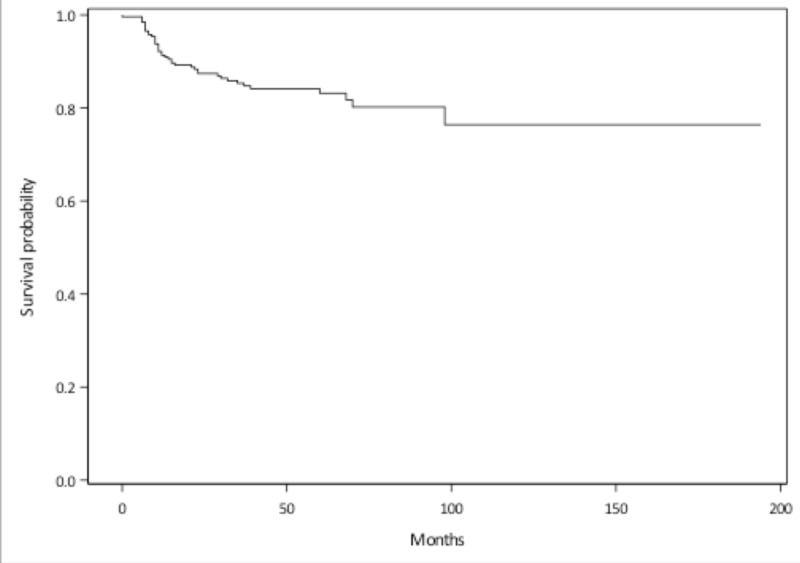
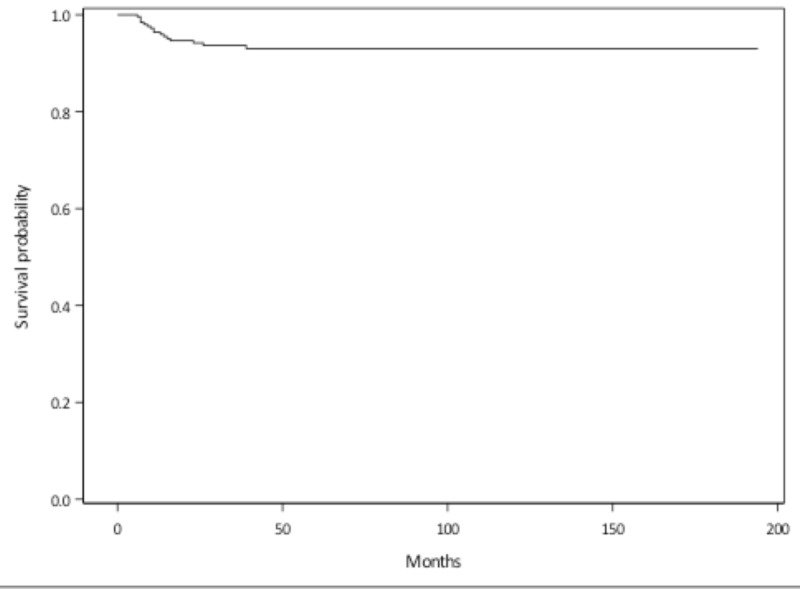
A total of 272 patients with OSCC were assessed. The median follow-up from initial treatment was 43 months (range: 3-194 months). Seven patients were lost to follow-up. The overall five-year survival rate was 87%. The three- and five-year disease-free survival rates were 86% and 83%, respectively. Forty-one patients had 53 treatment failures (16 were local, eight were regional, and 29 were distant; some patients had treatment failures in multiple locations). Fourteen (87.5%) of the local recurrences were in-field, one (6.25%) was marginal, and one (6.25%) was out-of-field.
Our analysis of patients with oropharyngeal cancer suggests that local failure is mostly in-field and potentially due to radioresistance, rather than a marginal miss of the tumor. It suggests that omitting CTV-HD is feasible and safe.
我们的目的是评估在接受调强放疗(IMRT)的口咽鳞状细胞癌(OSCC)患者中,在大体肿瘤体积(GTV)周围省略高剂量临床靶区放疗(CTV-HD)是否与局部复发增加相关。
回顾性分析2004年12月至2017年4月期间诊断为I期至IV期OSCC的患者。所有患者均接受了IMRT根治性放疗,联合或不联合新辅助或同步化疗。根据机构指南,未使用CTV-HD。局部复发定义为原发肿瘤部位的疾病持续存在或再次出现。当记录到原发失败时,将显示原发失败的计算机断层扫描/正电子发射断层扫描(CT/PET)扫描与原始治疗扫描融合。对每个复发性肿瘤进行轮廓勾画以评估复发模式。如果复发性肿瘤体积的>95%、20%-95%或<20%分别被原始治疗计划的95%高剂量处方等剂量线所包围,则复发被分类为野内、边缘或野外。然后我们确定省略CTV-HD是否与局部区域复发增加相关。
共评估了272例OSCC患者。从初始治疗开始的中位随访时间为43个月(范围:3-194个月)。7例患者失访。总体五年生存率为87%。三年和五年无病生存率分别为86%和83%。41例患者出现53次治疗失败(16例为局部,8例为区域,29例为远处;一些患者在多个部位出现治疗失败)。14例(87.5%)局部复发为野内复发,1例(6.25%)为边缘复发,1例(6.25%)为野外复发。
我们对口咽癌患者的分析表明,局部复发大多为野内复发,可能是由于放射抗性,而非肿瘤边缘遗漏。这表明省略CTV-HD是可行且安全的。