Department of Primary Care and Public Health, Imperial College London Charing Cross Campus, London, W6 8RP, UK.
Institute of Child Health, University College London, London, England.
BMC Med. 2018 Sep 17;16(1):151. doi: 10.1186/s12916-018-1142-3.
Universal health coverage (UHC) aims to improve child health through preventive primary care and vaccine coverage. Yet, in many developed countries with UHC, unplanned and ambulatory care sensitive (ACS) hospital admissions in childhood continue to rise. We investigated the relation between preventive primary care and risk of unplanned and ACS admission in children in a high-income country with UHC.
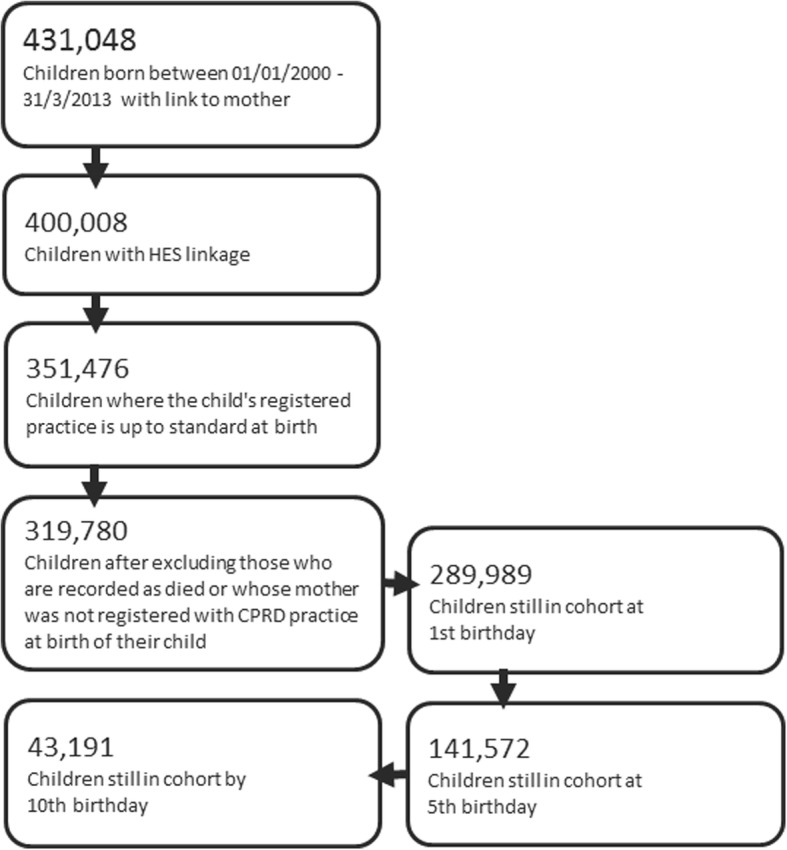
We followed 319,780 children registered from birth with 363 English practices in Clinical Practice Research Datalink linked to Hospital Episodes Statistics, born between January 2000 and March 2013. We used Cox regression estimating adjusted hazard ratios (HR) to examine subsequent risk of unplanned and ACS hospital admissions in children who received preventive primary care (development checks and vaccinations), compared with those who did not.
Overall, 98% of children had complete vaccinations and 87% had development checks. Unplanned admission rates were 259, 105 and 42 per 1000 child-years in infants (aged < 1 year), preschool (1-4 years) and primary school (5-9 years) children, respectively. Lack of preventive care was associated with more unplanned admissions. Infants with incomplete vaccination had increased risk for all unplanned admissions (HR 1.89, 1.79-2.00) and vaccine-preventable admissions (HR 4.41, 2.59-7.49). Infants lacking development checks had higher risk for unplanned admission (HR 4.63, 4.55-4.71). These associations persisted across childhood. Children who had higher consulting rates with primary care providers also had higher risk of unplanned admission (preschool children: HR 1.17, 1.17-1.17). One third of all unplanned admissions (62,154/183,530) were for ACS infectious illness. Children with chronic ACS conditions, asthma, diabetes or epilepsy had increased risk of unplanned admission (HR 1.90, 1.77-2.04, HR 11.43, 8.48-15.39, and HR 4.82, 3.93-5.91, respectively). These associations were modified in children who consulted more in primary care.
A high uptake of preventive primary care from birth is associated with fewer unplanned and ACS admissions in children. However, the clustering of poor health, a lack of preventive care uptake, and social deprivation puts some children with comorbid conditions at very high risk of admission. Strengthening immunisation coverage and preventive primary care in countries with poor UHC could potentially significantly reduce the health burden from hospital admission in children.
全民健康覆盖(UHC)旨在通过预防初级保健和疫苗接种来改善儿童健康。然而,在许多拥有 UHC 的发达国家,儿童的非计划性和门诊可避免的(ACS)住院仍然在增加。我们研究了在一个拥有 UHC 的高收入国家中,预防初级保健与儿童非计划性和 ACS 入院风险之间的关系。
我们对出生于 2000 年 1 月至 2013 年 3 月期间在临床实践研究数据库(Clinical Practice Research Datalink)注册的 363 家英语实践与医院发病统计(Hospital Episodes Statistics)相关联的 319780 名儿童进行了随访。我们使用 Cox 回归估计了调整后的危险比(HR),以检查接受预防初级保健(发育检查和疫苗接种)的儿童与未接受预防初级保健的儿童相比,随后发生非计划性和 ACS 住院的风险。
总体而言,98%的儿童完成了疫苗接种,87%的儿童进行了发育检查。婴儿(<1 岁)、学龄前(1-4 岁)和小学(5-9 岁)儿童的非计划性入院率分别为每 1000 儿童年 259、105 和 42 例。缺乏预防保健与更多的非计划性入院有关。未完成疫苗接种的婴儿所有非计划性入院(HR 1.89,1.79-2.00)和疫苗可预防入院(HR 4.41,2.59-7.49)的风险增加。未进行发育检查的婴儿非计划性入院风险更高(HR 4.63,4.55-4.71)。这些关联在整个儿童期都持续存在。与初级保健提供者咨询率较高的儿童非计划性入院风险也较高(学龄前儿童:HR 1.17,1.17-1.17)。所有非计划性入院的三分之一(62154/183530)是 ACS 传染性疾病。患有慢性 ACS 疾病、哮喘、糖尿病或癫痫的儿童非计划性入院风险增加(HR 1.90,1.77-2.04,HR 11.43,8.48-15.39,和 HR 4.82,3.93-5.91)。这些关联在在初级保健中咨询更多的儿童中有所改变。
从出生开始就大量接受预防初级保健与儿童非计划性和 ACS 入院的减少有关。然而,健康状况不佳、预防保健接受率低以及社会贫困等因素的集中,使一些患有合并症的儿童面临极高的入院风险。在 UHC 较差的国家加强免疫接种覆盖率和预防初级保健,可能会显著降低儿童因住院而带来的健康负担。