Institute of Pathology, Cancer Cluster Salzburg, Paracelsus Medical University/Salzburger Landeskliniken (PMU/SALK), Muellner Hauptstrasse 48, 5020 Salzburg, Austria.
Department of Surgery, Paracelsus Medical University/Salzburger Landeskliniken (PMU/SALK), Muellner Hauptstrasse 48, 5020 Salzburg, Austria.
Int J Mol Sci. 2018 Sep 15;19(9):2781. doi: 10.3390/ijms19092781.
Epigenetic factors are essentially involved in carcinogenesis, tumor promotion, and chemoresistance. Two epigenetic key players are miRNAs and histone deacetylases (HDACs). As previously shown by own theoretical databank analysis, the crosstalk between miRNAs and HDACs is relevant in different human chronic diseases and cancerogenic pathways. We aimed to investigate a potential connection between the expression of a well-defined subset of "proliferation-associated" miRNAs and the expression of HDACs as well as clinical parameters in pancreatic neuroendocrine tumors (pNETs).
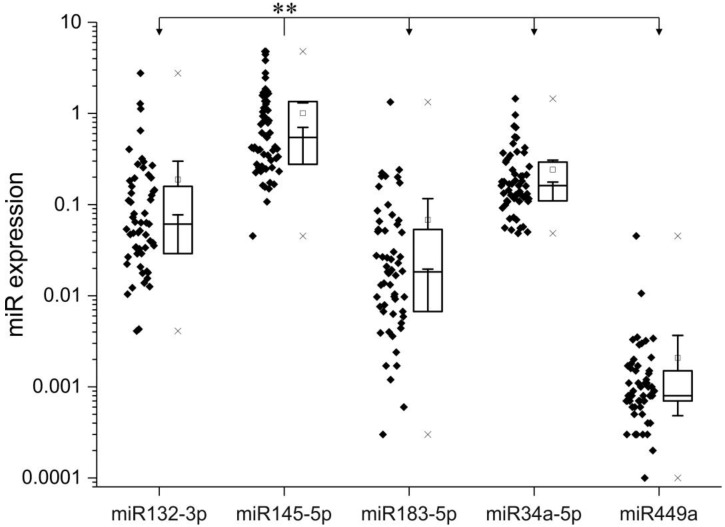
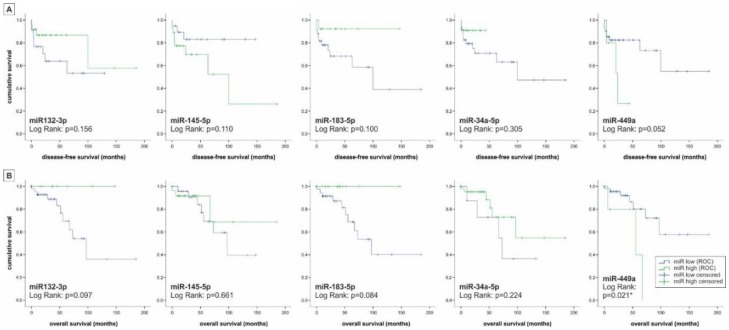
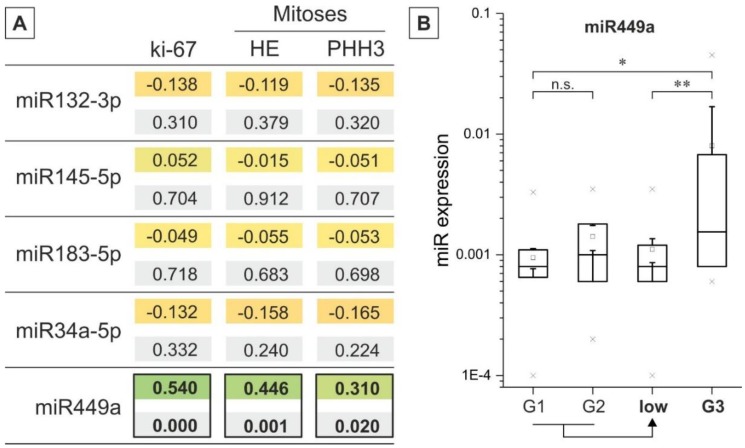
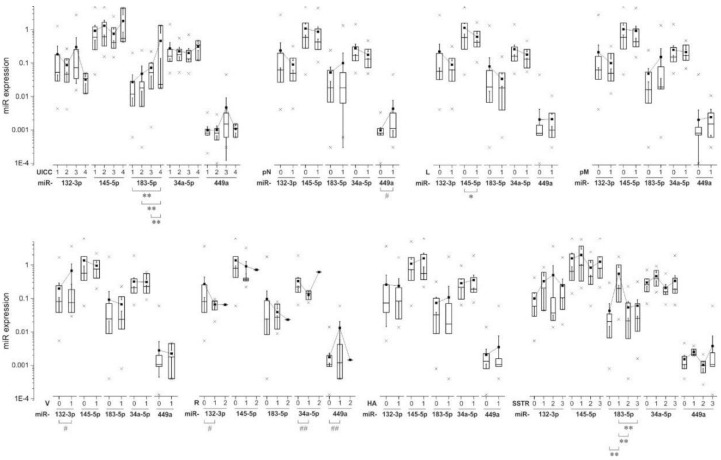
Expression levels of miRNA132-3p, miRNA145-5p, miRNA183-5p, miRNA34a-5p, and miRNA449a in 57 pNETs resected between 1997 and 2015 were measured and linked to the immunohistochemical expression pattern of members of the four HDAC classes on human tissue microarrays. All pNET cases were clinically and pathologically characterized according to published guidelines. Correlation analysis revealed a significant association between expression of specific miRNAs and two members of the HDAC family (HDAC3 and HDAC4). Additionally, a linkage between miRNA expression and clinico-pathological parameters like grading, TNM-staging, and hormone activity was found. Moreover, overall and disease-free survival is statistically correlated with the expression of the investigated miRNAs. Overall, we demonstrated that specific miRNAs could be linked to HDAC expression in pNETs. Especially miRNA449a (associated with HDAC3/4) seems to play an important role in pNET proliferation and could be a potential prognostic factor for poor survival. These first data could help, to improve our knowledge of the complex interactions of the epigenetic drivers in pNETs for further therapeutic approaches.
表观遗传因素本质上涉及致癌作用、肿瘤促进和化学抗性。两种表观遗传关键因素是 miRNA 和组蛋白去乙酰化酶 (HDACs)。如前所述,通过我们的理论数据库分析,miRNA 和 HDAC 之间的相互作用与不同的人类慢性疾病和致癌途径有关。我们旨在研究一组“增殖相关”miRNA 的表达与胰腺神经内分泌肿瘤 (pNET) 中 HDAC 表达以及临床参数之间的潜在联系。
测量了 1997 年至 2015 年间切除的 57 例 pNET 中 miRNA132-3p、miRNA145-5p、miRNA183-5p、miRNA34a-5p 和 miRNA449a 的表达水平,并将其与人类组织微阵列中四个 HDAC 类别的成员的免疫组织化学表达模式联系起来。所有 pNET 病例均根据已发表的指南进行临床和病理特征描述。相关性分析显示,特定 miRNA 的表达与 HDAC 家族的两个成员 (HDAC3 和 HDAC4) 之间存在显著关联。此外,miRNA 表达与分级、TNM 分期和激素活性等临床病理参数之间存在联系。此外,总生存率和无病生存率与所研究 miRNA 的表达呈统计学相关。总体而言,我们证明了特定 miRNA 可以与 pNET 中的 HDAC 表达相关。特别是 miRNA449a(与 HDAC3/4 相关)似乎在 pNET 增殖中发挥重要作用,可能是不良生存的潜在预后因素。这些初步数据有助于提高我们对 pNET 中表观遗传驱动因素复杂相互作用的认识,以进一步探索治疗方法。