Kafi Zahra, Cheshomi Hamid, Gholami Omid
Cellular and Molecular Research Center, Faculty of Medicine, Sabzevar University of Medical Sciences, Sabzevar, Iran.
Department of Biology, Faculty of Science, Ferdowsi University of Mashhad, Mashhad, Iran.
Dose Response. 2018 Sep 11;16(3):1559325818796014. doi: 10.1177/1559325818796014. eCollection 2018 Jul-Sep.
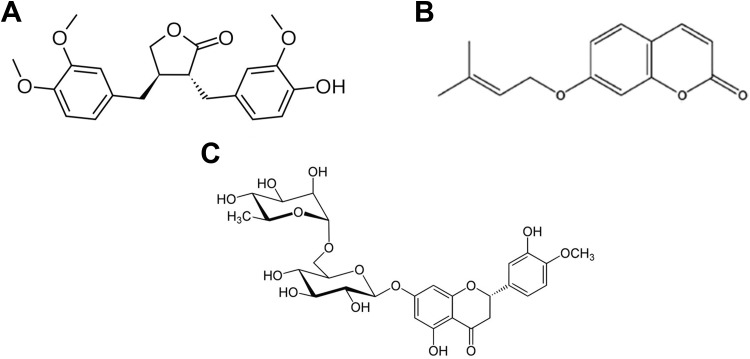
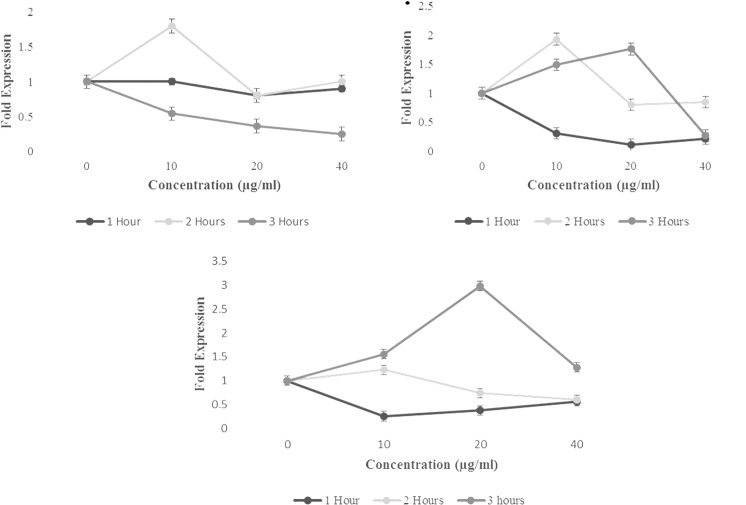
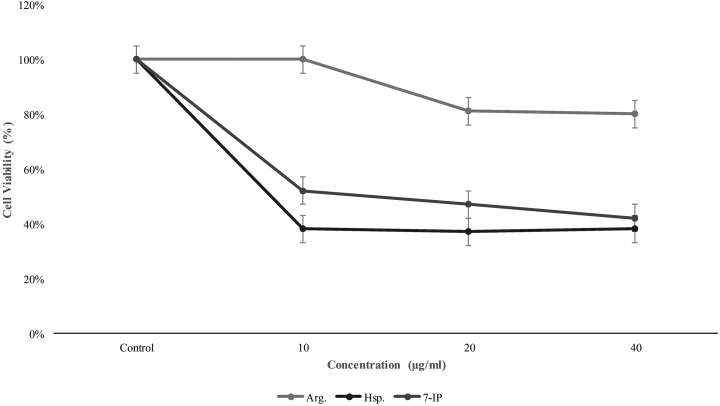
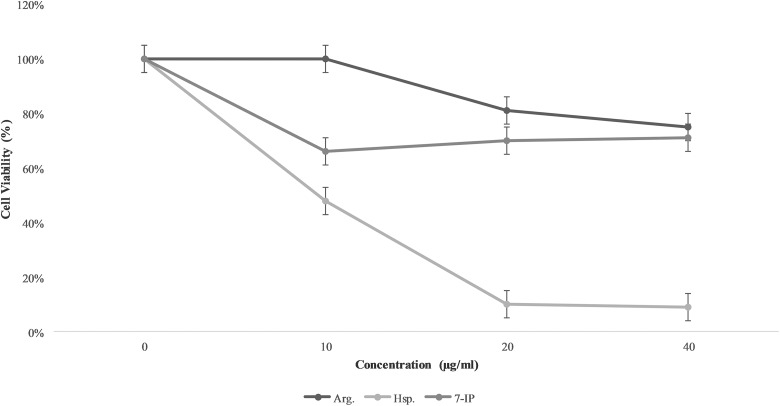
Hormesis is a new concept in dose-response relationship. Despite of traditional dose-response curves, there is a low-dose stimulation and a high-dose inhibition in this case. Hormesis effect in apoptosis induction/inhibition by natural compounds is reported previously. Here, we searched this effect for myeloid cell leukemia type-1 (Mcl-1) gene expression by phytochemicals 7-isopenthenyloxycoumarin (7-IP), arctigenin (Arg), and hesperidin (Hsp). For this purpose, first we tested the cytotoxicity of various doses of these compounds against K562 leukemia cell lines for different times by 3-(4,5-dimethylthiazol-2-yl)-2,5-diphenyltetrazolium bromide method. After that we explored the effect of various doses of these phytochemicals on Mcl-1 gene expression for different times by real-time polymerase chain reaction method. We found that these phytochemicals have cytotoxicity against K562 cell line. Hesperidin is the most cytotoxic agent. We also found that these natural compounds have hormetic effect on Mcl-1 gene expression. The hormetic model in Mcl-1 gene expression is overcompensation stimulation. This phenomenon is reported for the first time. We conclude that 7-IP, Arg, and Hsp are cytotoxic against K562 cancerous cells and induce/inhibit Mcl-1 gene expression by hormesis dose-response relationship.
兴奋效应是剂量反应关系中的一个新概念。尽管存在传统的剂量反应曲线,但在这种情况下存在低剂量刺激和高剂量抑制。此前已有关于天然化合物诱导/抑制细胞凋亡中的兴奋效应的报道。在此,我们研究了植物化学物质7-异戊烯氧基香豆素(7-IP)、牛蒡子苷元(Arg)和橙皮苷(Hsp)对髓样细胞白血病-1(Mcl-1)基因表达的这种效应。为此,首先我们通过3-(4,5-二甲基噻唑-2-基)-2,5-二苯基四氮唑溴盐法测试了不同剂量的这些化合物在不同时间对K562白血病细胞系的细胞毒性。之后,我们通过实时聚合酶链反应法研究了不同剂量的这些植物化学物质在不同时间对Mcl-1基因表达的影响。我们发现这些植物化学物质对K562细胞系具有细胞毒性。橙皮苷是最具细胞毒性的试剂。我们还发现这些天然化合物对Mcl-1基因表达具有兴奋效应。Mcl-1基因表达中的兴奋模型是超补偿刺激。这一现象首次被报道。我们得出结论,7-IP、Arg和Hsp对K562癌细胞具有细胞毒性,并通过兴奋效应剂量反应关系诱导/抑制Mcl-1基因表达。