Institute of Tropical Medicine, Guangzhou University of Chinese Medicine, Guangzhou, Guangdong 510405, P.R. China.
State Key Laboratory of Respiratory Disease, National Clinical Research Center for Respiratory Disease, Guangzhou Institute of Respiratory Health, First Affiliated Hospital of Guangzhou Medical University, Guangzhou, Guangdong 510120, P.R. China.
Int J Mol Med. 2018 Nov;42(5):2776-2792. doi: 10.3892/ijmm.2018.3863. Epub 2018 Sep 7.
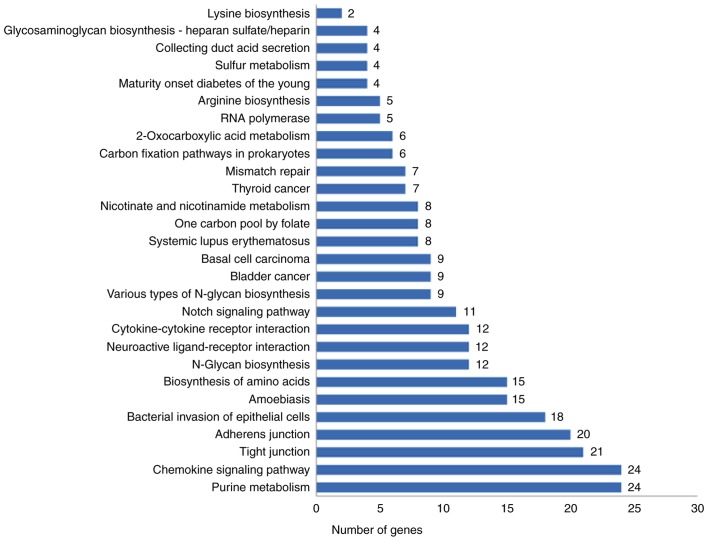
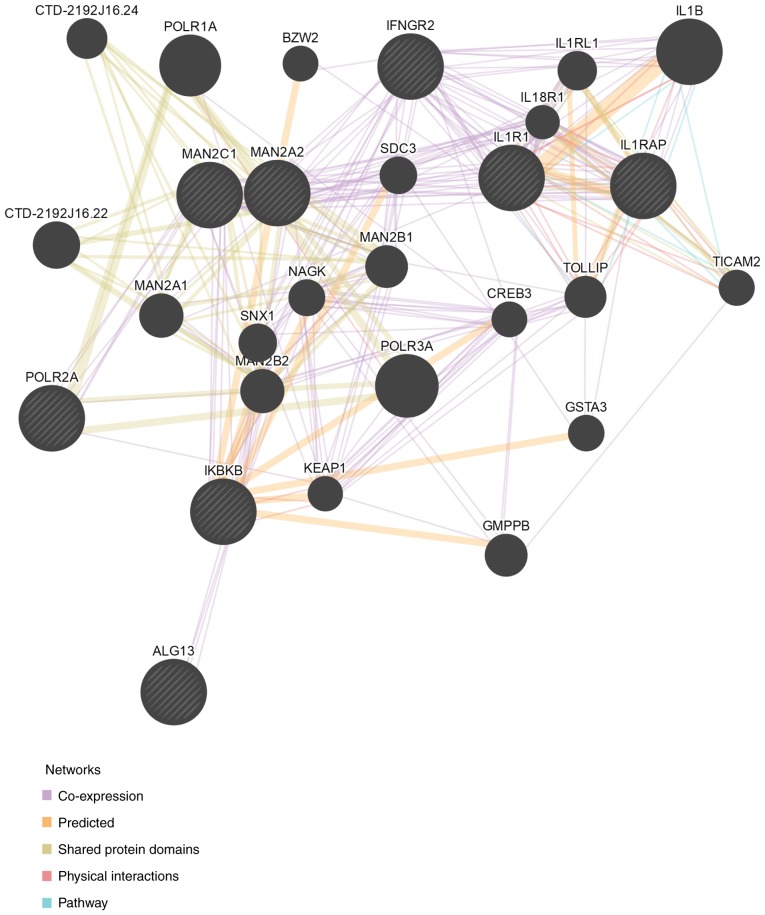
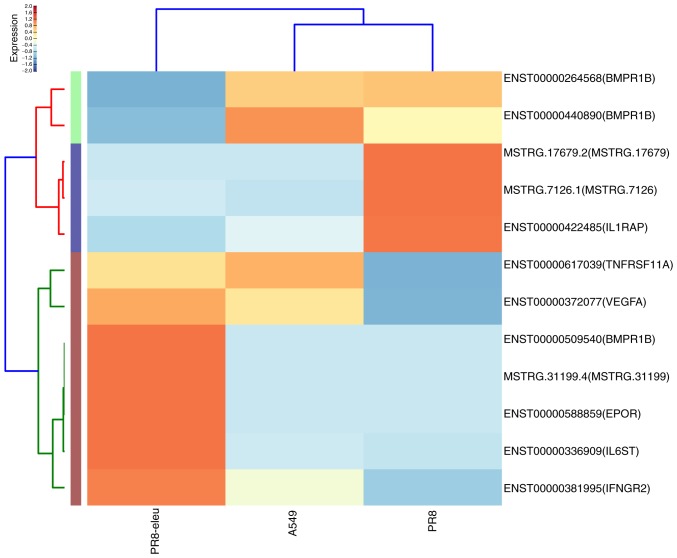
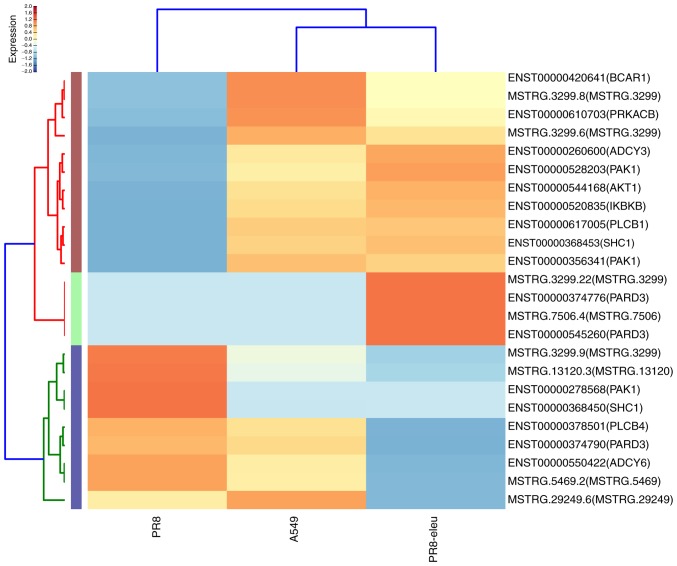
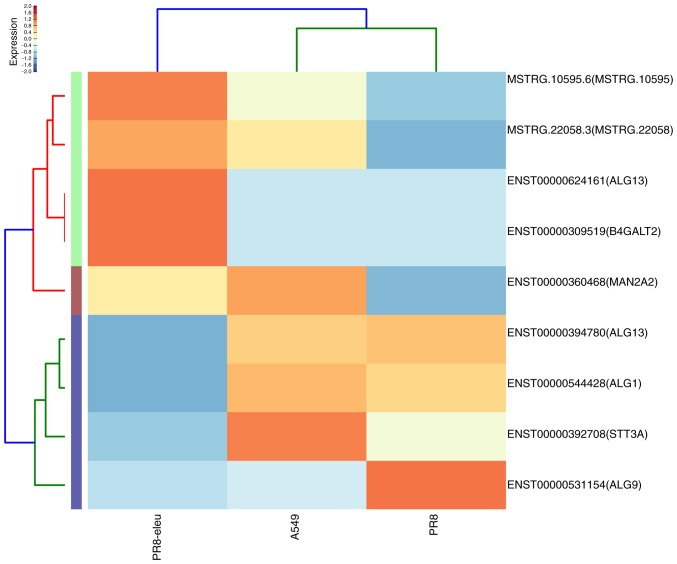
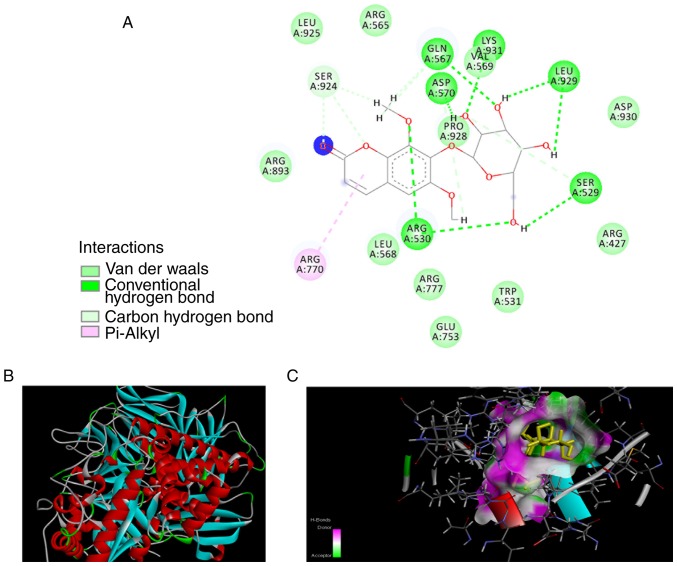
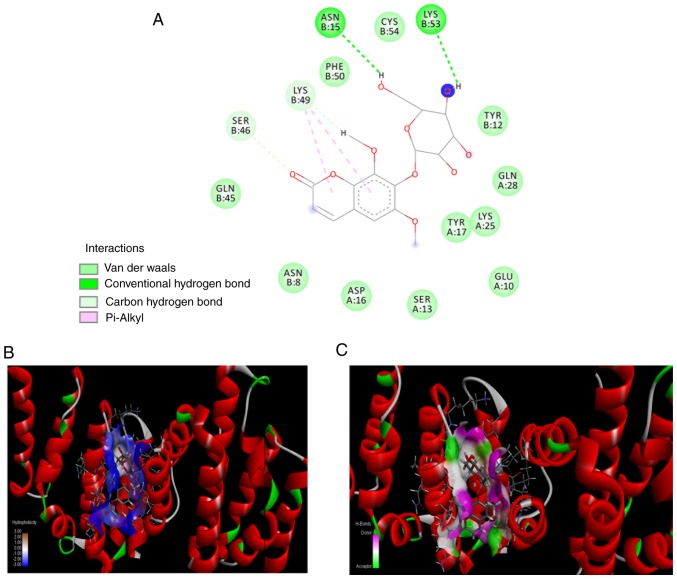
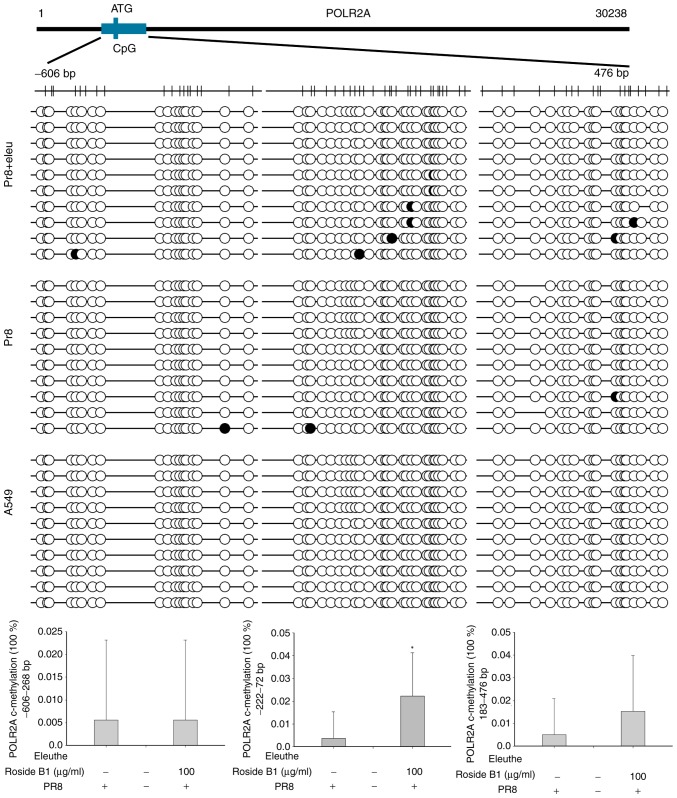
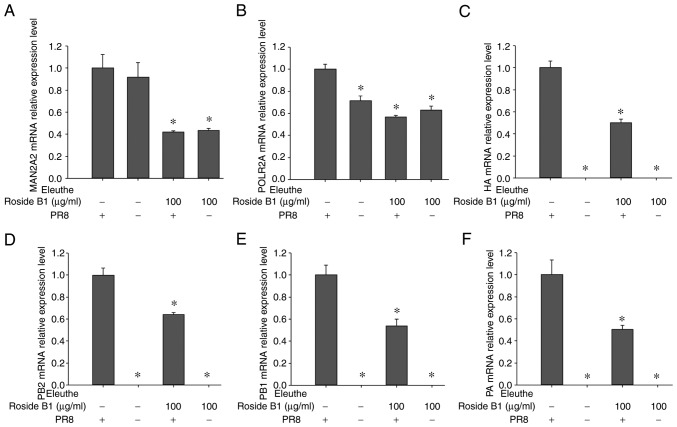
Influenza viruses represent a serious threat to human health. Although our research group has previously demonstrated the antiviral and anti‑inflammatory activities of eleutheroside B1, a detailed explanation of the mechanism by which it is effective against the influenza virus remains to be elucidated. In the present study, the transcriptomic responses of influenza A virus‑infected lung epithelial cells (A549) treated with eleutheroside B1 were investigated using high‑throughput RNA sequencing, and potential targets were identified using a molecular docking technique, reverse transcription‑quantitative polymerase chain reaction (RT‑qPCR) assay, and DNA methylation analysis. The transcriptomic data revealed that there are 1,871 differentially expressed genes (DEGs) between the cells infected with the influenza virus strain variant PR8, and the cells infected with PR8 and treated with eleutheroside B1. Among the DEGs, RNA polymerase II subunit A (POLR2A; encoding the largest subunit of RNA polymerase II) and mannosidase α class II member 1 (MAN2A1) were selected from the molecular docking analysis with eleutheroside B1. The docking score of Drosophila melanogaster MAN2A1 (3BVT) was 11.3029, whereas that of POLR2A was 9.0133. The RT‑qPCR results demonstrated that the expression levels of host genes (MAN2A2, POLR2A) and viral genes (PA, PB1, PB2, HA) were downregulated following eleutheroside B1 treatment. Bisulfite‑sequencing PCR was performed to investigate whether eleutheroside B1 was able to modify the DNA methylation of POLR2A, and the results suggested that the average proportion of methylated CpGs (‑222‑72 bp) increased significantly following treatment with eleutheroside B1. Taken together, these findings suggested that eleutheroside B1 may affect N‑glycan biosynthesis, the chemokine signaling pathway, cytokine‑cytokine receptor interaction and, in particular, may target the POLR2A to inhibit the production of influenza virus genes.
流感病毒严重威胁人类健康。虽然我们的研究小组先前已经证明了刺五加苷 B1 的抗病毒和抗炎活性,但仍需要阐明其有效抵抗流感病毒的机制。在本研究中,使用高通量 RNA 测序研究了刺五加苷 B1 处理感染流感病毒的肺上皮细胞(A549)的转录组反应,并使用分子对接技术、逆转录定量聚合酶链反应(RT-qPCR)检测和 DNA 甲基化分析鉴定了潜在的靶点。转录组数据显示,感染流感病毒株 PR8 的细胞与感染 PR8 并经刺五加苷 B1 处理的细胞之间有 1871 个差异表达基因(DEGs)。在 DEGs 中,从与刺五加苷 B1 的分子对接分析中选择 RNA 聚合酶 II 亚基 A(POLR2A;编码 RNA 聚合酶 II 的最大亚基)和甘露糖苷酶 α 类 II 成员 1(MAN2A1)。果蝇 MAN2A1(3BVT)的对接得分为 11.3029,而 POLR2A 的对接得分为 9.0133。RT-qPCR 结果表明,宿主基因(MAN2A2、POLR2A)和病毒基因(PA、PB1、PB2、HA)的表达水平在刺五加苷 B1 处理后下调。进行亚硫酸氢盐测序 PCR 以研究刺五加苷 B1 是否能够修饰 POLR2A 的 DNA 甲基化,结果表明,在用刺五加苷 B1 处理后,-222-72 bp 的甲基化 CpG 的平均比例显著增加。综上所述,这些发现表明刺五加苷 B1 可能影响 N-聚糖生物合成、趋化因子信号通路、细胞因子-细胞因子受体相互作用,特别是可能靶向 POLR2A 以抑制流感病毒基因的产生。