Institute of Tropical Medicine, Guangzhou University of Chinese Medicine, Guangzhou, Guangdong 510006, P.R. China.
Key Laboratory of Livestock Disease Prevention of Guangdong Province, Institute of Animal Health, Guangdong Academy of Agricultural Sciences, Guangzhou, Guangdong 510640, P.R. China.
Int J Mol Med. 2020 Mar;45(3):753-768. doi: 10.3892/ijmm.2020.4468. Epub 2020 Jan 17.
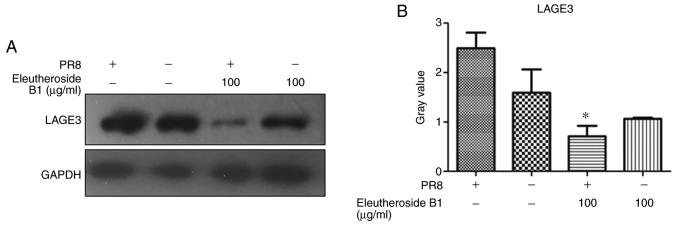
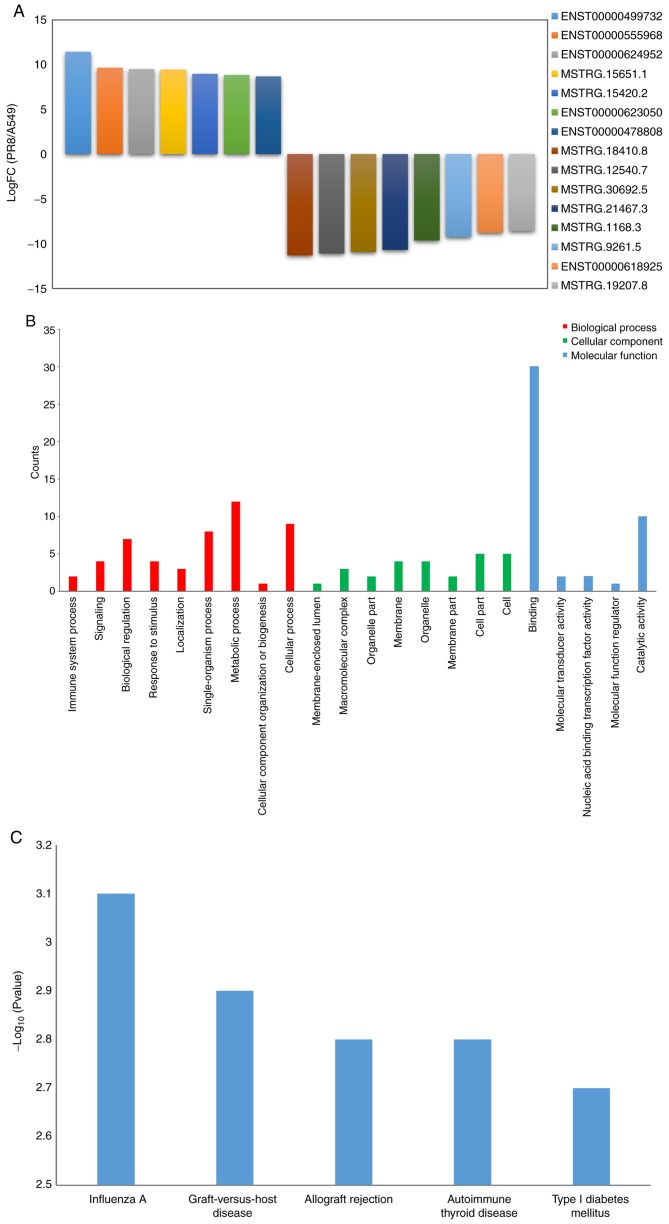
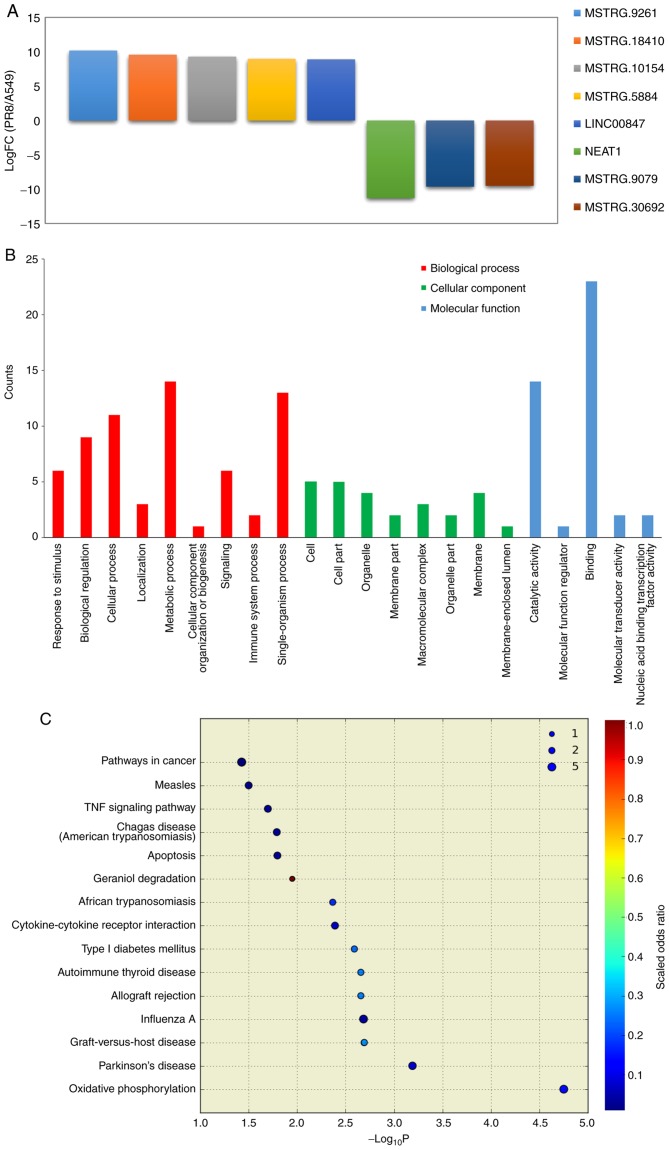
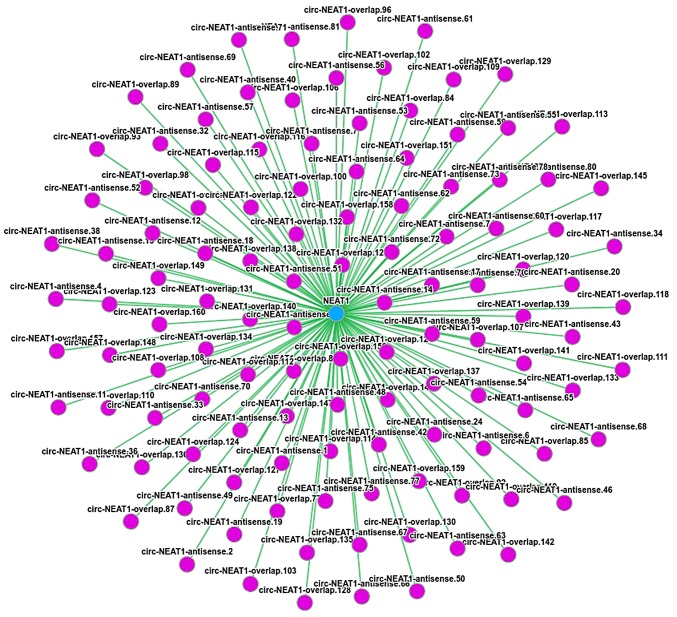
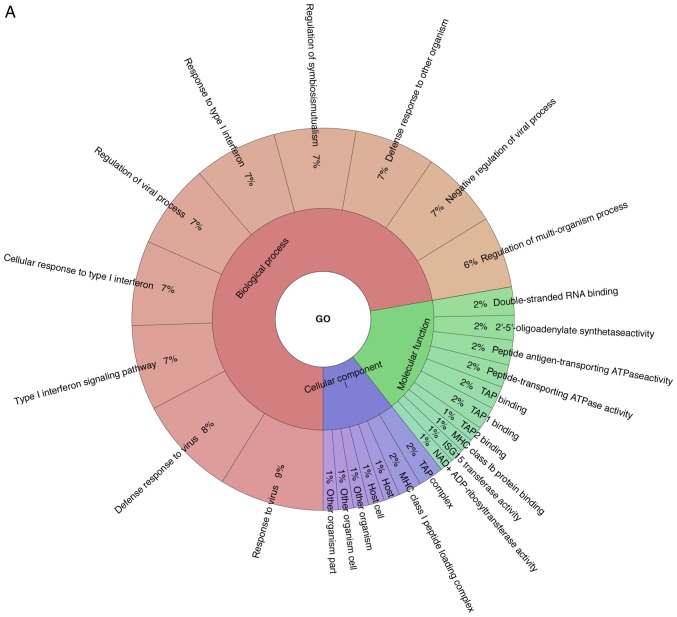
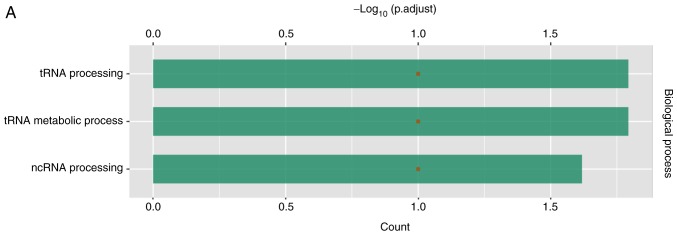
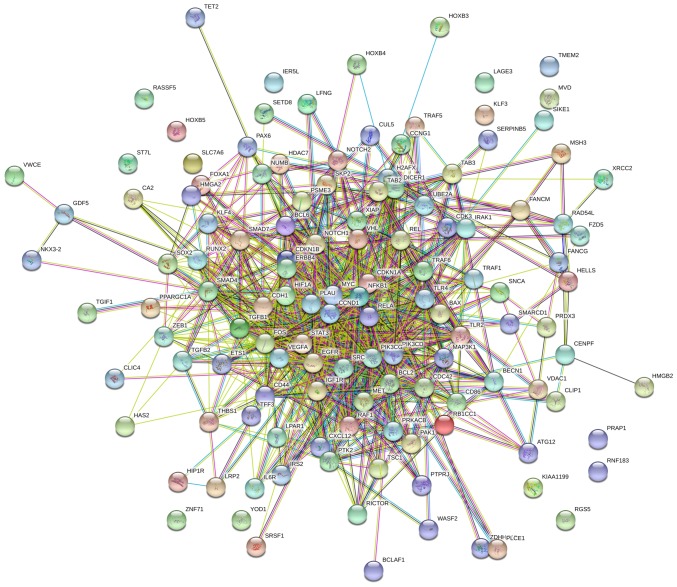
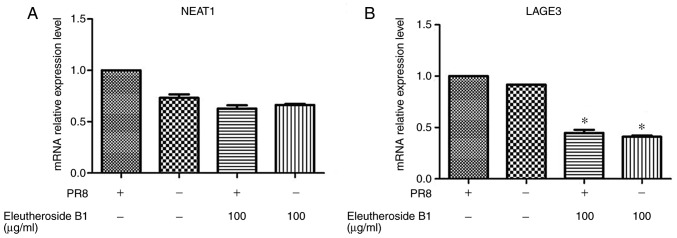
Influenza viruses often pose a serious threat to animals and human health. In an attempt to explore the potential of herbal medicine as a treatment for influenza virus infection, eleutheroside B1, a coumarin compound extracted from herba sarcandrae, was identified, which exhibited antiviral and anti‑inflammatory activities against influenza A virus. In this study, high‑throughput RNA sequencing and isobaric tags for relative and absolute quantification (iTRAQ) assays were performed to determine alterations in the non‑coding RNA (ncRNA) transcriptome and proteomics. Bioinformatics and target prediction analyses were used to decipher the potential roles of altered ncRNAs in the function of eleutheroside B1. Furthermore, long ncRNA (lncRNA) and mRNA co‑expressing networks were constructed to analyze the biological functions by Gene Ontology (GO) and Kyoto Encyclopedia of Genes and Genomes (KEGG) pathway analyses. The analysis of RNA sequencing data revealed that 5 differentially expressed ncRNAs were upregulated and 3 ncRNAs were downregulated in the A549 cells infected with A/PR8/34/H1N1, with or without eleutheroside B1 treatment (PR8+eleu and PR8, respectively). Nuclear paraspeckle assembly transcript 1 (NEAT1) was differentially expressed between the PR8 and A549 cell groups. GO and KEGG pathway analyses indicated that eleutheroside B1 took advantage of the host cell biological processes and molecular function for its antiviral and anti‑inflammatory activities, as well as for regulating cytokine‑cytokine receptor interaction in the immune system, consistent with previous findings. The results of the iTRAQ assays indicated that L antigen family member 3 (LAGE3) protein, essential for tRNA processing, tRNA metabolic processes and ncRNA processing, was downregulated in the PR8+eleu compared with the PR8 group. In the present study, these comprehensive, large‑scale data analysis enhanced the understanding of multiple aspects of the transcriptome and proteomics that are involved in the antiviral and anti‑inflammatory activities of eleutheroside B1. These findings demonstrate the potential of eleutheroside B1 for use in the prevention and treatment of influenza A virus‑mediated infections.
流感病毒常常对动物和人类健康构成严重威胁。为了探索草药作为治疗流感病毒感染的潜在方法,从穿心莲中提取的香豆素化合物紫丁香苷 B1 被鉴定为具有抗流感 A 病毒的抗病毒和抗炎活性。在这项研究中,进行了高通量 RNA 测序和等重标记相对和绝对定量(iTRAQ)分析,以确定非编码 RNA(ncRNA)转录组和蛋白质组的变化。生物信息学和靶标预测分析用于破译改变的 ncRNA 在紫丁香苷 B1 功能中的潜在作用。此外,构建了长 ncRNA(lncRNA)和 mRNA 共表达网络,通过基因本体论(GO)和京都基因与基因组百科全书(KEGG)通路分析来分析其生物学功能。RNA 测序数据分析表明,在 A549 细胞感染 A/PR8/34/H1N1 病毒(分别为 PR8+eleu 和 PR8)或用紫丁香苷 B1 处理后,有 5 个差异表达的 ncRNA 上调,3 个 ncRNA 下调。核斑聚合转录本 1(NEAT1)在 PR8 和 A549 细胞组之间差异表达。GO 和 KEGG 通路分析表明,紫丁香苷 B1 利用宿主细胞的生物学过程和分子功能发挥其抗病毒和抗炎活性,并调节免疫系统中的细胞因子-细胞因子受体相互作用,这与先前的研究结果一致。iTRAQ 分析的结果表明,L 抗原家族成员 3(LAGE3)蛋白在 PR8+eleu 组中下调,而 LAGE3 蛋白是 tRNA 加工、tRNA 代谢过程和 ncRNA 加工所必需的。在本研究中,这些全面的、大规模的数据分析增强了对与紫丁香苷 B1 的抗病毒和抗炎活性相关的转录组和蛋白质组的多个方面的理解。这些发现表明紫丁香苷 B1 具有用于预防和治疗流感 A 病毒介导的感染的潜力。