Álvarez-Teijeiro Saúl, García-Inclán Cristina, Villaronga M Ángeles, Casado Pedro, Hermida-Prado Francisco, Granda-Díaz Rocío, Rodrigo Juan P, Calvo Fernando, Del-Río-Ibisate Nagore, Gandarillas Alberto, Morís Francisco, Hermsen Mario, Cutillas Pedro, García-Pedrero Juana M
Department of Otolaryngology, Hospital Universitario Central de Asturias and Instituto de Investigación Sanitaria del Principado de Asturias; Instituto Universitario de Oncología del Principado de Asturias, University of Oviedo, 33011 Oviedo, Spain.
CIBERONC, 28029 Madrid, Spain.
Cancers (Basel). 2018 Sep 17;10(9):334. doi: 10.3390/cancers10090334.
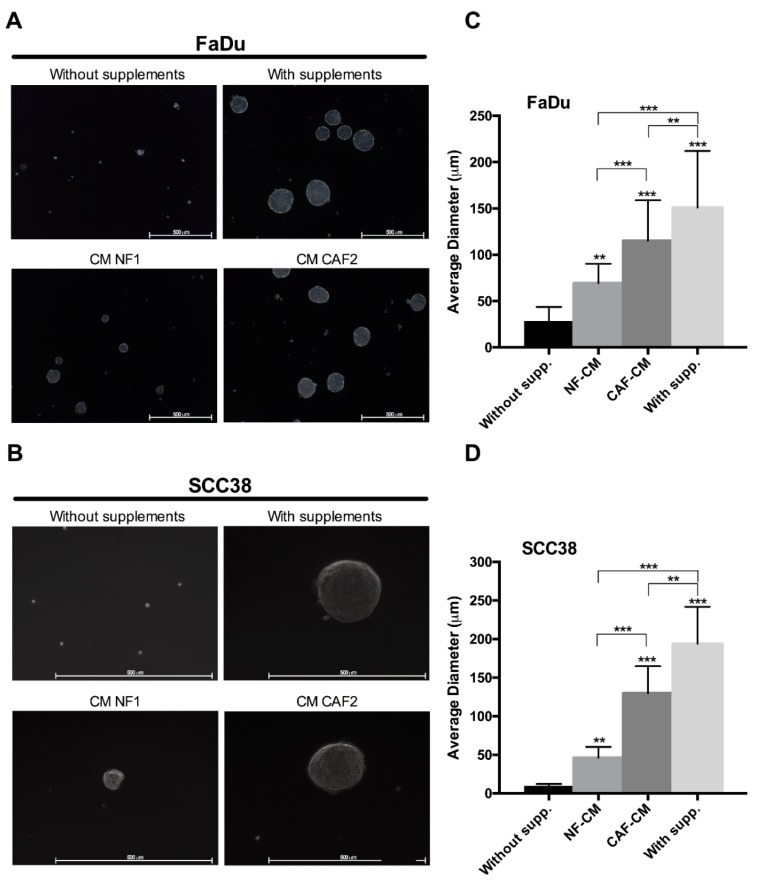
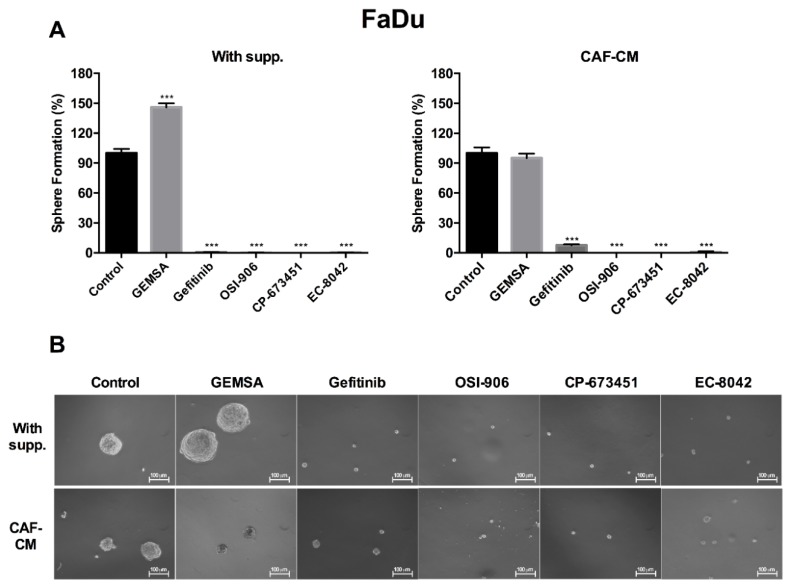
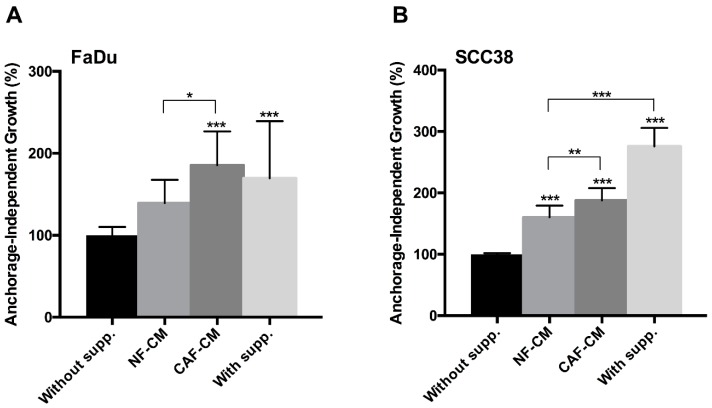
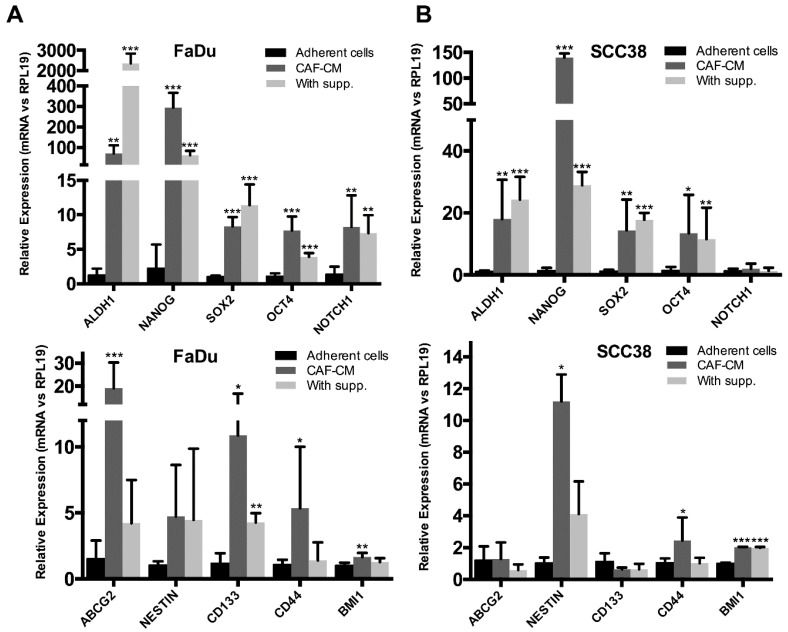
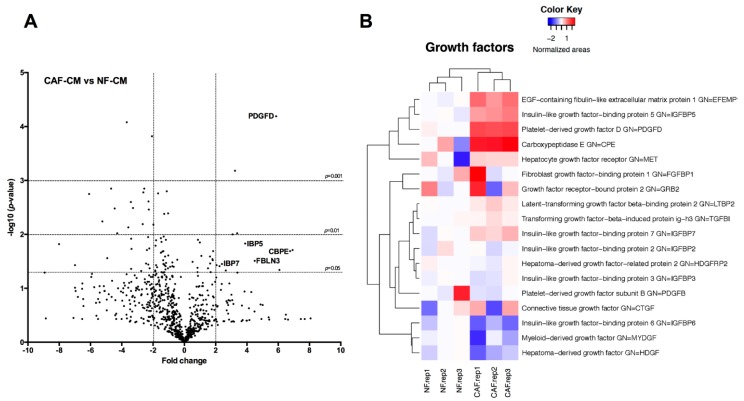
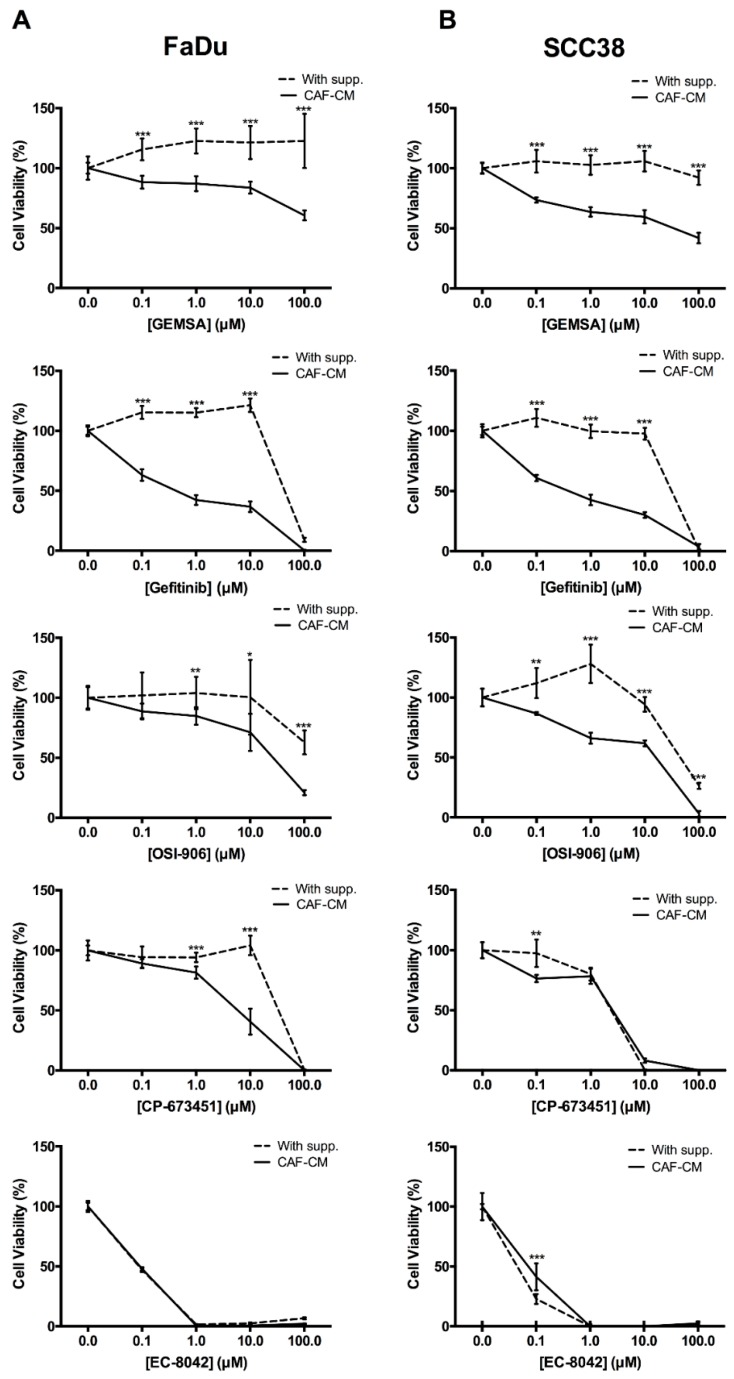
This study investigates for the first time the crosstalk between stromal fibroblasts and cancer stem cell (CSC) biology in head and neck squamous cell carcinomas (HNSCC), with the ultimate goal of identifying effective therapeutic targets. The effects of conditioned media from cancer-associated fibroblasts (CAFs) and normal fibroblasts (NFs) on the CSC phenotype were assessed by combining functional and expression analyses in HNSCC-derived cell lines. Further characterization of CAFs and NFs secretomes by mass spectrometry was followed by pharmacologic target inhibition. We demonstrate that factors secreted by CAFs but not NFs, in the absence of serum/supplements, robustly increased anchorage-independent growth, tumorsphere formation, and CSC-marker expression. Modulators of epidermal growth factor receptor (EGFR), insulin-like growth factor receptor (IGFR), and platelet-derived growth factor receptor (PDGFR) activity were identified as paracrine cytokines/factors differentially secreted between CAFs and NFs, in a mass spectrometry analysis. Furthermore, pharmacologic inhibition of EGFR, IGFR, and PDGFR significantly reduced CAF-induced tumorsphere formation and anchorage-independent growth suggesting a role of these receptor tyrosine kinases in sustaining the CSC phenotype. These findings provide novel insights into tumor stroma⁻CSC communication, and potential therapeutic targets to effectively block the CAF-enhanced CSC niche signaling circuit.
本研究首次探讨了头颈部鳞状细胞癌(HNSCC)中基质成纤维细胞与癌症干细胞(CSC)生物学之间的相互作用,最终目标是确定有效的治疗靶点。通过对HNSCC衍生细胞系进行功能分析和表达分析,评估了癌症相关成纤维细胞(CAF)和正常成纤维细胞(NF)的条件培养基对CSC表型的影响。通过质谱对CAF和NF分泌组进行进一步表征,随后进行药理靶点抑制。我们证明,在无血清/补充剂的情况下,CAF而非NF分泌的因子显著增加了非锚定依赖性生长、肿瘤球形成和CSC标志物表达。在质谱分析中,表皮生长因子受体(EGFR)、胰岛素样生长因子受体(IGFR)和血小板衍生生长因子受体(PDGFR)活性的调节剂被确定为CAF和NF之间差异分泌的旁分泌细胞因子/因子。此外,EGFR、IGFR和PDGFR的药理抑制显著降低了CAF诱导的肿瘤球形成和非锚定依赖性生长,表明这些受体酪氨酸激酶在维持CSC表型中发挥作用。这些发现为肿瘤基质与CSC的通讯提供了新的见解,以及有效阻断CAF增强的CSC微环境信号通路的潜在治疗靶点。