Gao Shan, Geng Yayuan, Li Jia, Zhou Yunxiao, Yao Shuxia
School of Foreign Languages, University of Electronic Science and Technology of China, Chengdu, China.
The Clinical Hospital of Chengdu Brain Science Institute, MOE Key Laboratory for NeuroInformation, University of Electronic Science and Technology of China, Chengdu, China.
Front Neurosci. 2018 Sep 4;12:611. doi: 10.3389/fnins.2018.00611. eCollection 2018.
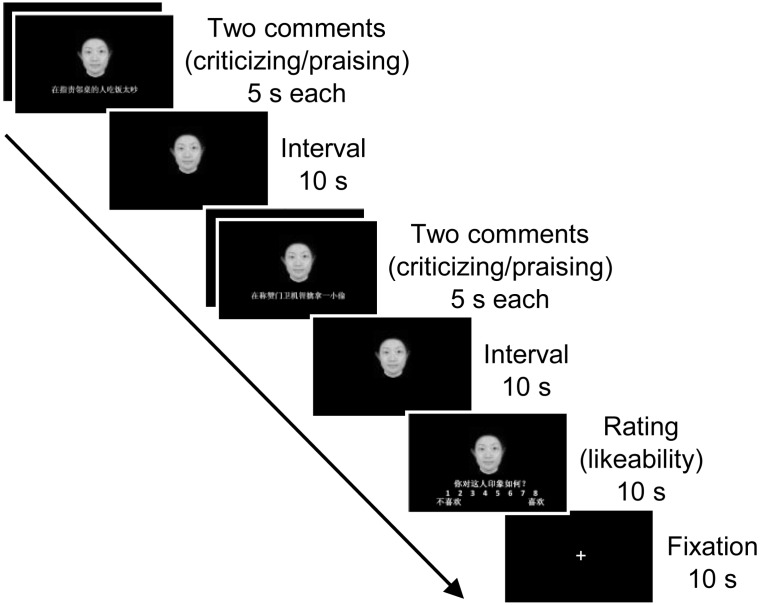
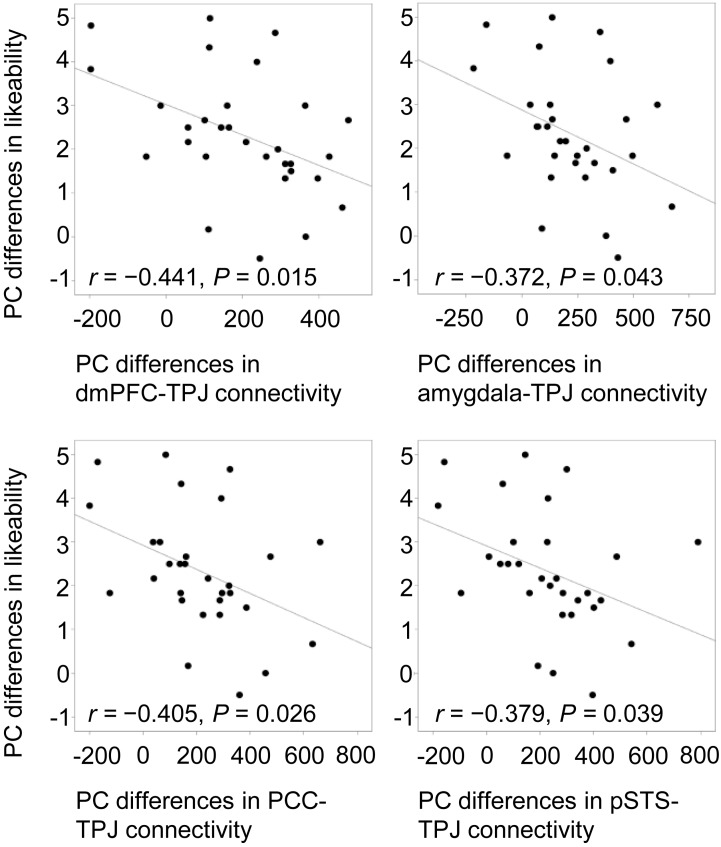
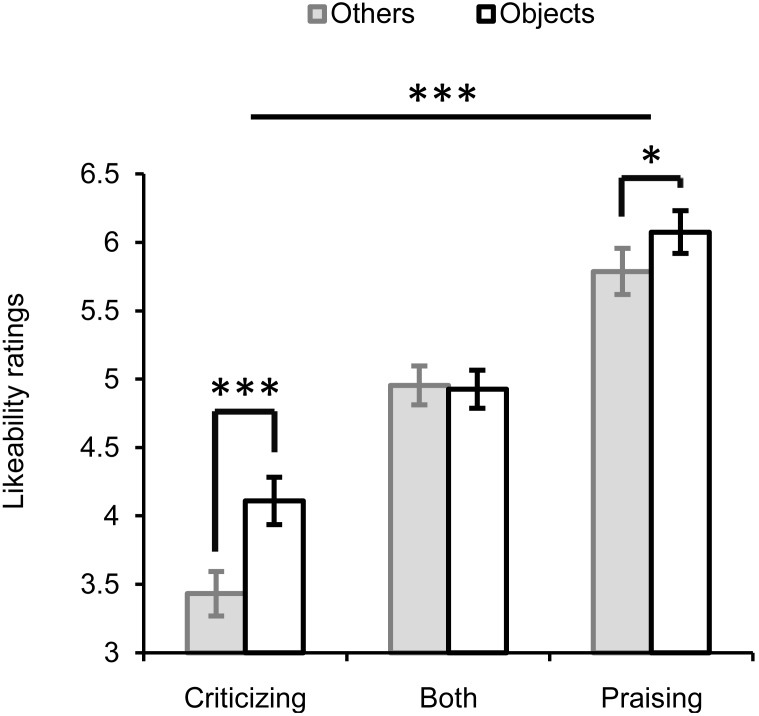
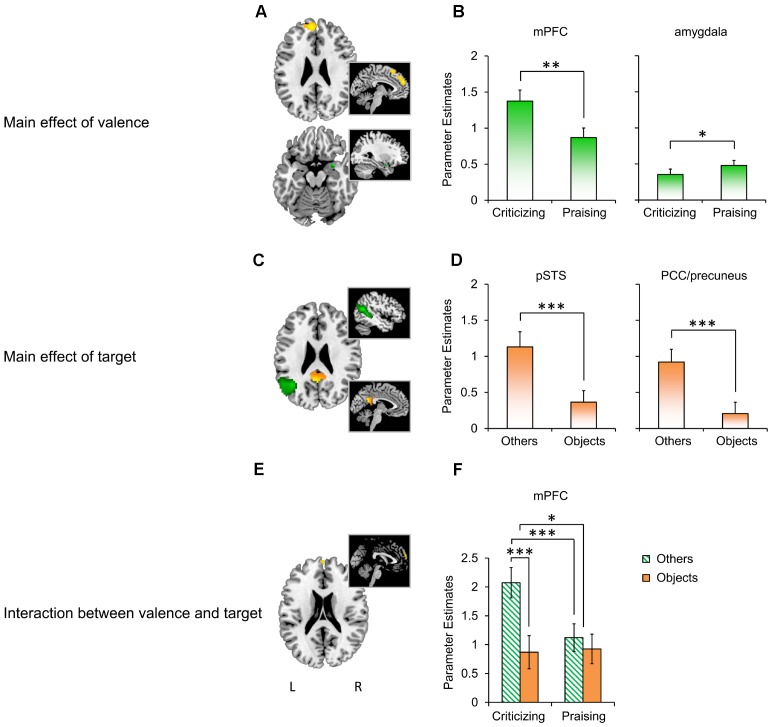
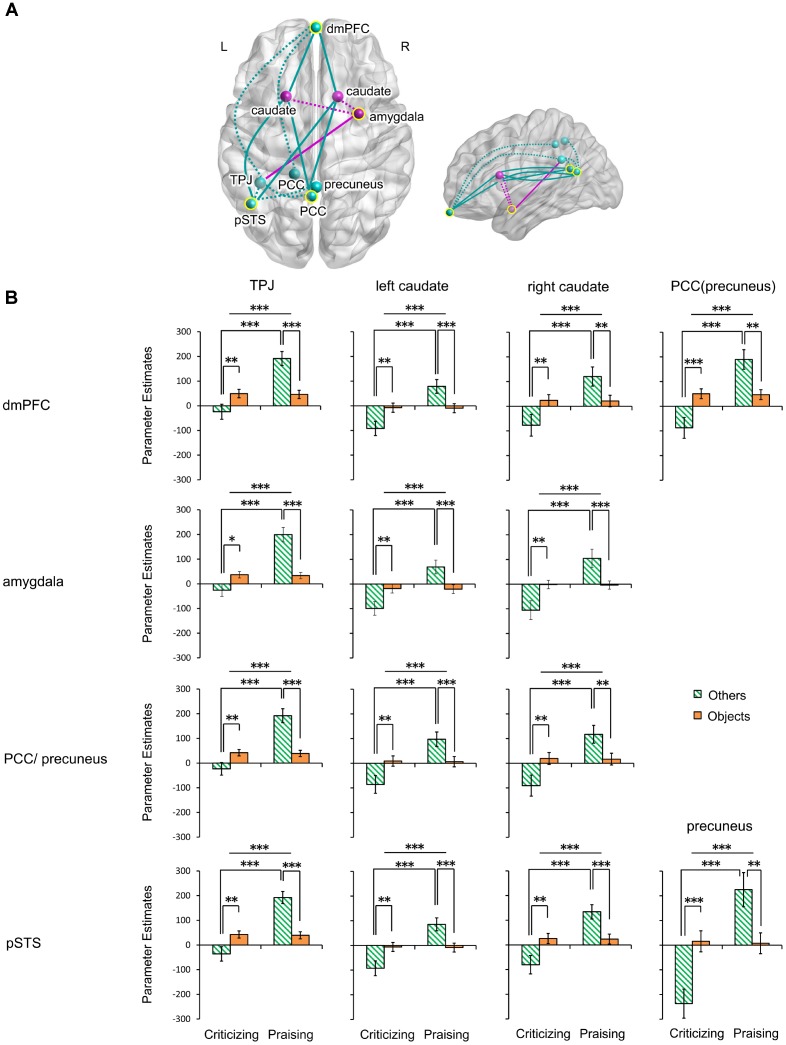
Verbal communication with evaluative characters of different emotional valence has a considerable impact on the extent to which social relations are facilitated or undermined. Here using functional magnetic resonance imaging, we investigated how the brain acts in response to social praise and criticism, leading to differential affective judgments. We engaged thirty men and women in a task associating sex-balanced, neutral faces with praising or criticizing comments targeting others or objects. A whole-brain analysis revealed that criticism as compared to praise enhanced the activation in the medial prefrontal cortex (mPFC), particularly its dorsal portion, whereas the right amygdala displayed an opposite pattern of changes. Comments on others relative to objects increased the reactivity in the left posterior superior temporal sulcus and posterior cingulate cortex (PCC) such that both praise and criticism of others produced stronger activation in these two regions than their object-targeted counterparts. The interaction of valence and target was identified in the mPFC with greater reactivity in the contrasts of criticism vs. praise in the social context and others- vs. object-targeted criticism. Comments also modulated the functional connectivity of prior activated regions with the left temporoparietal junction, bilateral caudate and left PCC/precuneus showing reduced connectivity in response to social criticism but greatly strengthened connectivity for social praise as compared to non-social counterparts. These neural effects subsequently led to altered likeability ratings for the faces. Neither behavioral nor neural effects observed were influenced by the gender of participants. Taken together, our findings suggest a fundamental interactive role of the mentalizing and affective learning networks in differential encoding of individuals associated with praising or criticizing others, leading to learning of valenced traits and subsequent approach or avoidance responses in social interactions.
与具有不同情感效价的评价性人物进行言语交流,对社会关系的促进或破坏程度有着相当大的影响。在此,我们使用功能磁共振成像技术,研究大脑如何对社会赞扬和批评做出反应,从而导致不同的情感判断。我们让30名男性和女性参与一项任务,将性别均衡的中性面孔与针对他人或物体的赞扬或批评性评论联系起来。全脑分析显示,与赞扬相比,批评增强了内侧前额叶皮质(mPFC)的激活,特别是其背侧部分,而右侧杏仁核则呈现出相反的变化模式。与对物体的评论相比,对他人的评论增加了左后颞上沟和后扣带回皮质(PCC)的反应性,使得对他人的赞扬和批评在这两个区域产生的激活都比针对物体的评论更强。在mPFC中发现了效价和目标的相互作用,在社会情境下批评与赞扬的对比以及针对他人与针对物体的批评对比中,反应性更强。评论还调节了先前激活区域与左颞顶联合区、双侧尾状核和左PCC/楔前叶的功能连接,与非社会对应物相比,社会批评导致连接性降低,而社会赞扬则使连接性大大增强。这些神经效应随后导致对面孔的喜爱程度评分发生变化。观察到的行为和神经效应均不受参与者性别的影响。综上所述,我们的研究结果表明,心理化和情感学习网络在对与赞扬或批评他人相关的个体进行差异编码中起着基本的交互作用,从而导致对有价值特质的学习以及随后在社会互动中的接近或回避反应。