Laureate Institute for Brain Research, 6655 S. Yale Ave., Tulsa, OK 74136, United States; School of Community Medicine, University of Tulsa, 800 S. Tucker Dr., Tulsa, OK 74104, United States.
Laureate Institute for Brain Research, 6655 S. Yale Ave., Tulsa, OK 74136, United States; Department of Human Development and Family Science, Oklahoma State University, 700 N. Greenwood Ave., Tulsa, OK 74106, United States.
Neuroimage Clin. 2016 Apr 4;11:548-554. doi: 10.1016/j.nicl.2016.03.009. eCollection 2016.
The parent-child relationship may be an important factor in the development of adolescent depressive and anxious symptoms. In adults, depressive symptoms relate to increased amygdala and attenuated prefrontal activation to maternal criticism. The current pilot study examined how depressive and anxiety symptoms in a high-risk adolescent population relate to neural responses to maternal feedback. Given previous research relating oxytocin to maternal behavior, we conducted exploratory analyses using oxytocin receptor (OXTR) genotype.
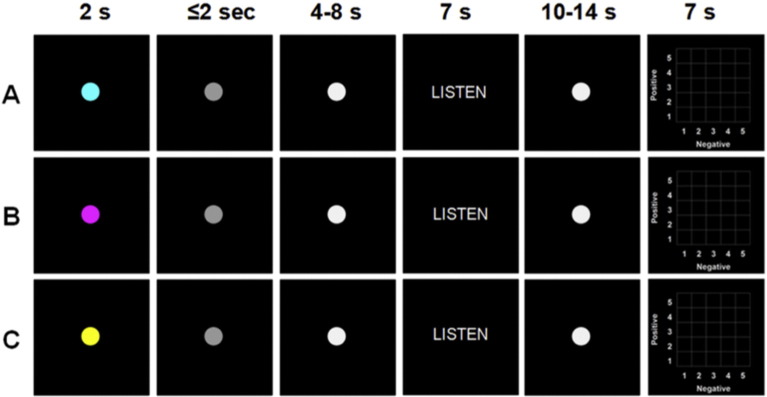
Eighteen females (ages 12-16) listened to maternal praise, neutral, and critical statements during functional magnetic resonance imaging. Participants completed the Mood and Feelings Questionnaire and the Screen for Child Anxiety Related Emotional Disorders. The OXTR single nucleotide polymorphism, rs53576, was genotyped. Linear mixed models were used to identify symptom or allele (GG, AA/AG) by condition (critical, neutral, praise) interaction effects on brain activation.
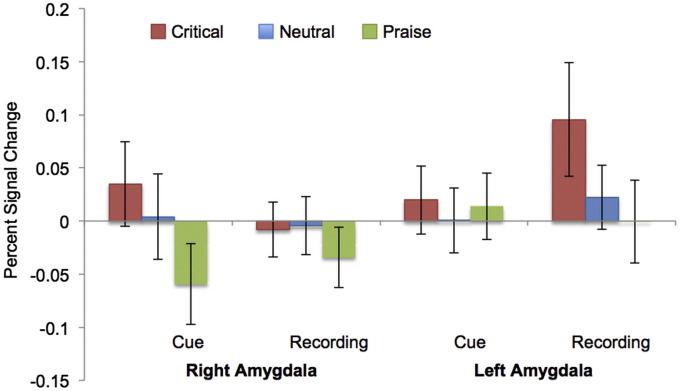
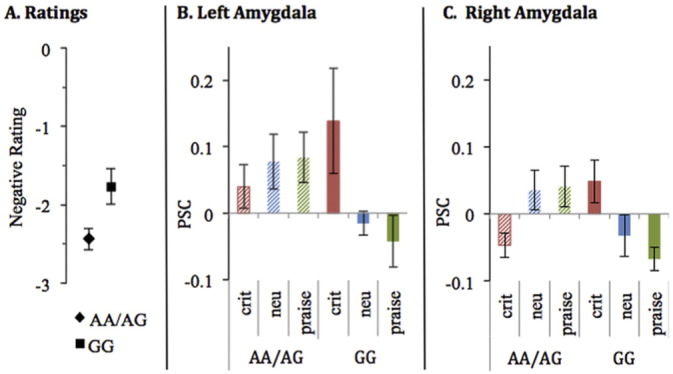
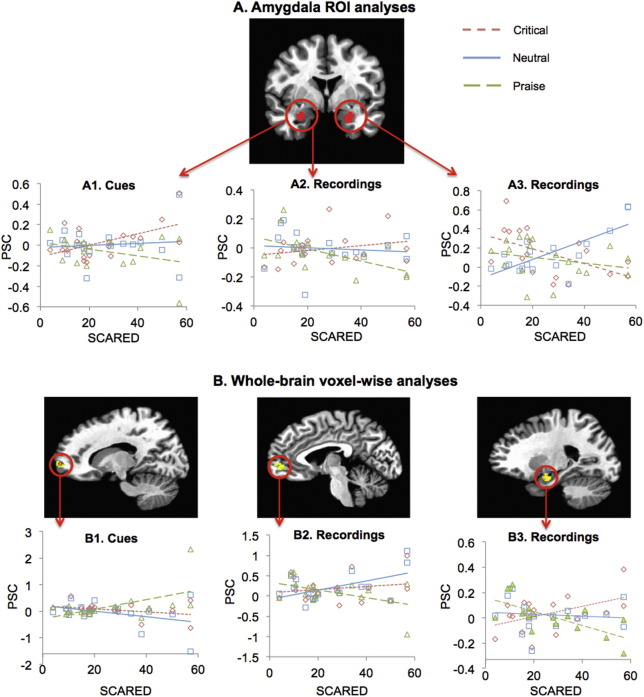
Greater symptoms related to greater right amygdala activation for criticism and reduced activation to praise. For left amygdala, greater symptoms related to reduced activation to both conditions. Anxiety symptoms related to differences in superior medial PFC activation patterns. Parental OXTR AA/AG allele related to reduced activation to criticism and greater activation to praise within the right amygdala.
Results support a relationship between anxiety and depressive symptoms and prefrontal-amygdala responses to maternal feedback. The lateralization of amygdala findings suggests separate neural targets for interventions reducing reactivity to negative feedback or increasing salience of positive feedback. Exploratory analyses suggest that parents' OXTR genetic profile influences parent-child interactions and related adolescent brain responses.
亲子关系可能是青少年抑郁和焦虑症状发展的一个重要因素。在成年人中,抑郁症状与杏仁核活动增加和前额叶对母亲批评的反应减弱有关。目前的初步研究探讨了高危青少年人群的抑郁和焦虑症状与对母亲反馈的神经反应之间的关系。鉴于催产素与母亲行为的相关研究,我们使用催产素受体(OXTR)基因型进行了探索性分析。
18 名女性(年龄 12-16 岁)在功能磁共振成像期间聆听了母亲的表扬、中性和批评性陈述。参与者完成了情绪和感觉问卷以及儿童焦虑相关情绪障碍筛查。OXTR 单核苷酸多态性 rs53576 被基因分型。线性混合模型用于识别症状或等位基因(GG、AA/AG)与条件(批评、中性、表扬)之间的相互作用对大脑激活的影响。
更多的症状与批评时右杏仁核的更大激活以及对表扬时的激活减少有关。对于左杏仁核,更多的症状与两种情况的激活减少有关。焦虑症状与上内侧前额叶皮层激活模式的差异有关。父母 OXTR AA/AG 等位基因与批评时的激活减少以及右杏仁核内对表扬时的更大激活有关。
结果支持焦虑和抑郁症状与母亲反馈的前额叶-杏仁核反应之间的关系。杏仁核发现的偏侧性表明,针对减少对负面反馈的反应或增加对正面反馈的显著性的干预措施具有不同的神经靶点。探索性分析表明,父母的 OXTR 遗传特征影响了亲子互动和相关的青少年大脑反应。