
对甲状腺激素与脂质代谢之间关联的重新关注。
A Renewed Focus on the Association Between Thyroid Hormones and Lipid Metabolism.
作者信息
Duntas Leonidas H, Brenta Gabriela
机构信息
Unit of Endocrinology Diabetes and Metabolism, Thyroid Section, Evgenideion Hospital, University of Athens, Athens, Greece.
Unit of Endocrinology and Metabolism, Thyroid Section, Dr. Cesar Milstein Hospital, Buenos Aires, Argentina.
出版信息
Front Endocrinol (Lausanne). 2018 Sep 3;9:511. doi: 10.3389/fendo.2018.00511. eCollection 2018.
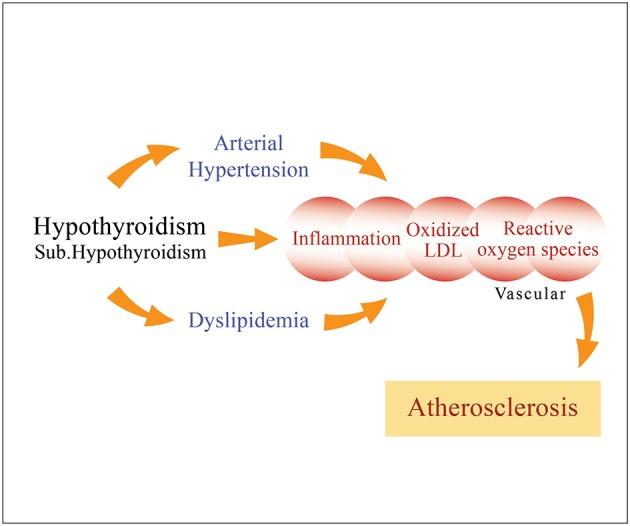
Thyroid dysfunction, manifesting as either overt or subclinical hypothyroidism, negatively affects lipid metabolism: this leads to hypercholesterolemia which progressively increases the risk for cardiovascular disease and, potentially, mortality. Hypercholesterolemia in hypothyroidism is mainly due to a reduction in low-density lipoprotein (LDL) receptor activity, this accompanied by concomitant diminishing control by triiodothyronine (T3) of sterol regulatory element-binding protein 2 (SREBP-2), which modulates cholesterol biosynthesis by regulating rate-limit degrading enzyme 3-hydroxy-3-methylglutaryl-coenzyme A reductase (HMG-CoA) activity. Recently, 3,5-diiodothyronine (T2), a natural thyroid hormone derivative, was found to repress the transcription factor carbohydrate-response element-binding protein (ChREBP) and also to be involved in lipid catabolism and lipogenesis, though via a different pathway than that of T3. While thyroid hormone could therapeutically reverse the dyslipidemic profile commonly occurring in hypothyroidism, it should be borne in mind that the potency of the effects may be age-and sex-dependent. Thyroid hormone administration possibly also sustains and enhances the efficacy of hypolipidemic drugs, such as statins, ezetimibe and proprotein convertase subtilisin/kexin type 9 (PCSK9), in patients with dyslipidemia and hypothyroidism.
甲状腺功能障碍,表现为显性或亚临床甲状腺功能减退,会对脂质代谢产生负面影响:这会导致高胆固醇血症,进而逐步增加心血管疾病风险以及潜在的死亡风险。甲状腺功能减退中的高胆固醇血症主要是由于低密度脂蛋白(LDL)受体活性降低,同时三碘甲状腺原氨酸(T3)对固醇调节元件结合蛋白2(SREBP-2)的控制也随之减弱,而SREBP-2通过调节限速降解酶3-羟基-3-甲基戊二酰辅酶A还原酶(HMG-CoA)的活性来调节胆固醇生物合成。最近,发现天然甲状腺激素衍生物3,5-二碘甲状腺原氨酸(T2)可抑制转录因子碳水化合物反应元件结合蛋白(ChREBP),并且还参与脂质分解代谢和脂肪生成,不过其作用途径与T3不同。虽然甲状腺激素在治疗上可以逆转甲状腺功能减退中常见的血脂异常情况,但应记住,其作用效果可能因年龄和性别而异。甲状腺激素给药可能还会维持并增强降血脂药物(如他汀类药物、依泽替米贝和前蛋白转化酶枯草溶菌素/kexin 9型(PCSK9))对血脂异常和甲状腺功能减退患者的疗效。

 Zotero 插件