Departamento de Microbiología y Ecología, Universitat de València, Burjassot, Spain.
Estructura de Recerca Interdisciplinar en Biotecnologia i Biomedicina, Universitat de València, Burjassot, Spain.
Front Cell Infect Microbiol. 2018 Sep 3;8:309. doi: 10.3389/fcimb.2018.00309. eCollection 2018.
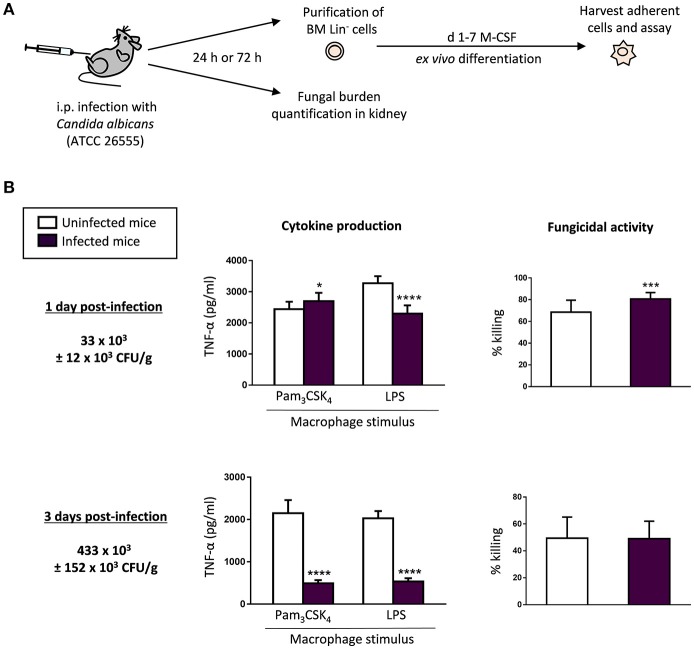
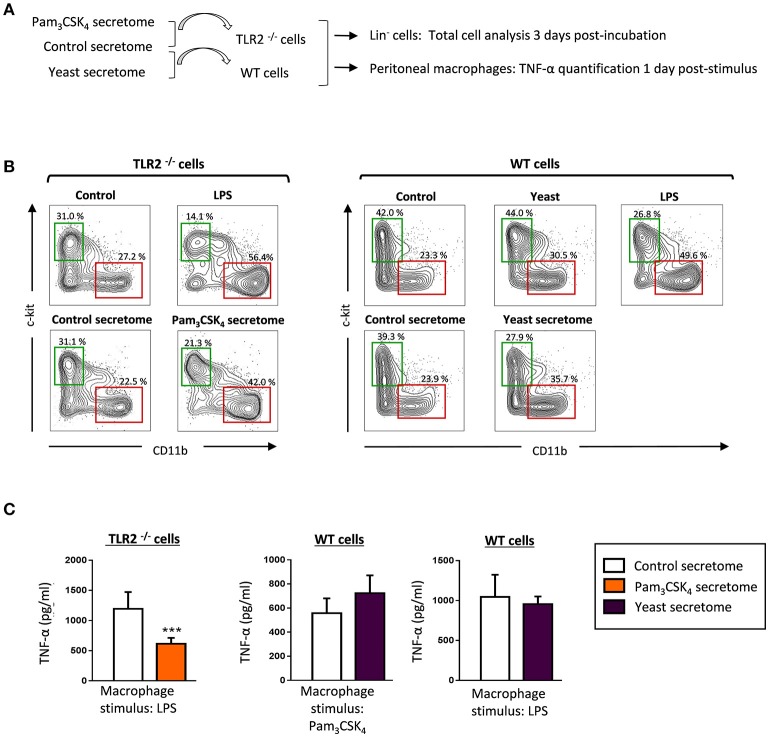
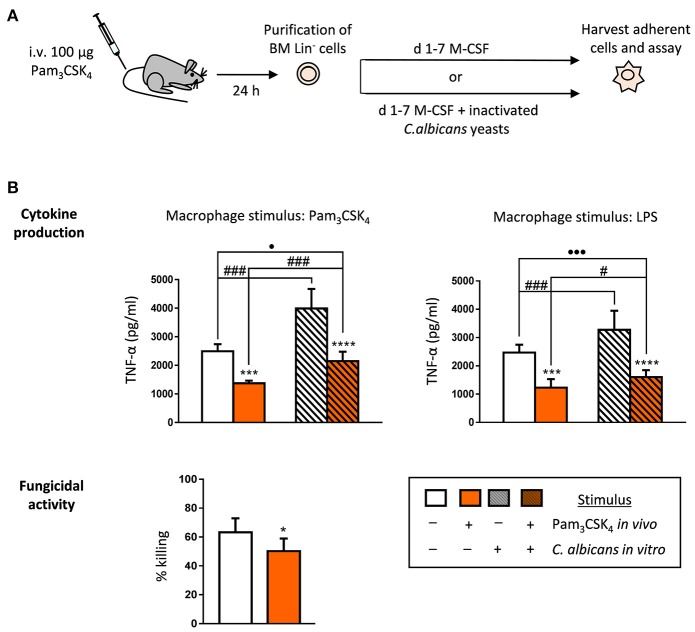
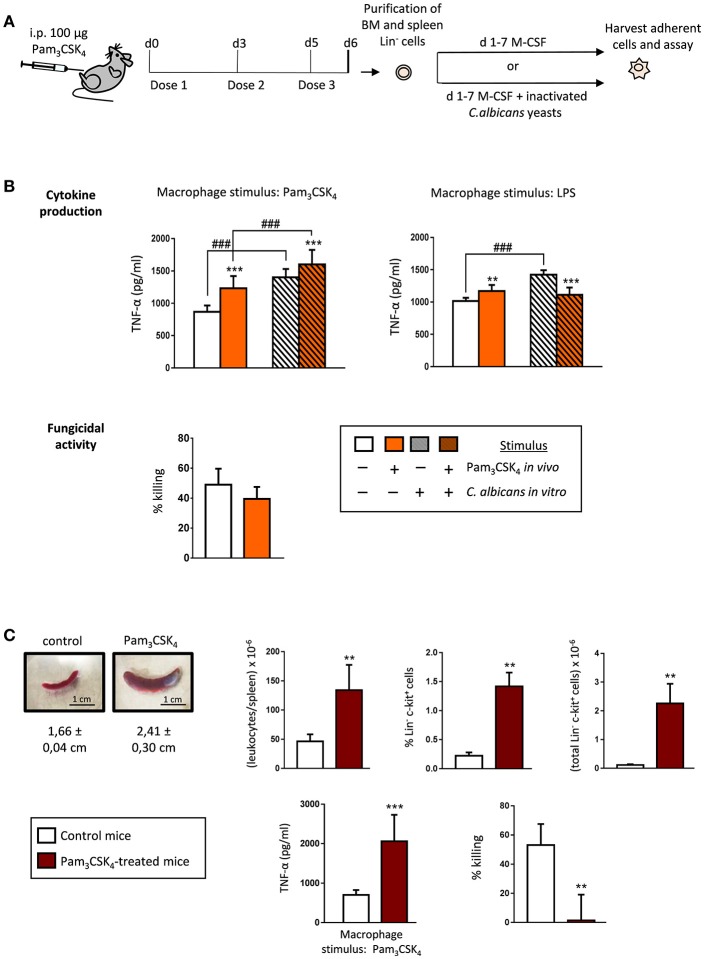
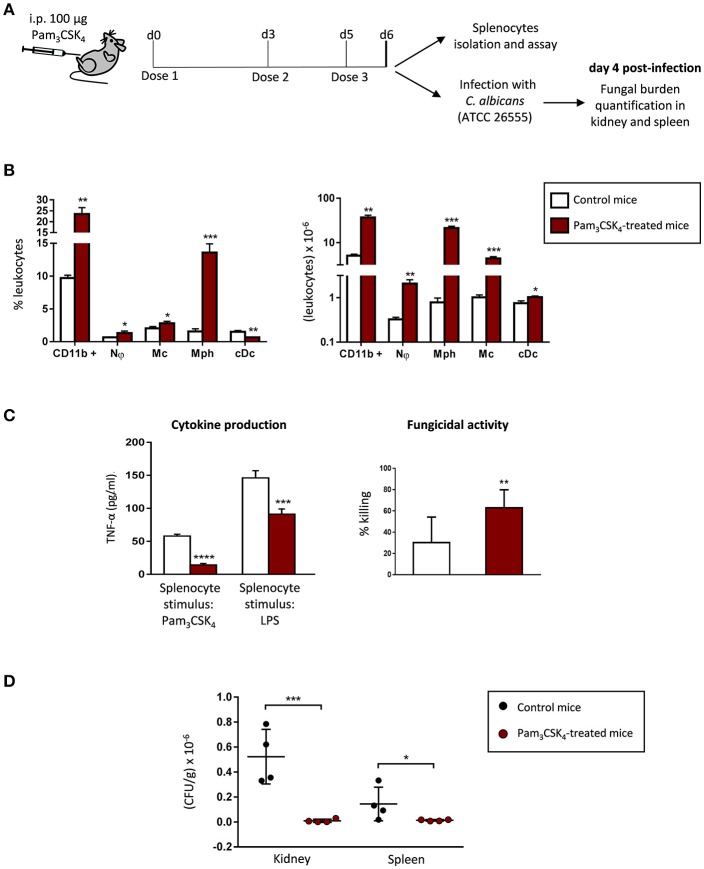
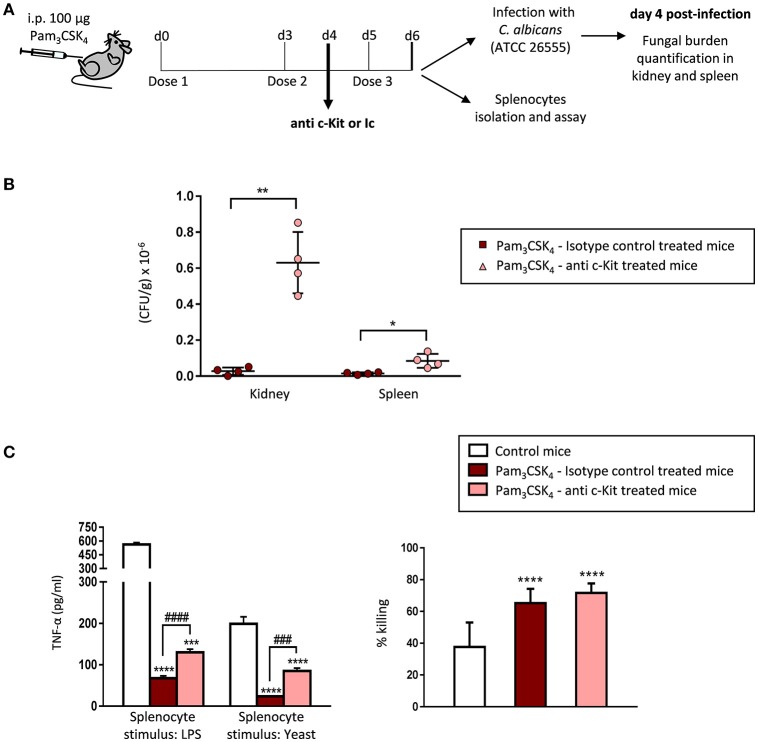
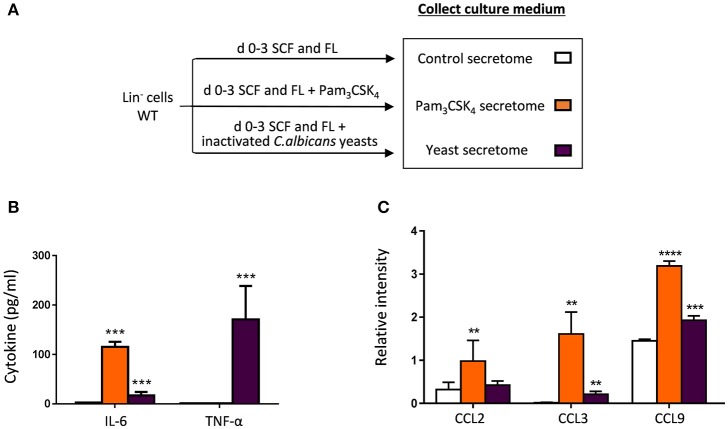
We have previously demonstrated that induces differentiation of hematopoietic stem and progenitor cells (HSPCs) toward the myeloid lineage both and in a TLR2- and Dectin-1-dependent manner, giving rise to functional macrophages. In this work, we used an model to investigate the functional consequences for macrophages derived from HSPCs -exposed to PamCSK (a TLR2 agonist) or infection. Short treatment of mice with PamCSK results in a tolerized phenotype of HSPC-derived macrophages, whereas an extended PamCSK treatment confers a trained phenotype. Early during candidiasis, HSPCs give rise to macrophages trained in their response to PamCSK and with an increased fungicidal activity; however, as the infection progresses to higher fungal burden, HSPC-derived macrophages become tolerized, while their fungicidal capacity is maintained. These results demonstrate that memory-like innate immune responses, already described for monocytes and macrophages, also take place in HSPCs. Interestingly, extended PamCSK treatment leads to an expansion of spleen HSPCs and myeloid cells, and drastically reduces the fungal burden in the kidney and spleen during systemic infection. This protection against tissue invasion is abrogated by immunodepletion of HSPCs, suggesting their protective role against infection in this model. In addition, HSPCs produce cytokines and chemokines in response to and PamCSK, and these secretomes are capable of inducing myeloid differentiation of HSPCs and modulating peritoneal macrophage cytokine responses. Taken together, these data assign an active role for HSPCs in sensing pathogens during infection and in contributing to host protection by diverse mechanisms.
我们之前已经证明,通过 TLR2 和 Dectin-1 依赖性途径,可诱导造血干细胞和祖细胞(HSPCs)向髓系分化,从而产生功能性巨噬细胞。在这项工作中,我们使用 模型来研究暴露于 PamCSK(TLR2 激动剂)或 感染的 HSPC 衍生巨噬细胞的功能后果。短时间用 PamCSK 处理小鼠会导致 HSPC 衍生的巨噬细胞产生耐受表型,而延长 PamCSK 处理则赋予训练表型。在念珠菌病早期,HSPC 会产生对 PamCSK 有反应并具有增强的杀菌活性的训练巨噬细胞;然而,随着感染进展到更高的真菌负荷,HSPC 衍生的巨噬细胞变得耐受,而其杀菌能力得以维持。这些结果表明,类似于记忆的先天免疫反应不仅在单核细胞和巨噬细胞中发生,也发生在 HSPC 中。有趣的是,延长的 PamCSK 处理会导致脾脏 HSPC 和髓样细胞的扩张,并在系统性 感染期间大大降低肾脏和脾脏中的真菌负荷。这种对组织侵袭的保护作用被 HSPC 免疫耗竭所消除,这表明它们在该模型中对感染具有保护作用。此外,HSPCs 会对 和 PamCSK 产生 细胞因子和趋化因子,这些分泌组能够诱导 HSPC 的髓样分化并调节腹膜巨噬细胞细胞因子反应。综上所述,这些数据赋予了 HSPC 在感染期间感知病原体以及通过多种机制为宿主提供保护的积极作用。