College of Pharmacy and Pharmaceutical Sciences, Florida A&M University, Tallahassee, FL 32307, United States.
College of Pharmacy and Pharmaceutical Sciences, Florida A&M University, Tallahassee, FL 32307, United States.
J Neuroimmunol. 2018 Nov 15;324:43-53. doi: 10.1016/j.jneuroim.2018.09.004. Epub 2018 Sep 11.
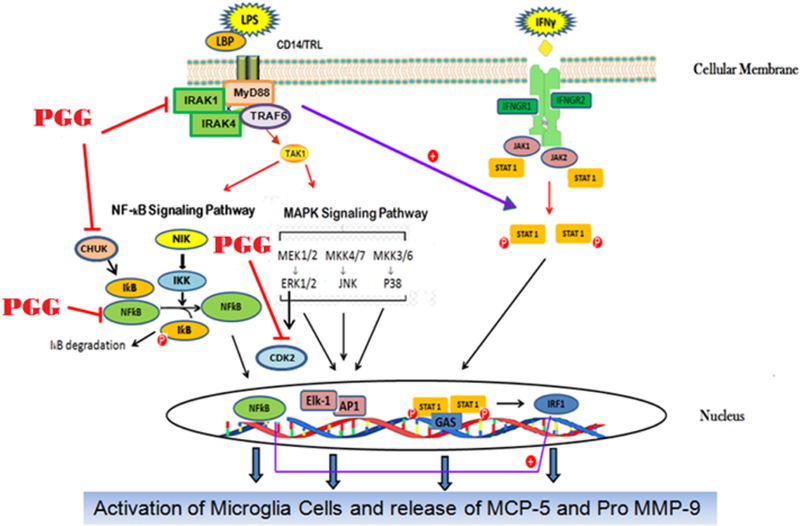
Overactivated microglial cells exhibit chronic inflammatory response and can lead to the continuous production of pro-inflammatory cytokines, perpetuating inflammation, and ultimately resulting in neuronal injury. 1,2,3,4,6-Penta-O-Galloyl-β-d-Glucose (PGG), which is a naturally occurring polyphenolic compound, has exhibited anti-inflammatory effect through the inhibition of many cytokines in different experimental models, but its effect on activated microglia cells was never described. In the present study, we investigated PGG effect in proteins involved in the NFƙB and MAPK signaling pathways, which play a central role in inflammation through their ability to induce transcription of pro-inflammatory genes.
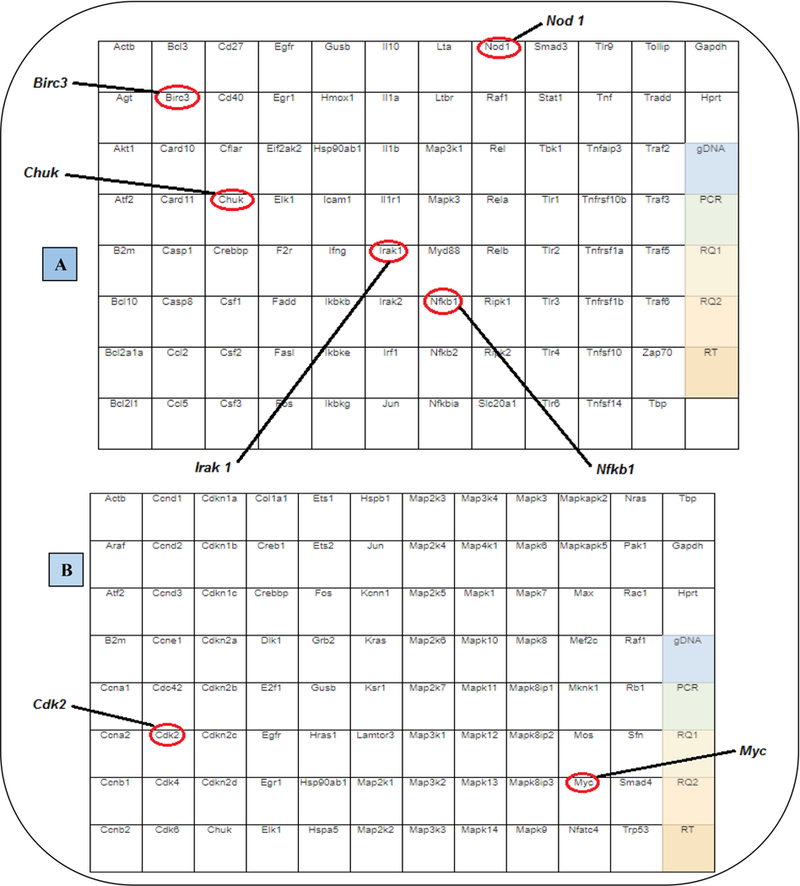
PCR arrays and RT-PCR with individual primers were used to determine the effect of PGG on mRNA expression of genes involved in NFƙB and MAPK signaling pathways. Western blots were performed to confirm PCR results.
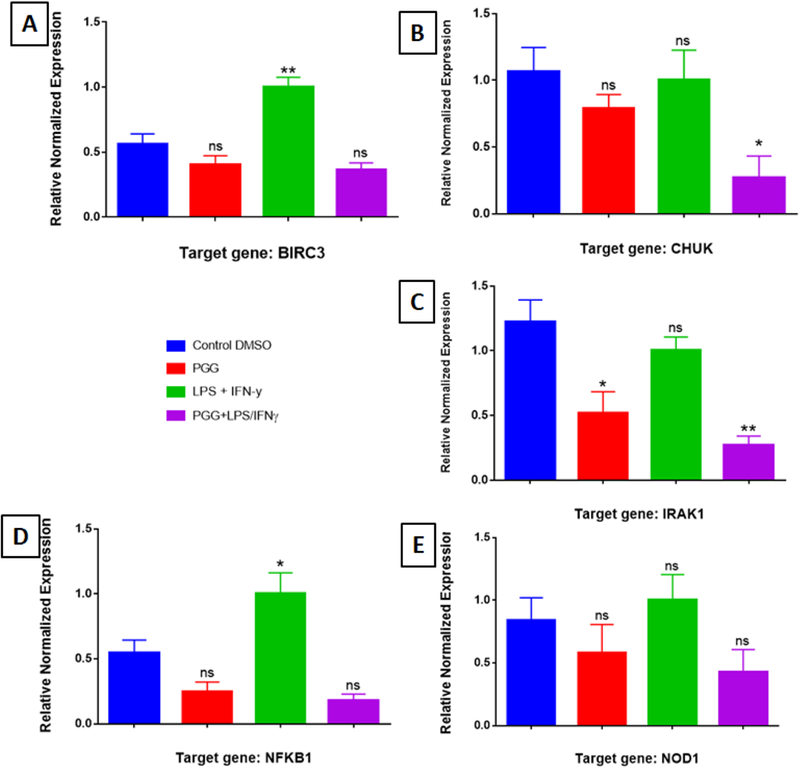
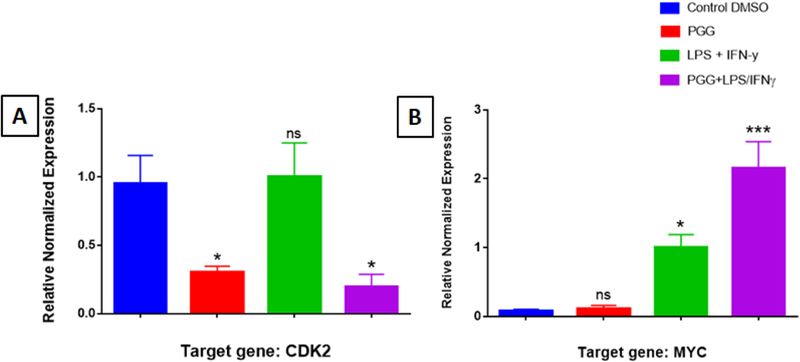
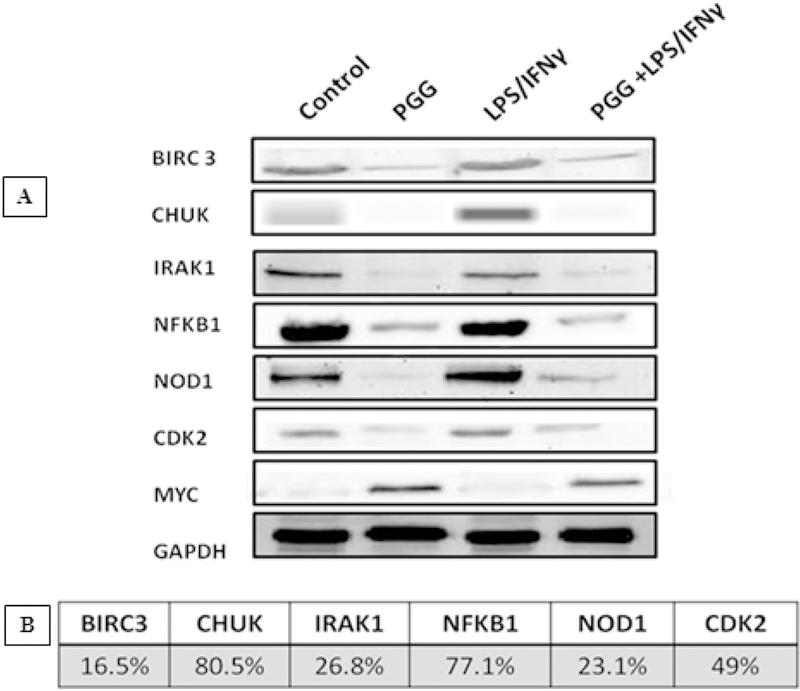
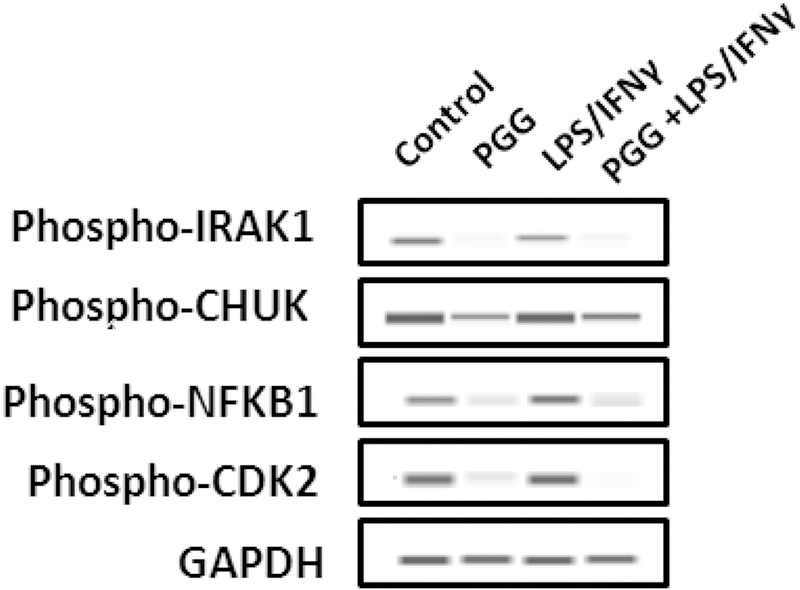
The data obtained showed that PGG modulated the expression of 5 genes from the NFƙB (BIRC3, CHUK, IRAK1, NFƙB1, NOD1) and 2 genes from MAPK signaling pathway (CDK2 and MYC) when tested in RT-PCR assays. Western blots confirmed the PCR results at the protein level, showing that PGG attenuated the expression of total and phosphorylated proteins (CDK2, CHUK, IRAK1, and NFƙB1) involved in NFƙB and MAPK signaling.
These findings show that PGG could modulate the expression of genes and proteins involved in the production of pro-inflammatory cytokines in microglia cells.
过度激活的小胶质细胞表现出慢性炎症反应,并能导致促炎细胞因子的持续产生,使炎症持续存在,并最终导致神经元损伤。1,2,3,4,6-五没食子酰基-β-D-葡萄糖(PGG)是一种天然存在的多酚化合物,在不同的实验模型中通过抑制许多细胞因子表现出抗炎作用,但它对激活的小胶质细胞的作用从未被描述过。在本研究中,我们研究了 PGG 对 NFƙB 和 MAPK 信号通路中涉及的蛋白质的影响,这些通路通过诱导促炎基因的转录在炎症中发挥核心作用。
PCR 阵列和使用个别引物的 RT-PCR 用于确定 PGG 对 NFƙB 和 MAPK 信号通路中涉及的基因的 mRNA 表达的影响。进行 Western blot 以确认 PCR 结果。
数据显示,PGG 调节了 NFƙB 途径(BIRC3、CHUK、IRAK1、NFƙB1、NOD1)中的 5 个基因和 MAPK 信号通路(CDK2 和 MYC)中的 2 个基因的表达,在 RT-PCR 试验中进行了测试。Western blot 证实了 PCR 结果在蛋白水平上,表明 PGG 减弱了 NFƙB 和 MAPK 信号转导中涉及的总蛋白和磷酸化蛋白(CDK2、CHUK、IRAK1 和 NFƙB1)的表达。
这些发现表明 PGG 可以调节小胶质细胞中促炎细胞因子产生相关基因和蛋白质的表达。