Faculty of Medicine, University of Melbourne, Melbourne, Australia.
Faculty of Economics, University of Louvain, Mons, Belgium.
Sleep. 2018 Dec 1;41(12). doi: 10.1093/sleep/zsy185.
Randomized controlled trials (RCTs) that compared the safety and efficacy of medical treatments for narcolepsy were analyzed using network meta-analysis.
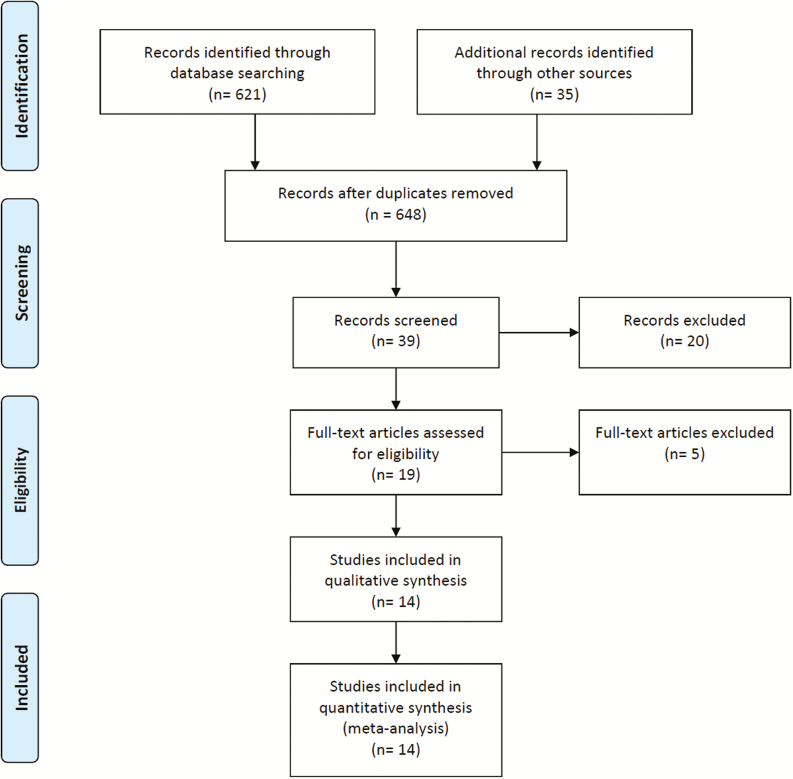
The RCTs in narcolepsy were searched. Network meta-analysis compared efficacy and safety of multiple treatments, multi-arm studies, and multi-criteria treatment decisions, based on a random model that assumed heterogeneity between studies, with corrections for multi-arm studies.
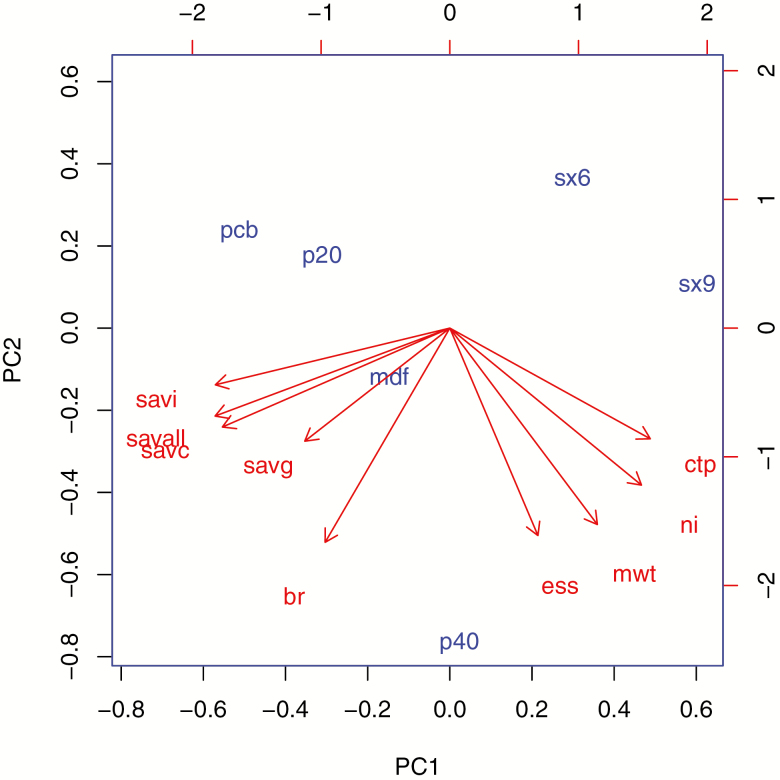
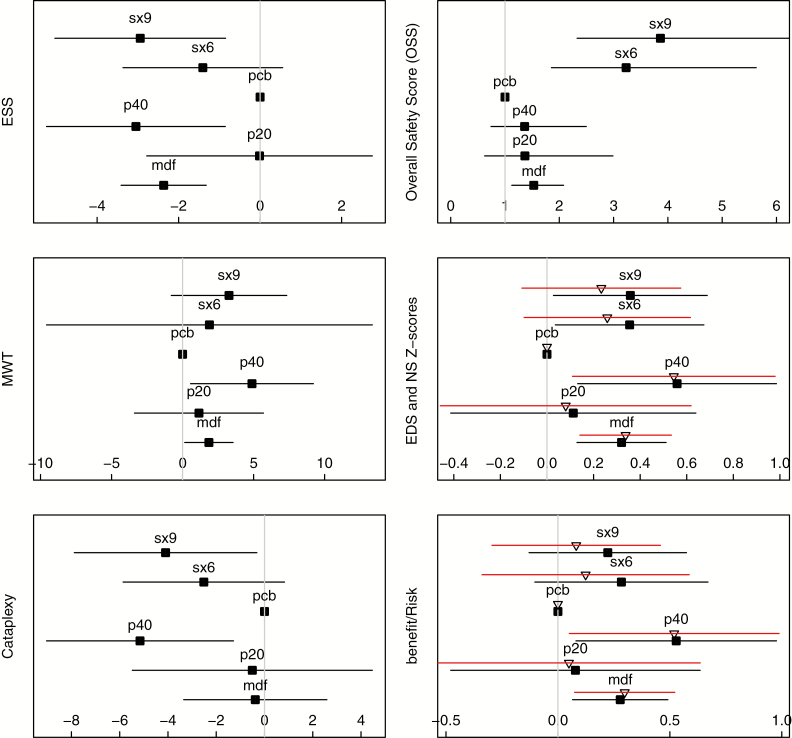
Fourteen RCTs, three drug treatments, and six doses were identified: sodium oxybate (6 and 9 g/d), modafinil (between 200 and 400 mg/d), and pitolisant (up to 20 and up to 40 mg/d). Significant heterogeneity (>50%) between studies was found in 12/14 studies for almost all endpoints, but between-design consistency was present. For ESS and MWT, sodium oxybate 9 g/d, modafinil, and pitolisant up to 40 mg/d had similar efficacy. Pitolisant 40 mg/d and sodium oxybate 9 g/d in two nightly doses had similar efficacy in reducing cataplexy. A good safety profile characterized by a TEAE incidence risk ratio (IRR) <1.5 was found for all the compared treatments, except for sodium oxybate 9 g/d. Although no significant difference was found, Pitolisant 40 mg was shown with the best P scores for the benefit/risk (BR) ratio.
Modafinil (200-400 mg/d), sodium oxybate 9 g/d, and pitolisant up to 40 mg/d had similar efficacy in reducing excessive day time sleepiness. Only sodium oxybate 9 g/d and pitolisant up to 40 mg/d were shown with a comparable beneficial effect on cataplexy. Overall, Pitolisant was found with the best P score on the BR ratio.
PROSPERO 2017 CRD42017054686. Efficacy, safety, and benefit-risk comparison of alternative treatments in narcolepsy: a network multiple comparisons of treatment meta-analysis. http://www.crd.york.ac.uk/PROSPERO/display_record.php?ID=CRD42017054686.
采用网状meta 分析比较了治疗发作性睡病的医学治疗方法的安全性和疗效。
搜索了发作性睡病的随机对照试验(RCT)。基于假设研究间存在异质性的随机模型和对多臂研究的校正,网状meta 分析比较了多种治疗方法、多臂研究和多标准治疗决策的疗效和安全性。
确定了 14 项 RCT、3 种药物治疗和 6 个剂量:羟丁酸钠(6 和 9 g/d)、莫达非尼(200 和 400 mg/d)和吡咯烷酮(高达 20 和高达 40 mg/d)。14 项研究中的 12 项/几乎所有终点均存在显著的研究间异质性(>50%),但存在设计间一致性。对于 ESS 和 MWT,羟丁酸钠 9 g/d、莫达非尼和吡咯烷酮高达 40 mg/d 的疗效相似。每晚两次给予吡咯烷酮 40 mg 和羟丁酸钠 9 g/d 可减少猝倒的疗效相似。除了羟丁酸钠 9 g/d 之外,所有比较治疗方法的安全性特征均为不良事件发生率风险比(IRR)<1.5。虽然未发现差异,但吡咯烷酮 40 mg 的获益/风险(BR)比值的 P 评分最佳。
莫达非尼(200-400 mg/d)、羟丁酸钠 9 g/d 和吡咯烷酮高达 40 mg/d 在减少日间过度嗜睡方面具有相似的疗效。只有羟丁酸钠 9 g/d 和吡咯烷酮高达 40 mg/d 显示对猝倒有类似的有益作用。总体而言,吡咯烷酮在 BR 比值的 P 评分上表现最佳。
PROSPERO 2017 CRD42017054686。发作性睡病替代治疗的疗效、安全性和获益-风险比较:治疗网状比较荟萃分析。http://www.crd.york.ac.uk/PROSPERO/display_record.php?ID=CRD42017054686。