Department of Anatomy, Sapporo Medical University, School of Medicine, Sapporo, Hokkaido, Japan.
Department of Physical Therapy, Hokkaido Chitose Rehabilitation University, Chitose, Hokkaido, Japan.
PLoS One. 2018 Sep 21;13(9):e0204252. doi: 10.1371/journal.pone.0204252. eCollection 2018.
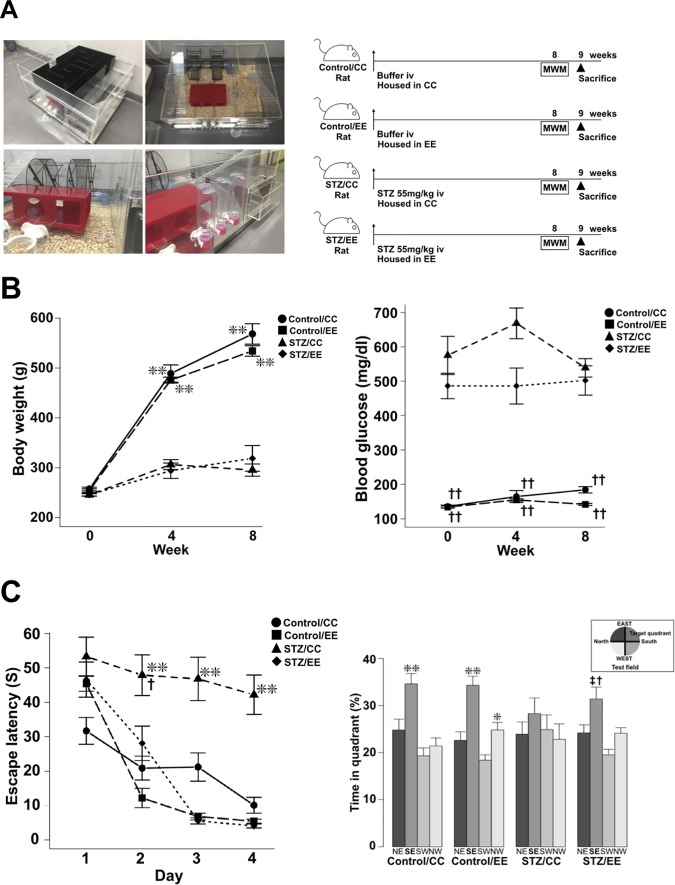
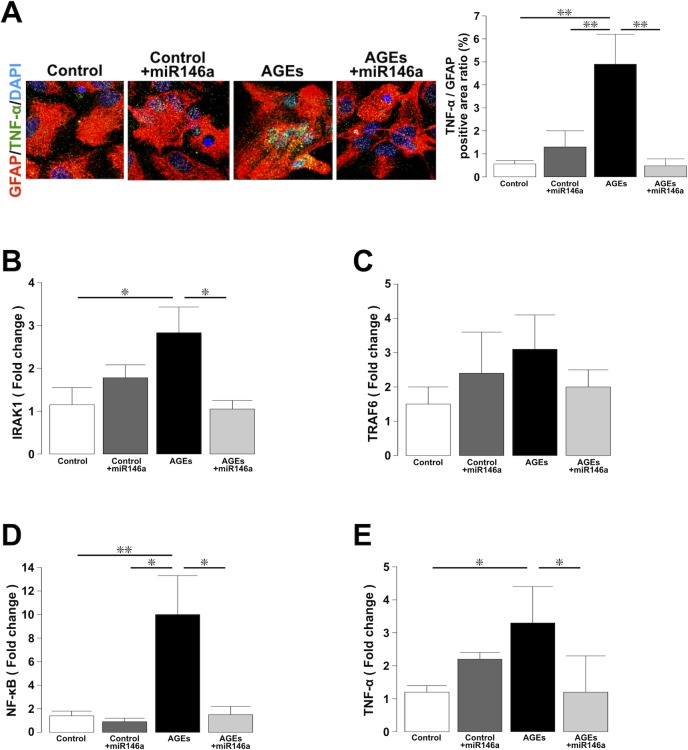
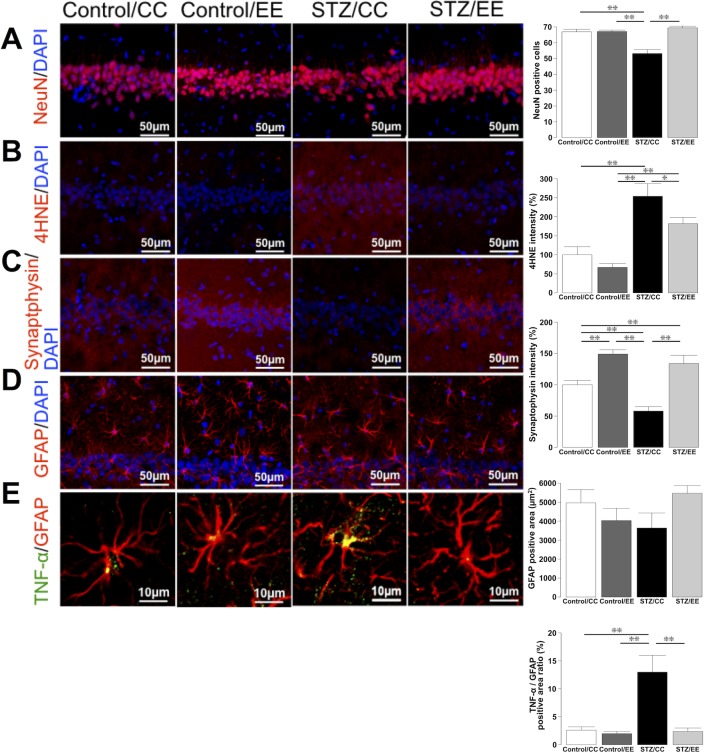
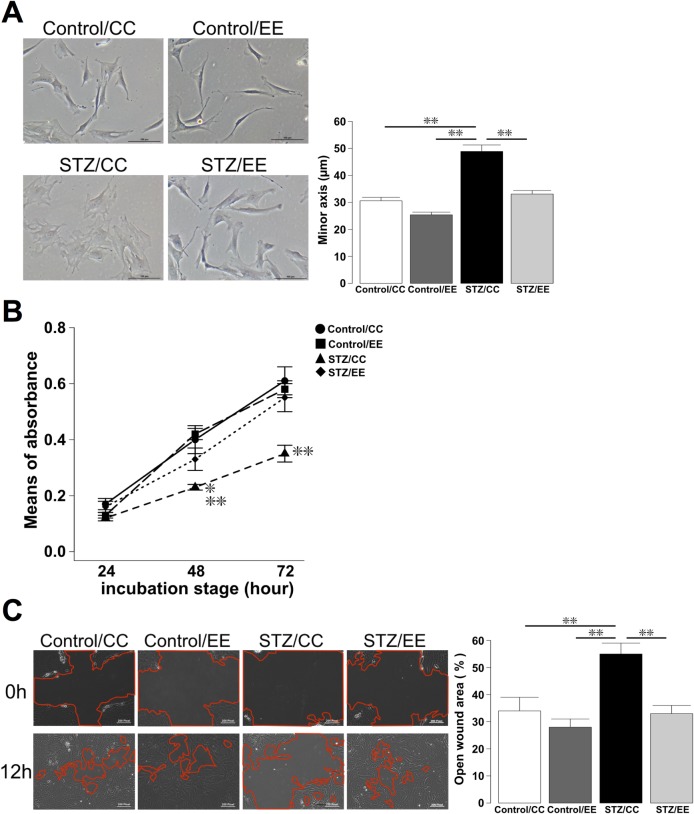
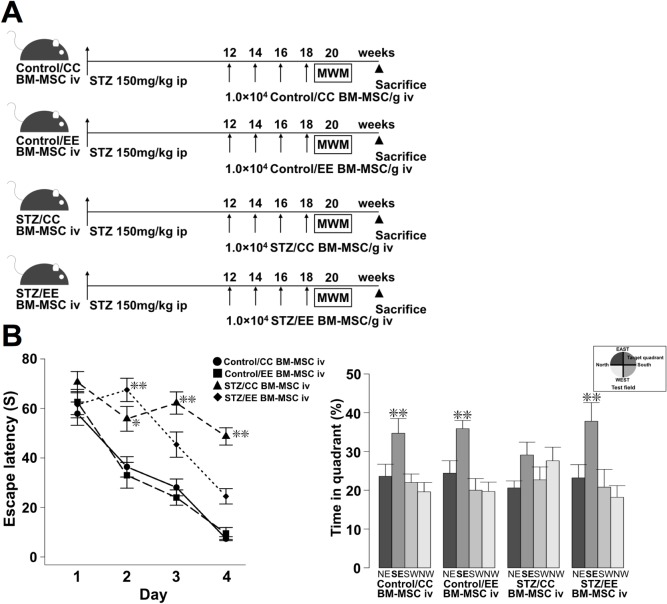
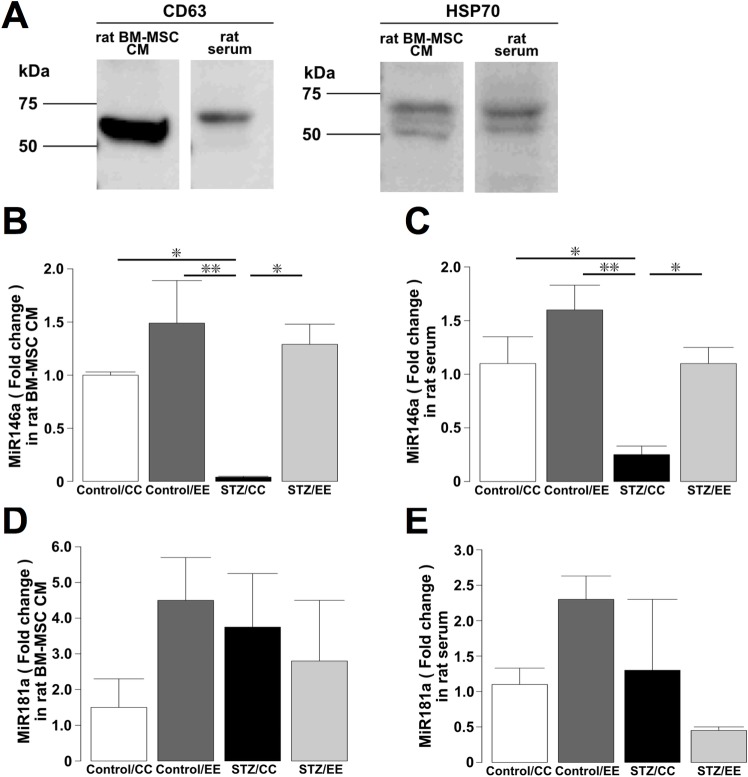
Increasing evidence suggests that an enriched environment (EE) ameliorates cognitive impairment by promoting repair of brain damage. However, the mechanisms by which this occurs have not been determined. To address this issue, we investigated whether an EE enhanced the capability of endogenous bone marrow-derived mesenchymal stem/stromal cells (BM-MSCs) to prevent hippocampal damage due to diabetes by focusing on miRNA carried in BM-MSC-derived exosomes. In diabetic streptozotocin (STZ) rats housed in an EE (STZ/EE), cognitive impairment was significantly reduced, and both neuronal and astroglial damage in the hippocampus was alleviated compared with STZ rats housed in conventional cages (STZ/CC). BM-MSCs isolated from STZ/CC rats had functional and morphological abnormalities that were not detected in STZ/EE BM-MSCs. The miR-146a levels in exosomes in conditioned medium of cultured BM-MSCs and serum from STZ/CC rats were decreased compared with non-diabetic rats, and the level was restored in STZ/EE rats. Thus, the data suggest that increased levels of miR-146a in sera were derived from endogenous BM-MSCs in STZ/EE rats. To examine the possibility that increased miR-146a in serum may exert anti-inflammatory effects on astrocytes in diabetic rats, astrocytes transfected with miR-146a were stimulated with advanced glycation end products (AGEs) to mimic diabetic conditions. The expression of IRAK1, NF-κB, and tumor necrosis factor-α was significantly higher in AGE-stimulated astrocytes, and these factors were decreased in miR-146a-transfected astrocytes. These results suggested that EEs stimulate up-regulation of exosomal miR-146a secretion by endogenous BM-MSCs, which exerts anti-inflammatory effects on damaged astrocytes and prevents diabetes-induced cognitive impairment.
越来越多的证据表明,丰富的环境(EE)通过促进脑损伤的修复来改善认知障碍。然而,其发生的机制尚未确定。为了解决这个问题,我们研究了丰富的环境是否通过关注骨髓源性间充质干细胞(BM-MSCs)衍生的外泌体中的 miRNA 来增强内源性 BM-MSCs 预防糖尿病引起的海马损伤的能力。在饲养于丰富环境中的糖尿病链脲佐菌素(STZ)大鼠(STZ/EE)中,与饲养于常规笼中的 STZ 大鼠(STZ/CC)相比,认知障碍显著减轻,海马中的神经元和星形胶质细胞损伤也得到缓解。从 STZ/CC 大鼠分离的 BM-MSCs 具有功能和形态异常,而 STZ/EE BM-MSCs 中未检测到这些异常。与非糖尿病大鼠相比,STZ/CC 大鼠 BM-MSCs 培养条件培养基中的外泌体和血清中的 miR-146a 水平降低,而 STZ/EE 大鼠的水平恢复。因此,数据表明,STZ/EE 大鼠血清中 miR-146a 水平的增加来自于内源性 BM-MSCs。为了检验血清中增加的 miR-146a 可能对糖尿病大鼠星形胶质细胞发挥抗炎作用的可能性,用 miR-146a 转染星形胶质细胞,用晚期糖基化终产物(AGEs)刺激来模拟糖尿病条件。在 AGE 刺激的星形胶质细胞中,IRAK1、NF-κB 和肿瘤坏死因子-α的表达显著升高,而在 miR-146a 转染的星形胶质细胞中则降低。这些结果表明,EEs 刺激内源性 BM-MSCs 上调外泌体 miR-146a 的分泌,从而对受损的星形胶质细胞发挥抗炎作用,并防止糖尿病引起的认知障碍。