Mukherjee Abhirup, Dhar Neha, Stathos Mark, Schaffer David V, Kane Ravi S
School of Chemical & Biomolecular Engineering, Georgia Institute of Technology, Atlanta, GA 30332, USA.
Department of Chemical Engineering, University of California Berkeley, Berkeley, CA 94720, USA; Department of Bioengineering, University of California, Berkeley, Berkeley, CA 94720, USA; Helen Wills Neuroscience Institute, University of California, Berkeley, Berkeley, CA 94720, USA.
iScience. 2018 Aug 31;6:13-21. doi: 10.1016/j.isci.2018.07.007. Epub 2018 Jul 17.
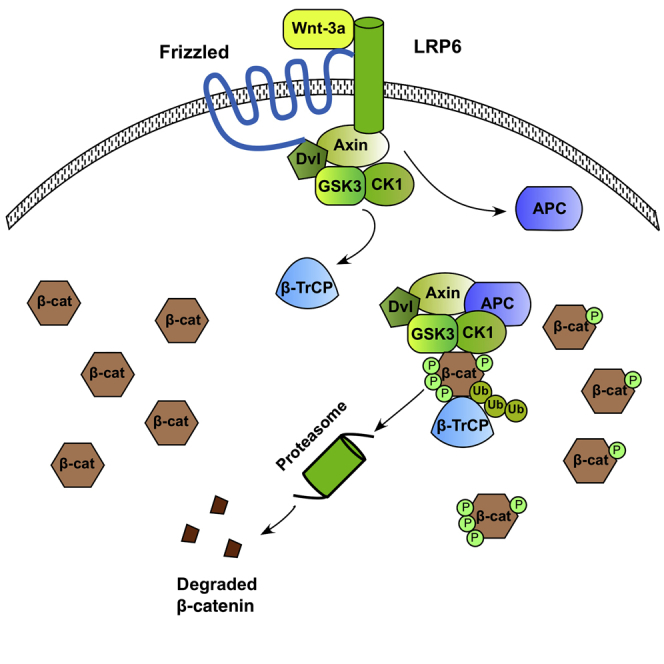
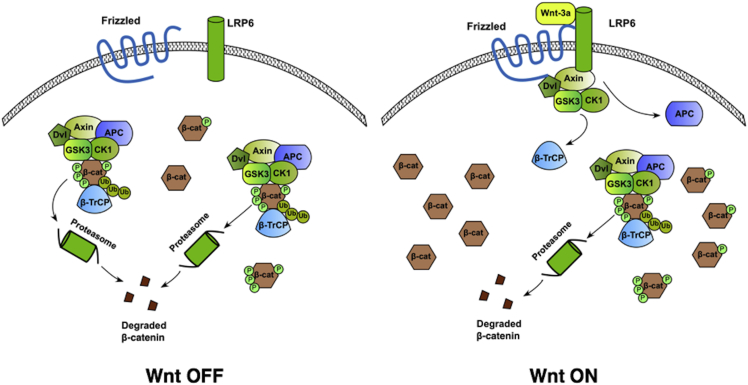
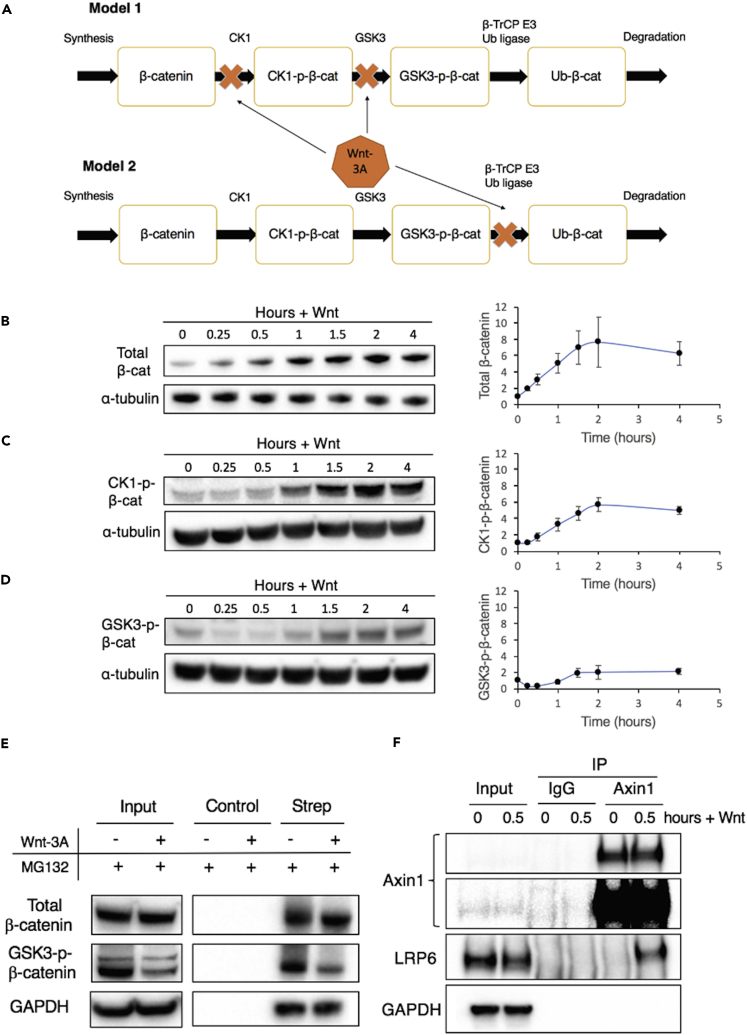
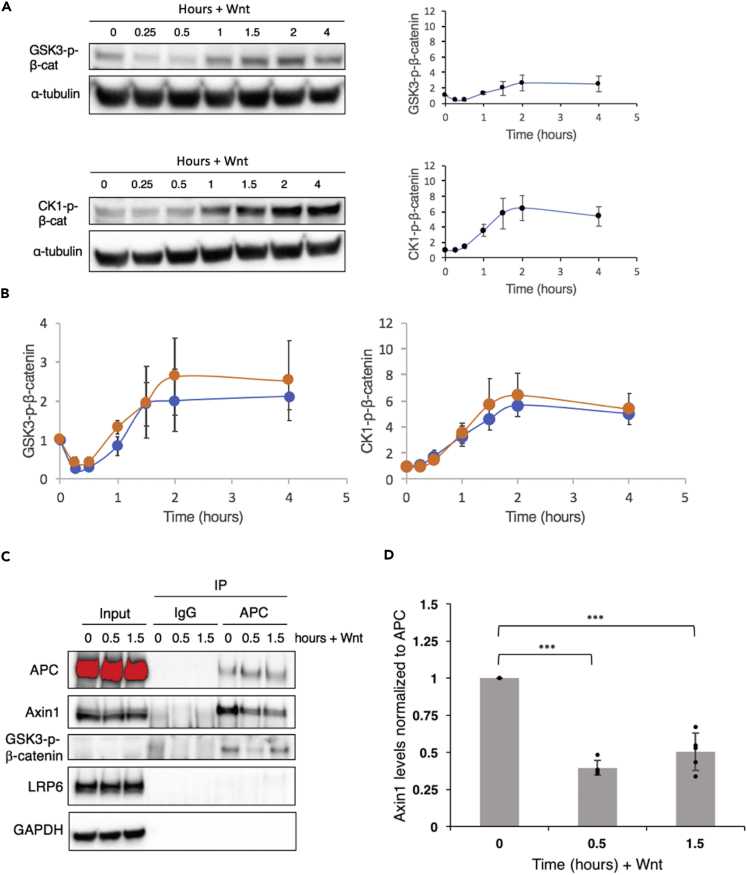
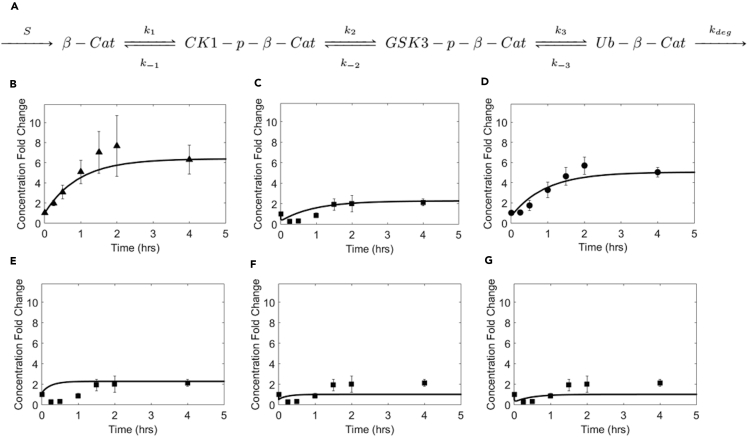
Despite extensive research on the canonical Wnt signaling pathway, the mechanism by which this signal downregulates the activity of destruction complexes and inhibits β-catenin degradation remains controversial. In particular, recent attention has focused on two main competing mechanisms-inhibition of phosphorylation and inhibition of ubiquitination. Our combined experimental and theoretical analysis demonstrates that the disassembly of a fraction of the intracellular destruction complexes results in the partial inhibition of both β-catenin phosphorylation and ubiquitination. This inhibition is spatially patterned, consistent with the relocalization of some destruction complexes to the cellular membrane upon Wnt stimulation. Moreover, in contrast to the generally accepted view that the destruction complex is highly processive, our analysis supports a distributive model, in which β-catenin can dissociate from the complex between sequential phosphorylation events. Understanding the fundamental mechanism by which Wnt signaling is regulated provides a rational basis for tuning the pathway for scientific and therapeutic purposes.
尽管对经典Wnt信号通路进行了广泛研究,但该信号下调破坏复合物活性并抑制β-连环蛋白降解的机制仍存在争议。特别是,最近的关注集中在两种主要的相互竞争的机制上——磷酸化抑制和泛素化抑制。我们结合实验和理论分析表明,一部分细胞内破坏复合物的解体导致β-连环蛋白磷酸化和泛素化均受到部分抑制。这种抑制具有空间模式,与Wnt刺激后一些破坏复合物重新定位到细胞膜一致。此外,与普遍接受的破坏复合物具有高度连续性的观点相反,我们的分析支持一种分布式模型,即β-连环蛋白可以在连续的磷酸化事件之间从复合物中解离。了解Wnt信号通路调控的基本机制为出于科学和治疗目的调节该通路提供了合理依据。