Department of Developmental Biology, Howard Hughes Medical Institute, Institute for Stem Cell Biology and Regenerative Medicine, Stanford University, 265 Campus Drive, Stanford, CA 94305, USA.
Science. 2013 Mar 22;339(6126):1445-8. doi: 10.1126/science.1231077.
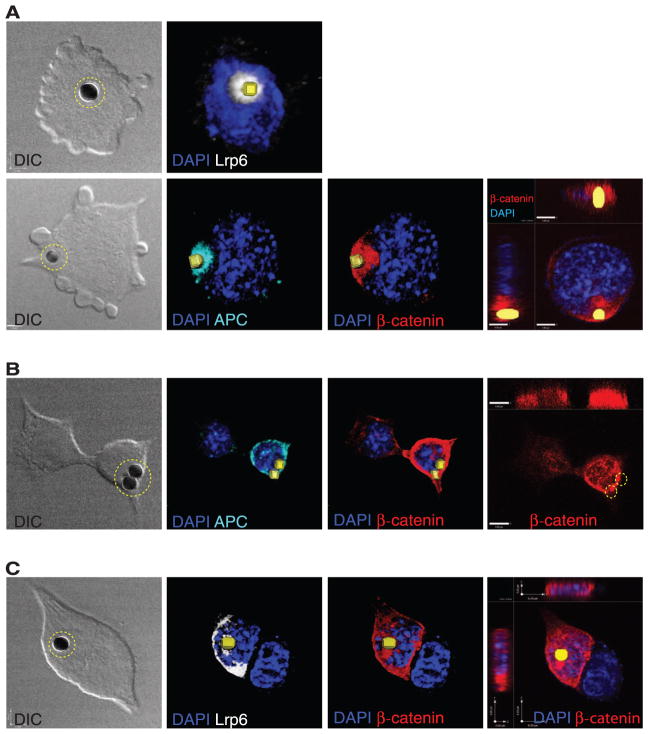
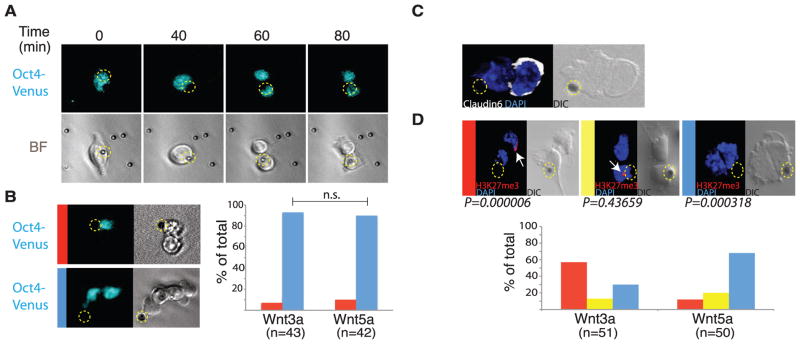
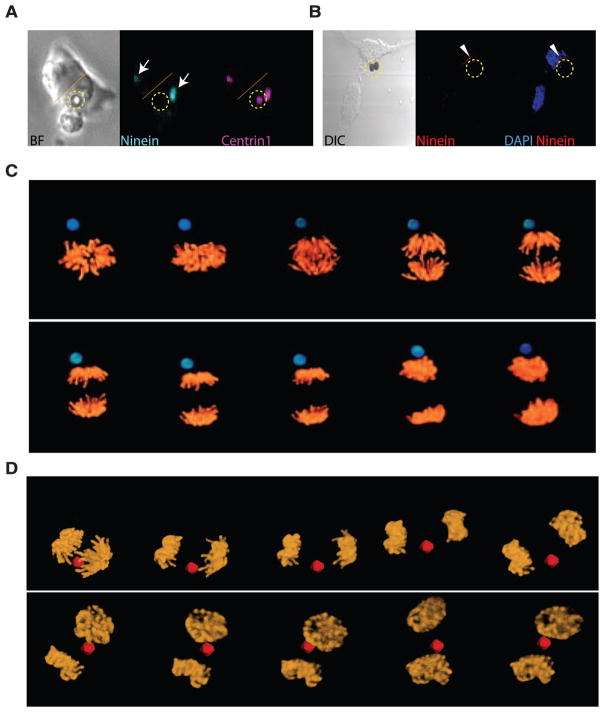
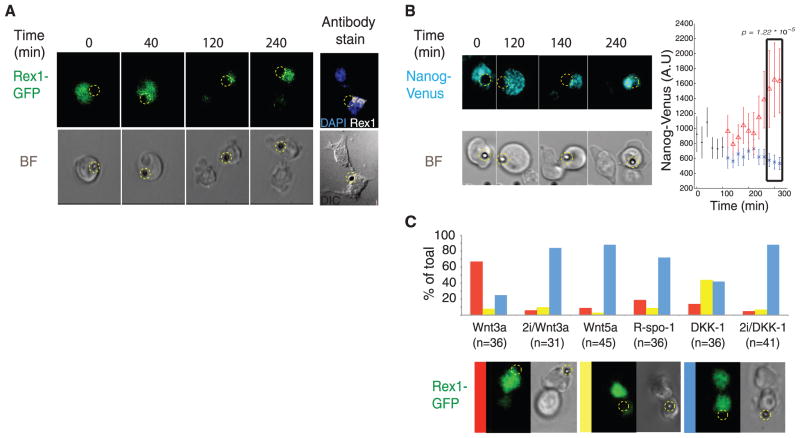
Developmental signals such as Wnts are often presented to cells in an oriented manner. To examine the consequences of local Wnt signaling, we immobilized Wnt proteins on beads and introduced them to embryonic stem cells in culture. At the single-cell level, the Wnt-bead induced asymmetric distribution of Wnt-β-catenin signaling components, oriented the plane of mitotic division, and directed asymmetric inheritance of centrosomes. Before cytokinesis was completed, the Wnt-proximal daughter cell expressed high levels of nuclear β-catenin and pluripotency genes, whereas the distal daughter cell acquired hallmarks of differentiation. We suggest that a spatially restricted Wnt signal induces an oriented cell division that generates distinct cell fates at predictable positions relative to the Wnt source.
发育信号(如 Wnt)通常以定向的方式呈现给细胞。为了研究局部 Wnt 信号的后果,我们将 Wnt 蛋白固定在珠上,并将其引入培养中的胚胎干细胞。在单细胞水平上,Wnt 珠诱导 Wnt-β-catenin 信号传导成分的不对称分布,定向有丝分裂分裂的平面,并指导中心体的不对称遗传。在胞质分裂完成之前,Wnt 接近的子细胞表达高水平的核β-catenin 和多能性基因,而远离子细胞获得分化的特征。我们认为,空间受限的 Wnt 信号诱导定向细胞分裂,相对于 Wnt 源在可预测的位置产生不同的细胞命运。