Bray P, Carter A, Simons C, Guo V, Puckett C, Kamholz J, Spiegel A, Nirenberg M
Proc Natl Acad Sci U S A. 1986 Dec;83(23):8893-7. doi: 10.1073/pnas.83.23.8893.
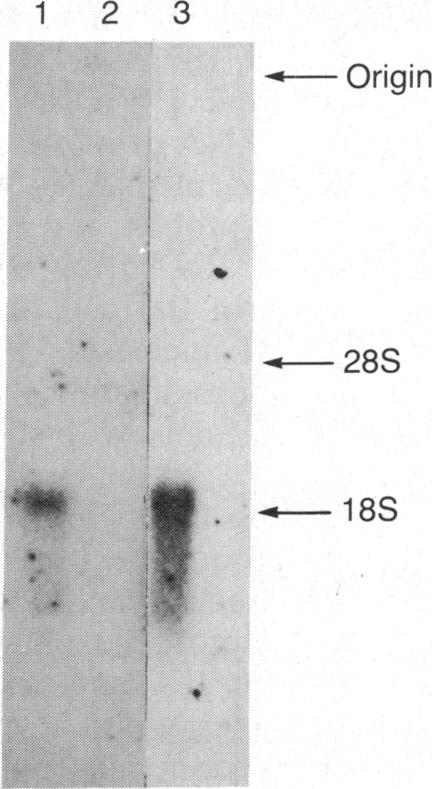
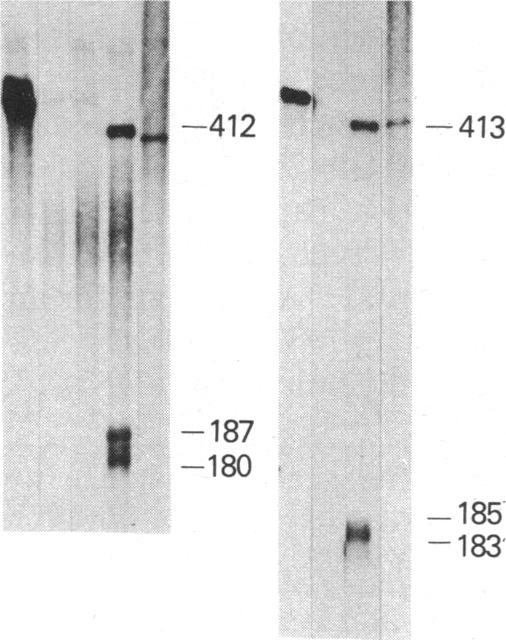
lambda gt11 cDNA libraries derived from human brain were screened with oligonucleotide probes for recombinants that code for alpha subunits of G signal transduction proteins. Eleven alpha s clones were detected with both probes and characterized. Four types of alpha s cDNA were cloned that differ in nucleotide sequence in the region that corresponds to amino acid residues 71-88. The clones differ in the codon for alpha s amino acid residue 71 (glutamic acid or aspartic acid), the presence or absence of codons for the next 15 amino acid residues, and the presence or absence of an adjacent serine residue. S1 nuclease protection experiments revealed at least two forms of alpha s mRNA. A mechanism for generating four species of alpha s mRNA by alternative splicing of precursor RNA is proposed.
用人脑来源的λgt11 cDNA文库,用寡核苷酸探针筛选编码G信号转导蛋白α亚基的重组体。用两种探针检测到11个αs克隆并进行了表征。克隆出了四种αs cDNA,它们在对应于氨基酸残基71 - 88的区域核苷酸序列不同。这些克隆在αs氨基酸残基71的密码子(谷氨酸或天冬氨酸)、接下来15个氨基酸残基密码子的有无以及相邻丝氨酸残基的有无方面存在差异。S1核酸酶保护实验揭示了至少两种形式的αs mRNA。提出了一种通过前体RNA可变剪接产生四种αs mRNA的机制。