Psychology Department of the Public Health Institute of Harbin Medical University, Heilongjiang Province, Harbin, China.
Affiliated Hosptial of Jining Medical University, Shandong Province, Jining, China.
Sci Rep. 2018 Sep 21;8(1):14181. doi: 10.1038/s41598-018-31530-2.
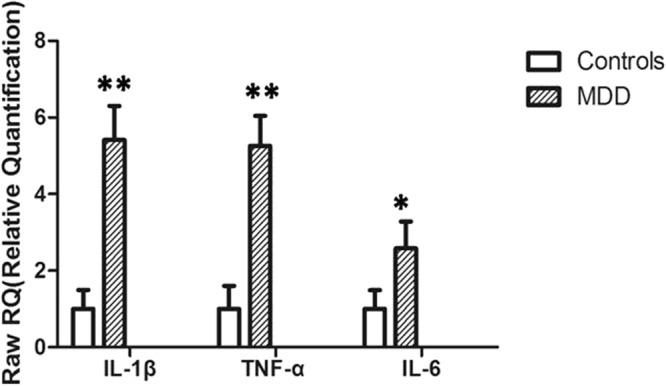
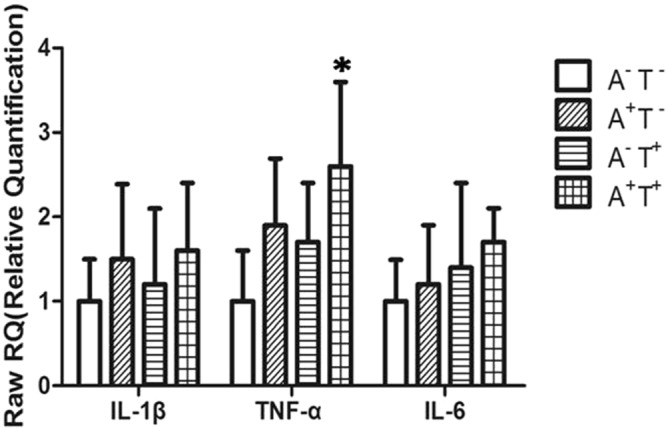
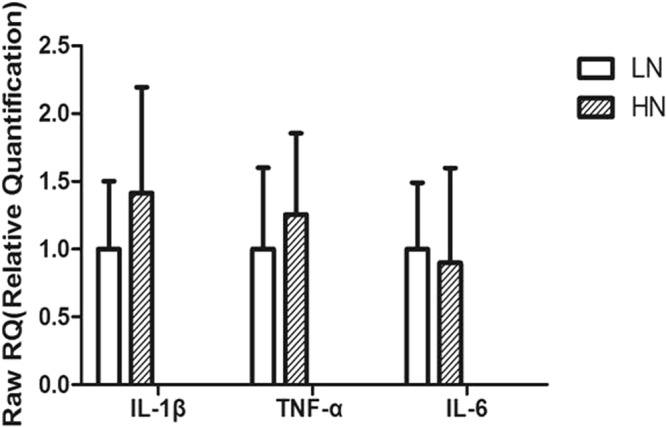
The purpose of this study is to explore Dvl3 variants and their interaction with negative life events on MDD susceptibility in a Chinese Han population. Additionally, we also attempted to identify whether there is an association between Dvl3 variants and pro-inflammatory cytokines. A total of 1102 participants, consisting of 550 patients with MDD and 552 healthy subjects, were recruited for genotyping by TaqMan allelic discrimination assay. Pro-inflammatory cytokine mRNA levels in peripheral blood were measured by QPCR. After the assessment of negative life events by the Life Events Scale, the Dvl3 gene-environment interaction (G × E) and risk factors were evaluated using generalized multifactor dimensionality reduction method (GMDR) and logistic regression analysis, respectively. This study is the first to reveal the interaction between Dvl3 allelic variations and negative life events as well as pro-inflammatory cytokines on MDD susceptibility in a Chinese Han population.
本研究旨在探讨 Dvl3 变异及其与中国汉族人群负性生活事件在 MDD 易感性中的相互作用。此外,我们还试图确定 Dvl3 变异与促炎细胞因子之间是否存在关联。通过 TaqMan 等位基因鉴别检测法,共招募了 1102 名参与者,其中包括 550 名 MDD 患者和 552 名健康受试者进行基因分型。通过 QPCR 测量外周血中促炎细胞因子的 mRNA 水平。通过生活事件量表评估负性生活事件后,使用广义多因素降维方法(GMDR)和逻辑回归分析分别评估 Dvl3 基因-环境相互作用(G×E)和危险因素。这项研究首次揭示了 Dvl3 等位基因变异与负性生活事件以及促炎细胞因子在中国汉族人群 MDD 易感性中的相互作用。