Lee Dong-Joon, Wu Lei, Shimono Masaki, Piao Zhengguo, Green David W, Lee Jong-Min, Jung Han-Sung
Division in Anatomy and Developmental Biology, Department of Oral Biology, Oral Science Research Center, BK21 PLUS Project, Yonsei University College of Dentistry, Seoul, South Korea.
Key Laboratory of Oral Medicine, Guangzhou Institute of Oral Disease, Stomatological Hospital of Guangzhou Medical University, Guangzhou, China.
Front Physiol. 2018 Aug 14;9:1098. doi: 10.3389/fphys.2018.01098. eCollection 2018.
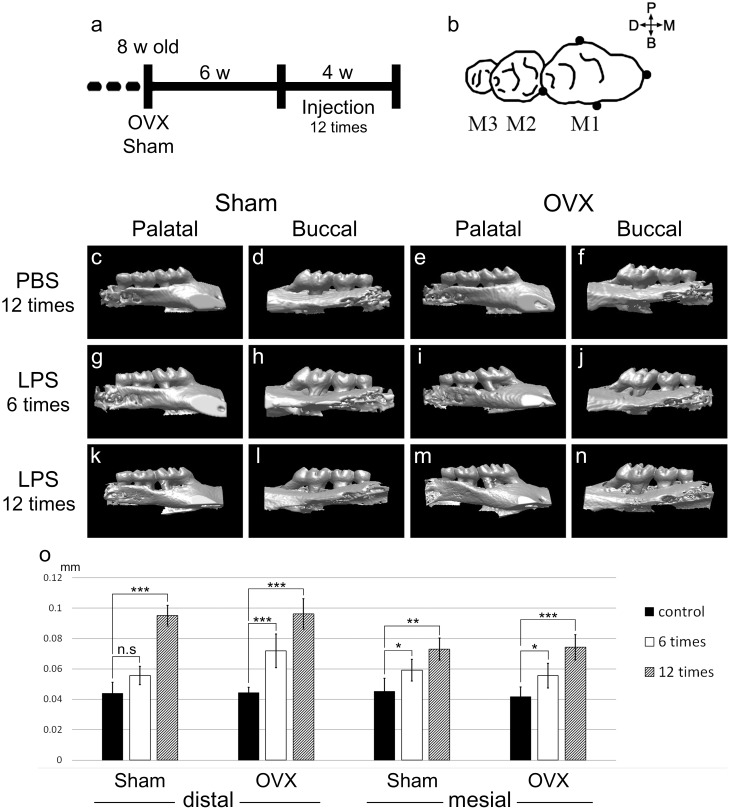
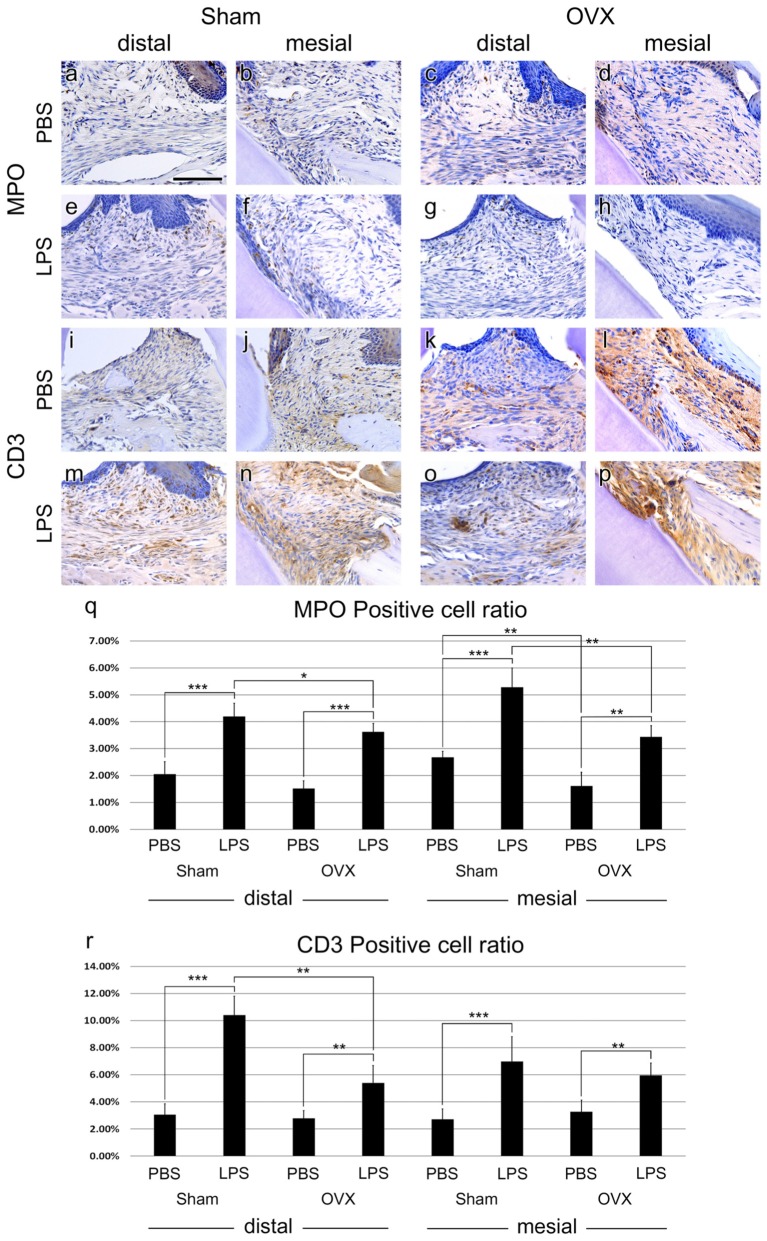
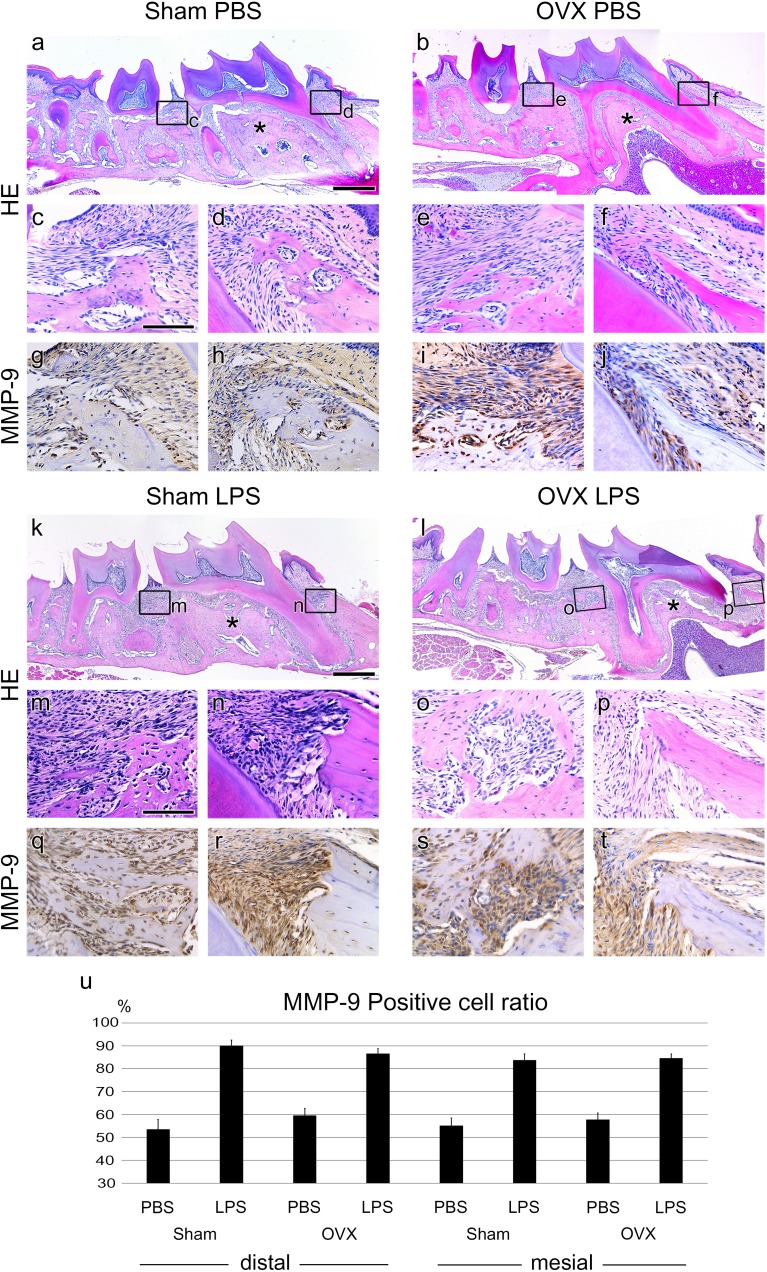
Over the past four decades, it has become accepted that periodontal disease is caused by specific bacterial infections and that individuals are uniformly susceptible neither to these infections nor to the damage caused by them. The specific bacterial infections and the composition of the environment in which these bacteria easily settle cause an immune response. The immune cells involved in pathogenesis of periodontitis migrate into the periodontitis lesion and advance the disease. The purpose of the present study is to investigate the correlation between immune cell migration and progression of periodontal disease by inducing estrogen deficiency through ovariectomy (OVX) to mimic postmenopausal women and treatment with lipopolysaccharide (LPS). The LPS derived from induced periodontitis and absorption of the alveolar bone dose-dependently. However, the alveolar crest level reduction after LPS injection between OVX and Sham operated mice did not show a significant difference. Matrix metallopeptidase-9 (MMP-9), which is known to be able to detect the progression of periodontitis in general, was not significantly different between OVX and Sham groups. However, immune cells such as T-lymphocytes and neutrophils migrated less overall in OVX groups than Sham operated groups. These findings can be a topic of debate on the old controversy regarding the relationship between periodontal disease and hormonal change. Currently, in clinical practice, menopause is not a major consideration in the treatment of periodontal disease. This study suggests that treatment methods and medication should be considered in the treatment of infectious periodontal disease in postmenopausal women.
在过去的四十年里,人们已经普遍接受牙周病是由特定细菌感染引起的,而且个体对这些感染及其造成的损害并非普遍易感。特定的细菌感染以及这些细菌易于定居的环境组成会引发免疫反应。参与牙周炎发病机制的免疫细胞迁移到牙周炎病变部位并促使疾病发展。本研究的目的是通过卵巢切除术(OVX)诱导雌激素缺乏以模拟绝经后女性,并使用脂多糖(LPS)进行治疗,从而研究免疫细胞迁移与牙周病进展之间的相关性。源自诱导性牙周炎的LPS会导致牙槽骨吸收,且呈剂量依赖性。然而,在OVX小鼠和假手术小鼠中,注射LPS后牙槽嵴水平的降低并无显著差异。基质金属蛋白酶-9(MMP-9)通常能够检测牙周炎的进展,在OVX组和假手术组之间并无显著差异。然而,OVX组中的T淋巴细胞和中性粒细胞等免疫细胞总体迁移量比假手术组少。这些发现可能会引发关于牙周病与激素变化之间关系这一古老争议的讨论。目前,在临床实践中,绝经并非牙周病治疗中的主要考虑因素。本研究表明,在治疗绝经后女性的感染性牙周病时应考虑治疗方法和用药。