Department of Hematology and Oncology, Chang Gung Memorial Hospital, Chiayi 61363, Taiwan.
Chang Gung Institute of Technology, Taoyuan 33302, Taiwan.
Int J Mol Sci. 2018 Sep 22;19(10):2884. doi: 10.3390/ijms19102884.
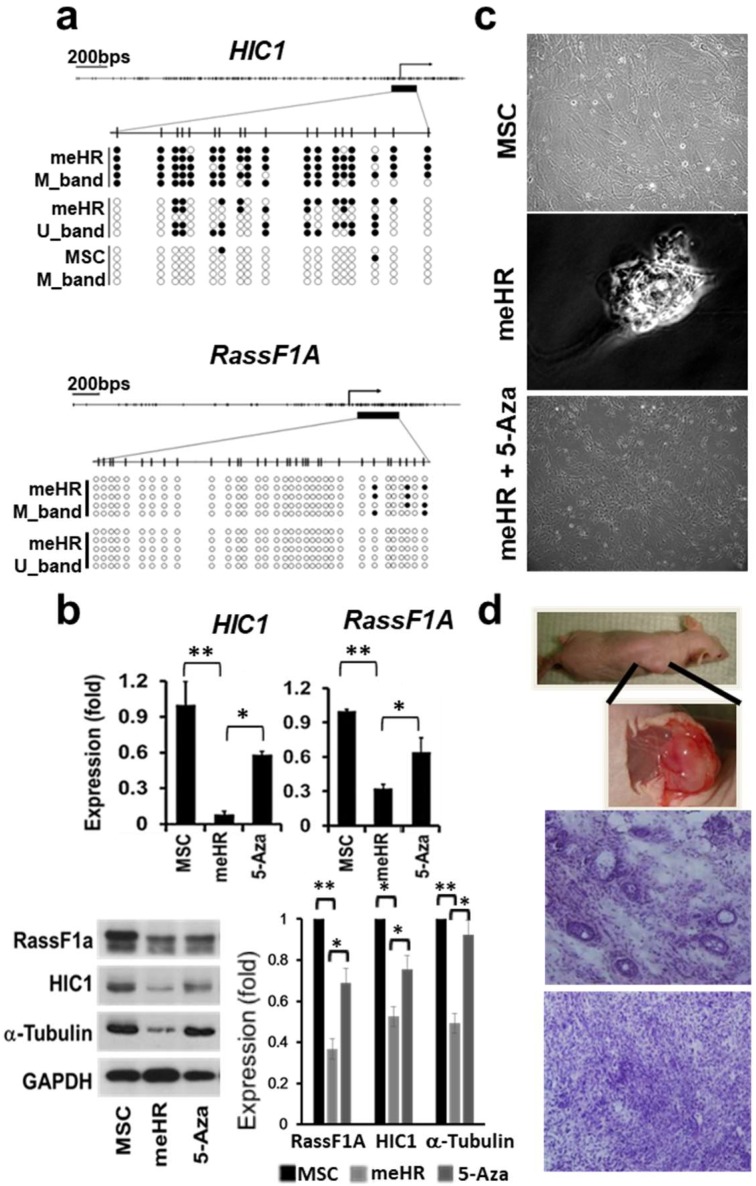
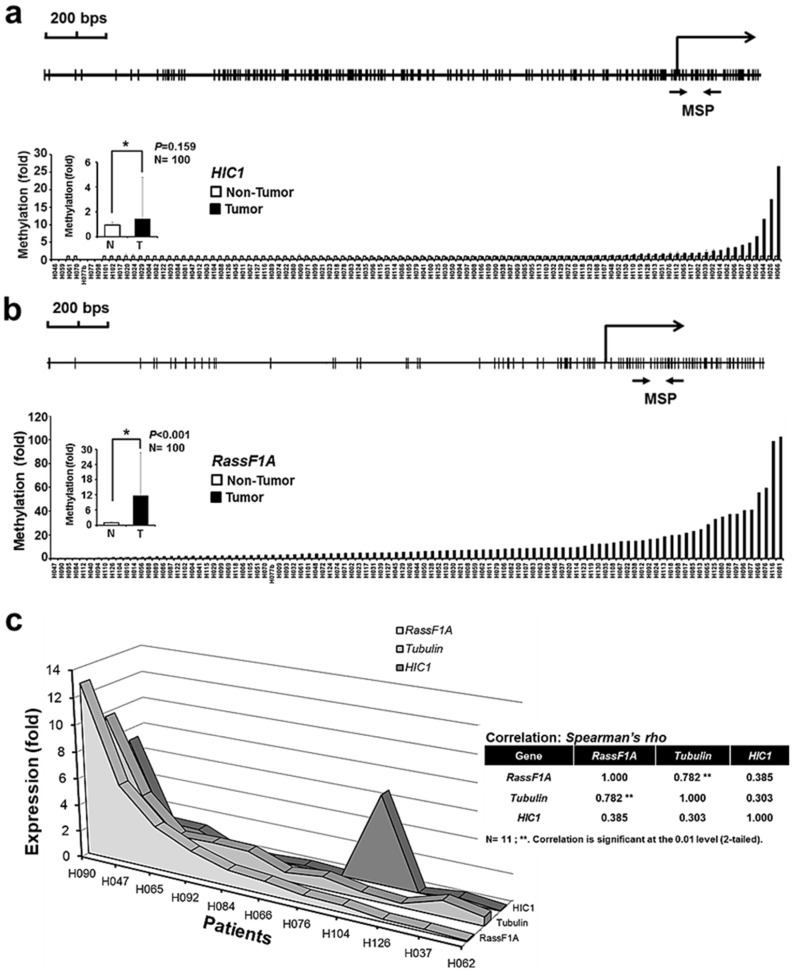
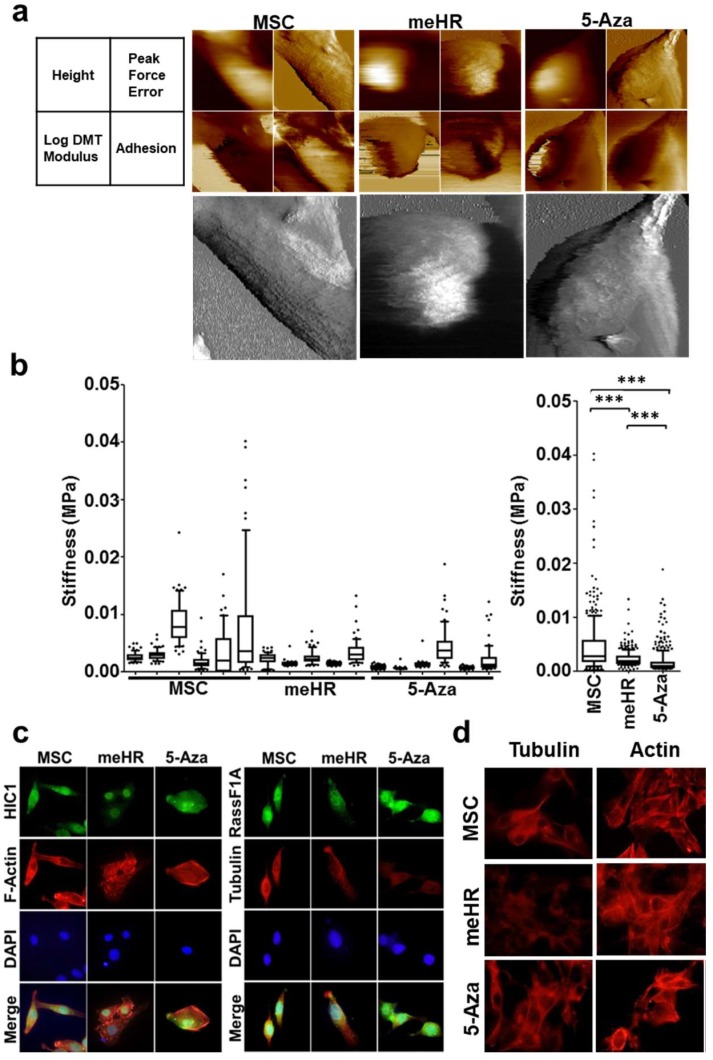
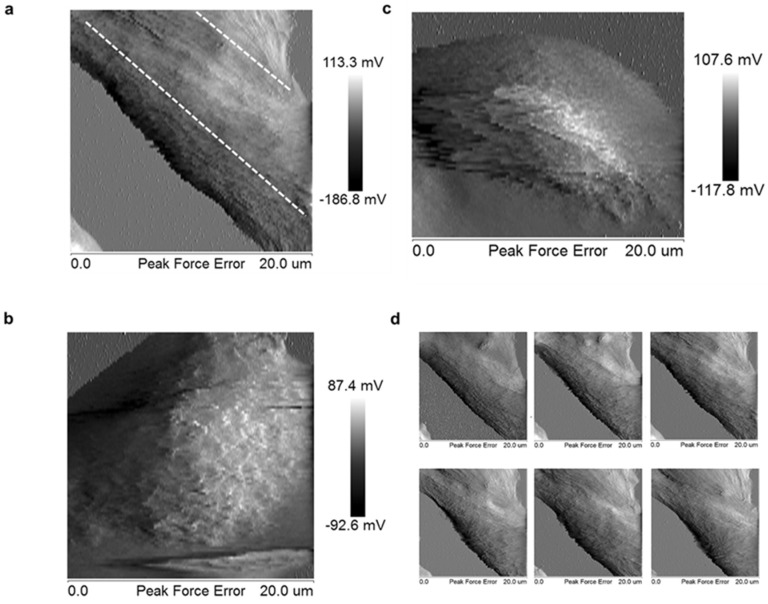
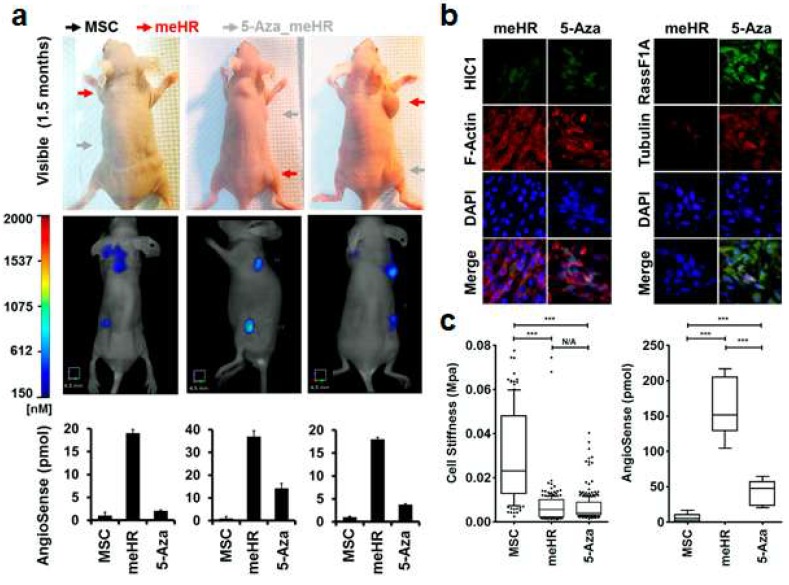
Cell stiffness is a potential biomarker for monitoring cellular transformation, metastasis, and drug resistance development. Environmental factors relayed into the cell may result in formation of inheritable markers (e.g., DNA methylation), which provide selectable advantages (e.g., tumor development-favoring changes in cell stiffness). We previously demonstrated that targeted methylation of two tumor suppressor genes, hypermethylated in cancer 1 () and Ras-association domain family member 1A (), transformed mesenchymal stem cells (MSCs). Here, transformation-associated cytoskeleton and cell stiffness changes were evaluated. Atomic force microscopy (AFM) was used to detect cell stiffness, and immunostaining was used to measure cytoskeleton expression and distribution in cultured cells as well as in vivo. and methylation ()-transformed MSCs developed into tumors that clonally expanded in vivo. In -transformed MSCs, cell stiffness was lost, tubulin expression decreased, and F-actin was disorganized; DNA methylation inhibitor treatment suppressed their tumor progression, but did not fully restore their F-actin organization and stiffness. Thus, -induced cell transformation was accompanied by the loss of cellular stiffness, suggesting that somatic epigenetic changes provide inheritable selection markers during tumor propagation, but inhibition of oncogenic aberrant DNA methylation cannot restore cellular stiffness fully. Therefore, cell stiffness is a candidate biomarker for cells' physiological status.
细胞刚性是监测细胞转化、转移和耐药性发展的潜在生物标志物。环境因素传递到细胞中可能导致可遗传标记的形成(例如,DNA 甲基化),这提供了可选择的优势(例如,有利于肿瘤发展的细胞刚性变化)。我们之前证明,两个肿瘤抑制基因的靶向甲基化,即癌症中高甲基化 1 () 和 Ras 相关结构域家族成员 1A (),可转化间充质干细胞 (MSCs)。在这里,评估了与转化相关的细胞骨架和细胞刚性变化。原子力显微镜 (AFM) 用于检测细胞刚性,免疫染色用于测量培养细胞以及体内的细胞骨架表达和分布。 和 甲基化 ()-转化的 MSC 发展为体内克隆扩增的肿瘤。在 -转化的 MSC 中,细胞刚性丧失,微管蛋白表达减少,F-肌动蛋白紊乱;DNA 甲基化抑制剂治疗抑制了它们的肿瘤进展,但不能完全恢复它们的 F-肌动蛋白组织和刚性。因此, -诱导的细胞转化伴随着细胞刚性的丧失,表明体细胞表观遗传变化在肿瘤传播过程中提供了可遗传的选择标记,但致癌异常 DNA 甲基化的抑制不能完全恢复细胞刚性。因此,细胞刚性是细胞生理状态的候选生物标志物。