Private Practice, Lindenstraße 44, Bad Essen, 49152, Germany.
Department of Orthodontics, University Medical Center UMG, Robert-Koch-Straße 40, 37075, Göttingen, Germany.
Head Face Med. 2018 Sep 24;14(1):17. doi: 10.1186/s13005-018-0176-2.
Controlled space closure in cases of isolated lower second premolar aplasia (ILSPA) without maxillary counterbalancing extraction is challenging. Anterior anchorage loss may occur during space closure resulting in compromised occlusal results in terms of an absence of proper canine guidance during laterotrusive mandible movements. In order to evaluate the effectiveness of Herbst telescope anchorage in combination with double-cable, pull mechanics and a completely customized lingual appliance for orthodontic space management in cases of ILSPA, we tested the null hypothesis that there is a significant deterioration in the sagittal canine relationship towards an Angle-Class-II occlusion expressed as a loss of anterior anchorage following space closure with molar mesialization.
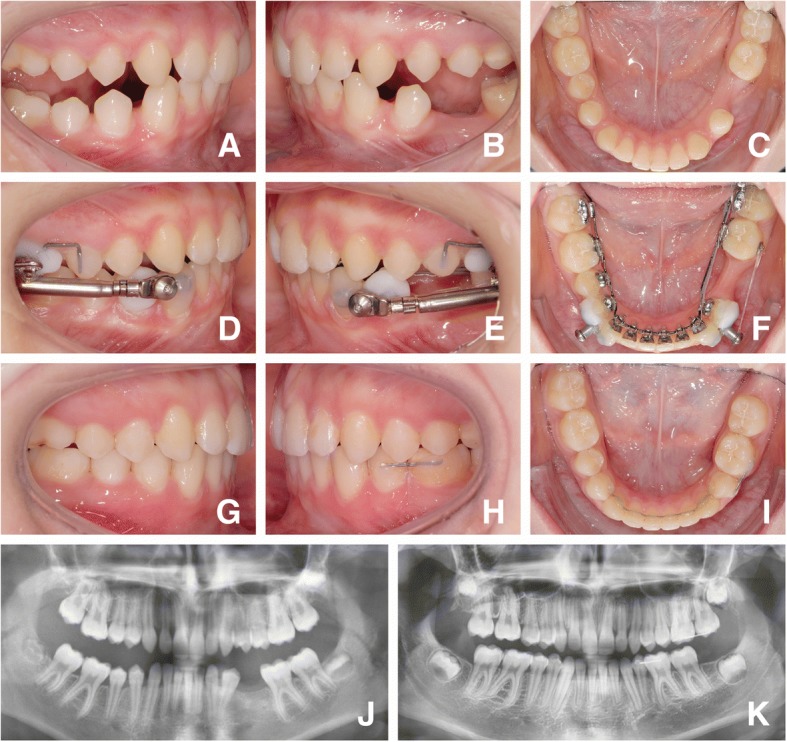
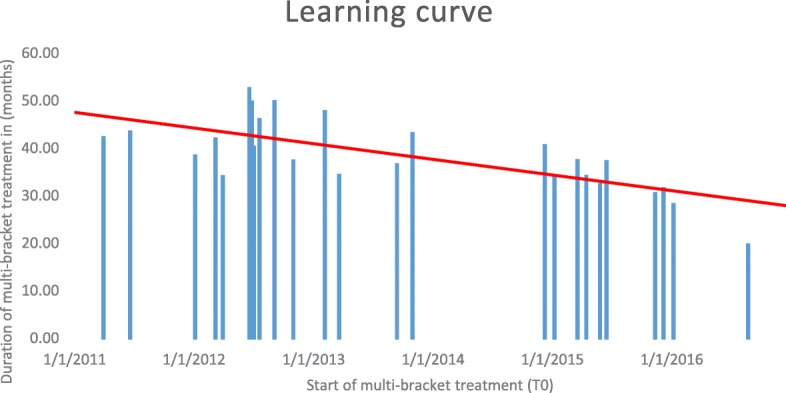
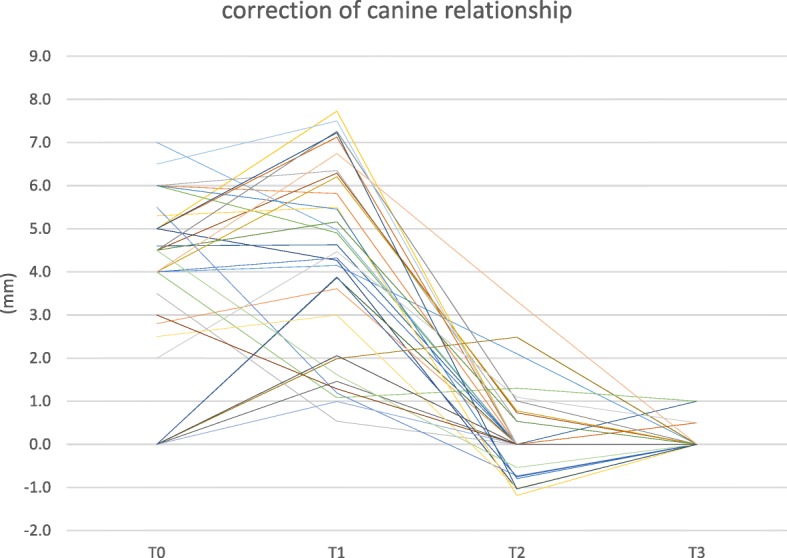
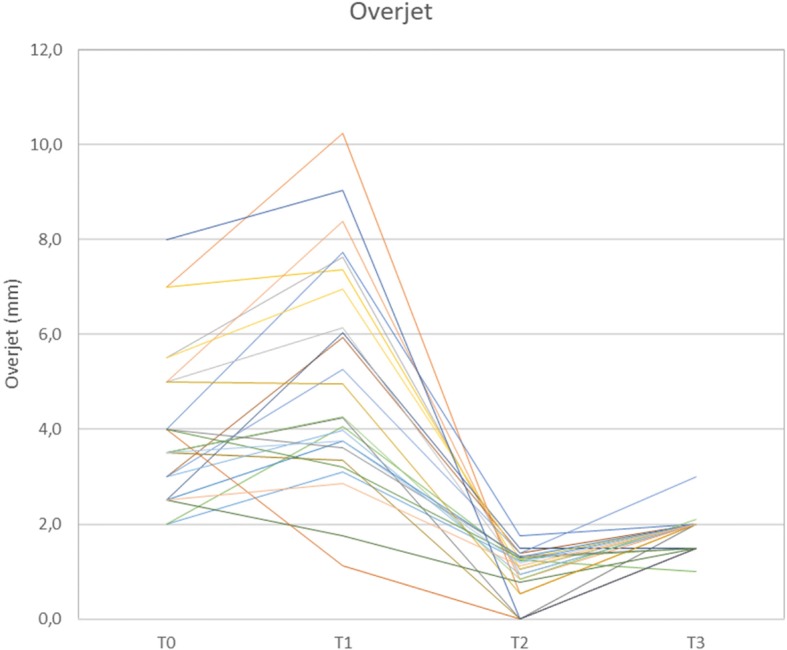
Twenty-five consecutively de-bonded subjects (female / male 17 / 8; aged at T0 (start of MB Tx) 12.3 to 20.6 years; mean age 15.0 / SD 1.7 years) were included in this retrospective analysis using the inclusion criteria of least of one lower second premolar aplasia; completed treatment with a totally customized lingual appliance (CCLA) in combination with Herbst telescopes. Exclusion criteria were the absence of counterbalancing maxillary extractions, as well as additional tooth aplasia other than lower second premolars. A total of 33 single, lower premolar aplasia space closures (right / left sided 17 / 16) were assessed using plaster casts and intra-oral photographs scaled to the plaster casts, at bonding (T0), Herbst insertion (T1), following gap closure (T2) and de-bonding (T3). Parallelism of roots was controlled by panoramic x-rays at T3.
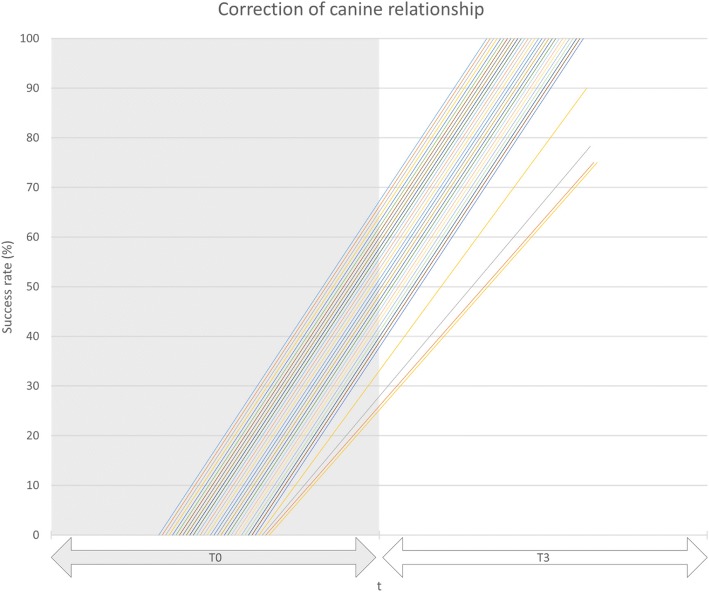
The mean aplasia space at T0 was 7.5 mm (SD 2.6). Complete space closure was achieved in all 33 situations. The null hypothesis was rejected. There was a significant improvement in the initial canine relationships (mean 3.5 mm distal occlusion at T0) to a mean 0.1 mm at T3. When evaluated against the individual treatment plan, the following amounts of planned improvements were achieved: space closure 100%, canine relationship 97.5%, overjet 93.9%, overbite 96.4%, parallel roots in space closure site 93.9%.
Herbst telescope anchorage in combination with double-cable pull mechanics and a CCLA for orthodontic space closure can deliver predictable, high-quality treatment results.
在孤立的下第二前磨牙缺失(ILSPA)的情况下,没有上颌平衡拔牙的情况下进行控制空间关闭是具有挑战性的。在空间关闭过程中可能会发生前牙支抗丧失,从而导致在后期磨牙侧向运动时,犬齿引导不当,咬合结果受损。为了评估 Herbst 望远镜锚固与双电缆、牵引力学以及完全定制的舌侧矫治器在 ILSPA 中的正畸空间管理中的有效性,我们测试了一个零假设,即随着磨牙向近中移动而进行的空间关闭会导致矢状向犬齿关系明显恶化,表现为前牙支抗丧失,从而导致 Angle-Class-II 类咬合。
本回顾性分析共纳入 25 例连续拆除粘结剂的患者(女性/男性 17/8;T0(MBTx 开始时)年龄为 12.3 至 20.6 岁;平均年龄 15.0/SD 1.7 岁),纳入标准为至少有一个下第二前磨牙缺失;使用完全定制的舌侧矫治器(CCLA)与 Herbst 望远镜联合治疗。排除标准为上颌无平衡拔牙以及除下第二前磨牙以外的其他牙齿缺失。使用石膏模型和口腔内照片对 33 例单侧、下前磨牙缺失的空间关闭(右侧/左侧 17/16)进行评估,照片按石膏模型缩放,并在粘结(T0)、 Herbst 插入(T1)、间隙关闭(T2)和拆除粘结剂(T3)时进行评估。T3 时通过全景 X 射线控制牙根的平行度。
T0 时的平均缺失空间为 7.5mm(SD 2.6)。所有 33 例均完全关闭间隙。零假设被拒绝。初始犬齿关系有显著改善(T0 时平均 3.5mm 远中咬合),至 T3 时平均为 0.1mm。根据个别治疗计划进行评估,达到了以下预期改善量:间隙关闭 100%、犬齿关系 97.5%、覆𬌗 93.9%、覆盖 96.4%、空间关闭部位的牙根平行度 93.9%。
Herbst 望远镜锚固与双电缆牵引力学以及 CCLA 用于正畸空间关闭可提供可预测的高质量治疗结果。