Language and Genetics Department, Max Planck Institute for Psycholinguistics, 6525 XD, Nijmegen, The Netherlands.
Centre for Molecular and Biomolecular Informatics, Radboud University Nijmegen Medical Centre, 6525 GA, Nijmegen, The Netherlands.
Sci Rep. 2018 Sep 24;8(1):14279. doi: 10.1038/s41598-018-32053-6.
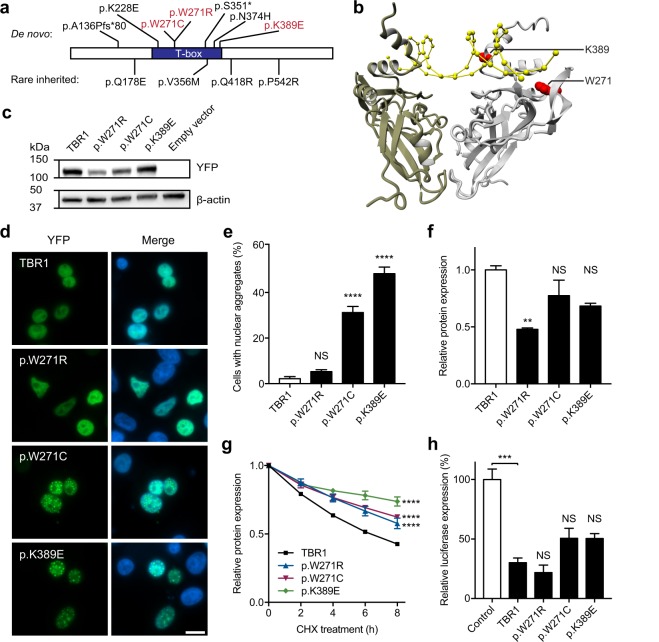
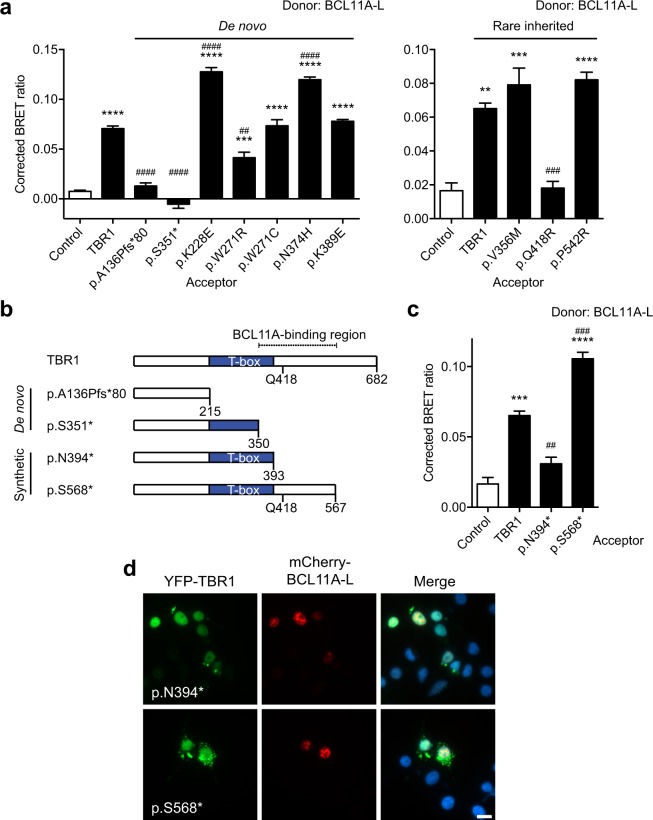
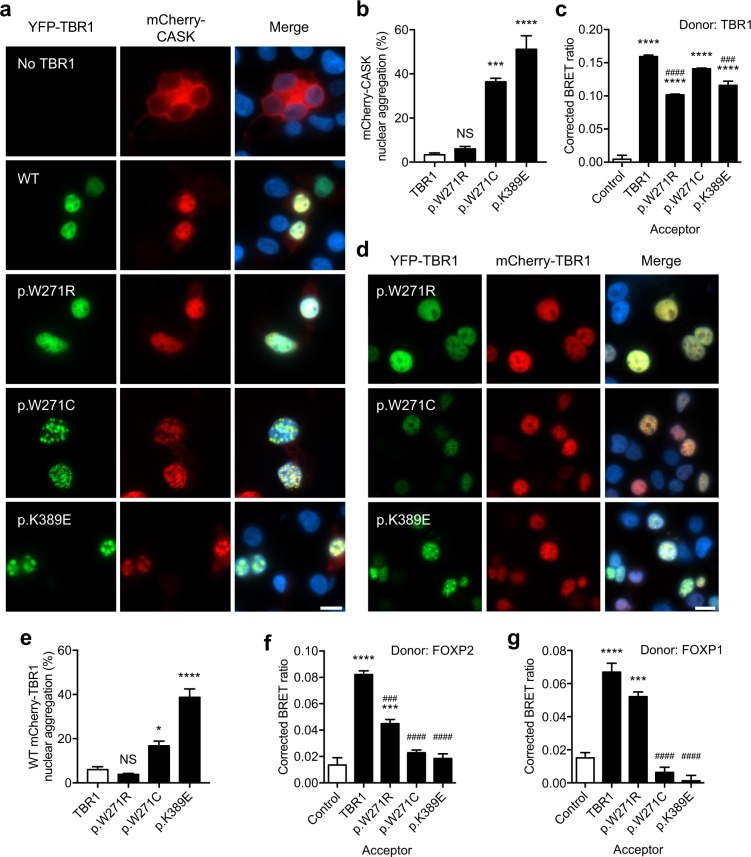
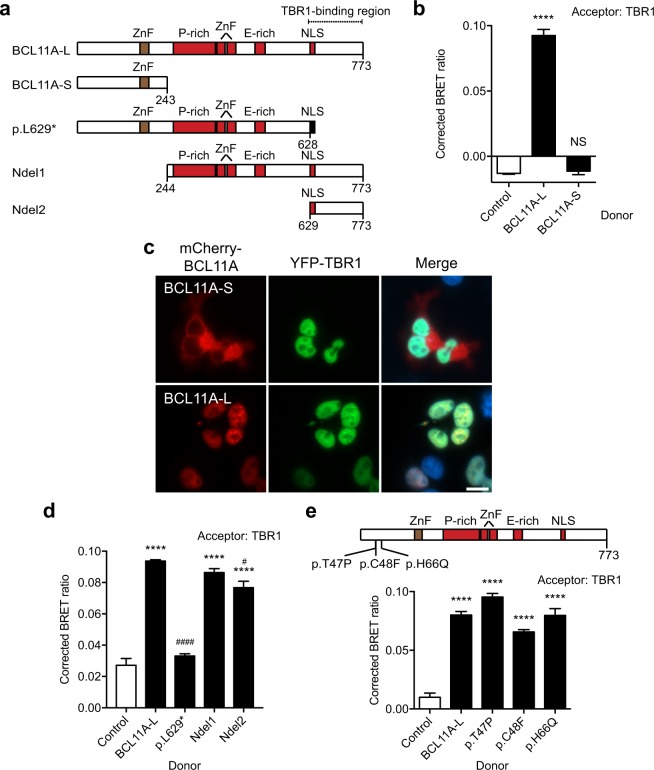
Recurrent de novo variants in the TBR1 transcription factor are implicated in the etiology of sporadic autism spectrum disorders (ASD). Disruptions include missense variants located in the T-box DNA-binding domain and previous work has demonstrated that they disrupt TBR1 protein function. Recent screens of thousands of simplex families with sporadic ASD cases uncovered additional T-box variants in TBR1 but their etiological relevance is unclear. We performed detailed functional analyses of de novo missense TBR1 variants found in the T-box of ASD cases, assessing many aspects of protein function, including subcellular localization, transcriptional activity and protein-interactions. Only two of the three tested variants severely disrupted TBR1 protein function, despite in silico predictions that all would be deleterious. Furthermore, we characterized a putative interaction with BCL11A, a transcription factor that was recently implicated in a neurodevelopmental syndrome involving developmental delay and language deficits. Our findings enhance understanding of molecular functions of TBR1, as well as highlighting the importance of functional testing of variants that emerge from next-generation sequencing, to decipher their contributions to neurodevelopmental disorders like ASD.
在散发型自闭症谱系障碍(ASD)的病因学中,TBR1 转录因子的反复从头变异被牵连在内。这些突变包括位于 T 盒 DNA 结合域的错义突变,先前的研究已经证明它们会破坏 TBR1 蛋白的功能。最近对数千个散发 ASD 病例的单体型家族进行筛查,在 TBR1 中发现了其他 T 盒变异,但它们的病因相关性尚不清楚。我们对在 ASD 病例的 T 盒中发现的从头错义 TBR1 变异进行了详细的功能分析,评估了蛋白质功能的许多方面,包括亚细胞定位、转录活性和蛋白相互作用。尽管所有预测都认为这些变异是有害的,但只有三个测试的变异中的两个严重破坏了 TBR1 蛋白的功能。此外,我们对与 BCL11A 的假定相互作用进行了特征描述,BCL11A 是一种转录因子,最近被牵连到一种涉及发育迟缓、语言缺陷的神经发育综合征中。我们的发现增进了对 TBR1 分子功能的理解,同时强调了对下一代测序中出现的变异进行功能测试的重要性,以破译它们对 ASD 等神经发育障碍的贡献。