Institute of Biodiversity, Animal Health and Comparative Medicine, University of Glasgow, Glasgow G61 1QH United Kingdom.
Int J Parasitol. 2018 Nov;48(13):1035-1042. doi: 10.1016/j.ijpara.2018.06.003. Epub 2018 Sep 22.
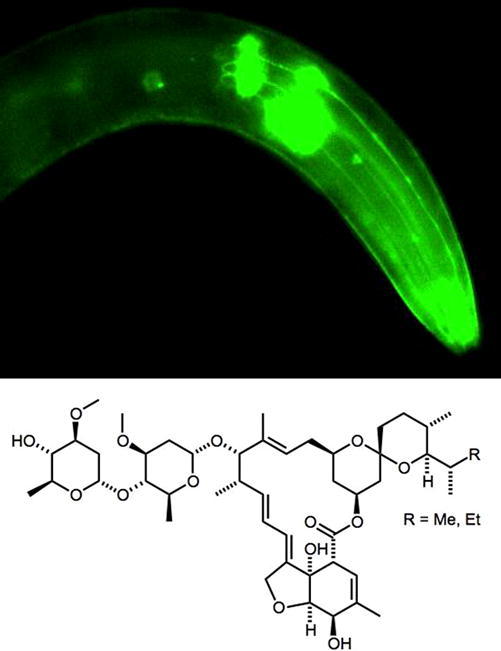
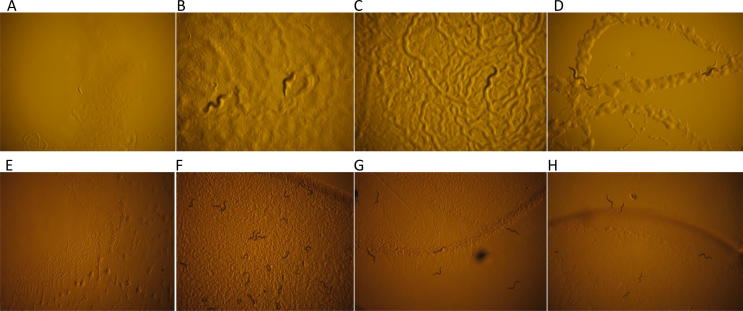
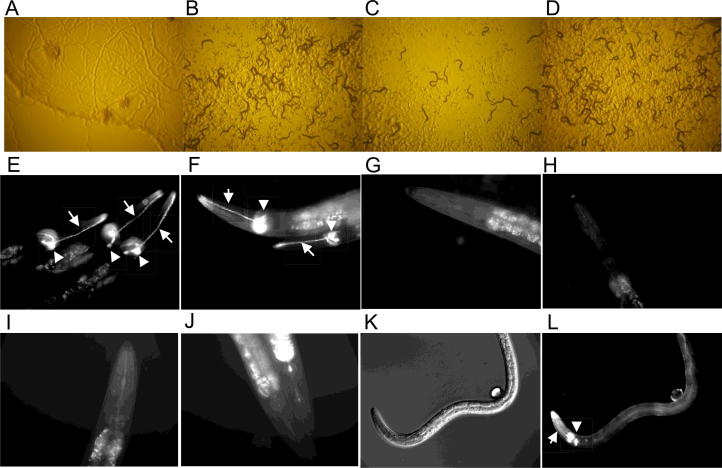
Parasitic nematodes represent formidable pathogens of humans, livestock and crop plants. Control of these parasites is almost exclusively dependent on a small group of anthelmintic drugs, the most important of which belong to the macrocyclic lactone class. The extensive use of these drugs to control the ubiquitous trichostrongylid parasites of grazing livestock has resulted in the emergence of both single and multi-drug resistance. The expectation is that this resistance will eventually occur in the human parasites such as the common and debilitating soil transmitted nematodes and vector-borne filarial nematodes. While the modes of action of anthelmintics such as ivermectin, have been elucidated, notably in the model nematode Caenorhabditis elegans, the molecular nature of this resistance remains to be fully determined. Here we show that the anterior amphids play a key role in ivermectin uptake and mutations in these sensory structures result in ivermectin resistance in C. elegans. Random genetic mutant screens, detailed analysis of existing amphid mutants and lipophilic dye uptake indicate that the non-motile ciliated amphid neurons are a major route of ivermectin ingress; the majority of the mutants characterised in this study are predicted to be involved in intraflagellar transport. In addition to a role in ivermectin resistance, a subset of the amphid mutants are resistant to the non-related benzimidazole class of anthelmintics, raising the potential link to a multi-drug resistance mechanism. The amphid structures are present in all nematodes and are clearly defined in a drug-sensitive strain of Haemonchus contortus. It is predicted that amphidial drug uptake and intraflagellar transport may prove to be significant in the development of single and multi-drug resistance in the nematode pathogens of veterinary and human importance.
寄生线虫是人类、家畜和作物植物的强大病原体。这些寄生虫的控制几乎完全依赖于一小群驱虫药物,其中最重要的属于大环内酯类。广泛使用这些药物来控制放牧家畜普遍存在的三棘刺线虫寄生虫,导致了单一和多药耐药性的出现。预计这种耐药性最终将出现在人类寄生虫中,如常见且使人虚弱的土壤传播线虫和经媒介传播的丝虫。虽然驱虫药物如伊维菌素的作用模式已经阐明,特别是在模式线虫秀丽隐杆线虫中,但这种耐药性的分子性质仍有待完全确定。在这里,我们表明前触角在伊维菌素摄取中起着关键作用,并且这些感觉结构中的突变导致秀丽隐杆线虫对伊维菌素产生耐药性。随机遗传突变筛选、对现有触角突变体的详细分析和疏水性染料摄取表明,非运动性纤毛触角神经元是伊维菌素进入的主要途径;本研究中鉴定的大多数突变体预计参与鞭毛内运输。除了在伊维菌素耐药性中的作用外,一部分触角突变体对非相关苯并咪唑类驱虫药物具有耐药性,这增加了与多药耐药机制的潜在联系。触角结构存在于所有线虫中,在敏感药物的捻转血矛线虫中清晰定义。预计触角药物摄取和鞭毛内运输可能在兽医和人类重要的线虫病原体中单药和多药耐药性的发展中被证明是重要的。