Jieensinue Sayilaxi, Zhu Hong, Li Guangcheng, Dong Keli, Liang Meiting, Li Yayue
Department of Traditional Chinese Medicine, Central South University Third Xiangya Hospital, Changsha, 410013, China.
BMC Cell Biol. 2018 Sep 25;19(1):21. doi: 10.1186/s12860-018-0174-z.
Mitochondrial homeostasis has been increasingly viewed as a potential target of cancer therapy, and mitochondrial fission is a novel regulator of mitochondrial function and apoptosis. The aim of our study was to determine the detailed role of mitochondrial fission in SW837 colorectal cancer cell viability, mobility and proliferation. In addition, the current study also investigated the therapeutic impact of Tanshinone IIA (Tan IIA), a type of anticancer adjuvant drug, on cancer mitochondrial homeostasis.
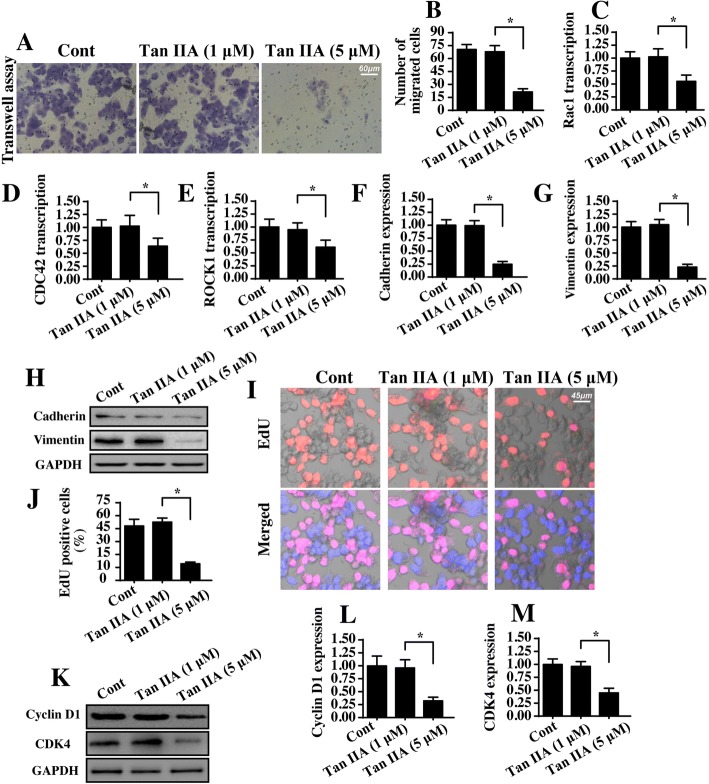
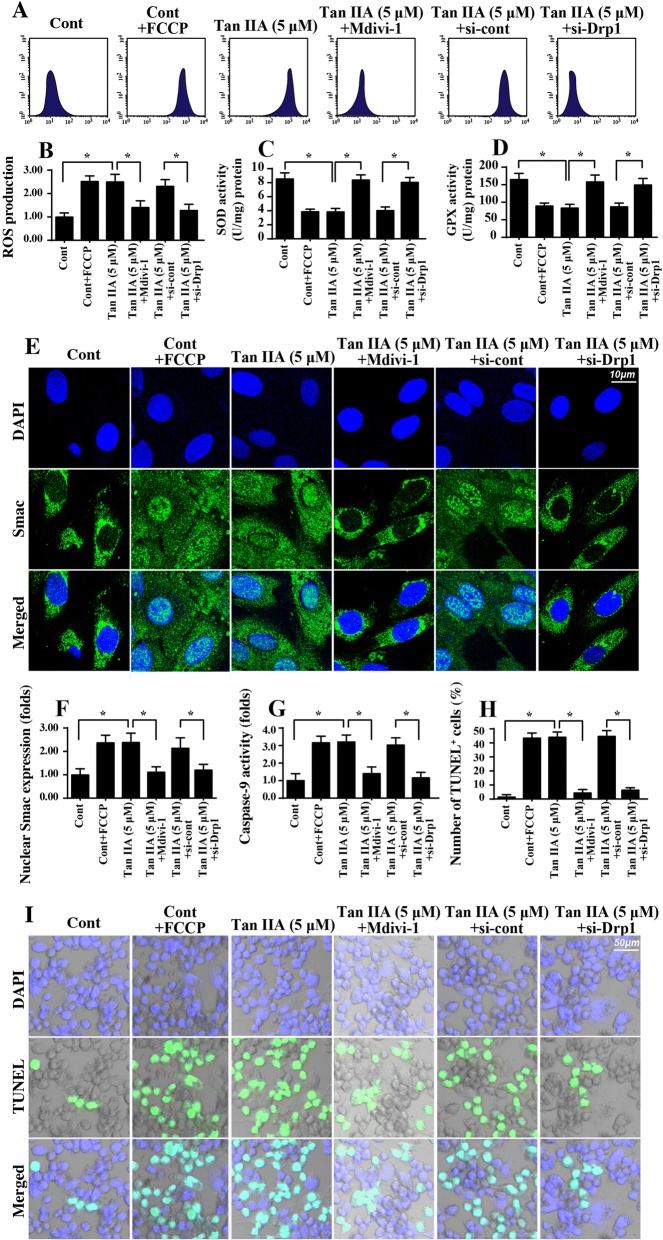
The results of our data illustrated that Tan IIA promoted SW837 cell death, impaired cell migration and mediated cancer proliferation arrest in a dose-dependent manner. Functional investigation exhibited that Tan IIA treatment evoked mitochondrial injury, as witnessed by mitochondrial ROS overproduction, mitochondrial potential collapse, antioxidant factor downregulation, mitochondrial pro-apoptotic protein upregulation, and caspase-9-dependent apoptotic pathway activation. Furthermore, we confirmed that Tan IIA mediated mitochondrial damage by activating mitochondrial fission, and the inhibition of mitochondrial fission abrogated the proapoptotic effects of Tan IIA on SW837 cells. To this end, our results demonstrated that Tan IIA modulated mitochondrial fission via the JNK-Mff pathways. The blockade of the JNK-Mff axis inhibited Tan IIA-mediated mitochondrial fission and promoted the survival of SW837 cells.
Altogether, our results identified mitochondrial fission as a new potential target to control cancer viability, mobility and proliferation. Furthermore, our findings demonstrate that Tan IIA is an effective drug to treat colorectal cancer by activating JNK-Mff-mitochondrial fission pathways.
线粒体稳态日益被视为癌症治疗的潜在靶点,而线粒体分裂是线粒体功能和细胞凋亡的新型调节因子。我们研究的目的是确定线粒体分裂在SW837结肠癌细胞活力、迁移和增殖中的具体作用。此外,本研究还探讨了抗癌辅助药物丹参酮IIA(Tan IIA)对癌症线粒体稳态的治疗影响。
我们的数据结果表明,Tan IIA以剂量依赖的方式促进SW837细胞死亡、损害细胞迁移并介导癌症增殖停滞。功能研究显示,Tan IIA处理引发线粒体损伤,表现为线粒体活性氧过度产生、线粒体膜电位崩溃、抗氧化因子下调、线粒体促凋亡蛋白上调以及caspase-9依赖性凋亡途径激活。此外,我们证实Tan IIA通过激活线粒体分裂介导线粒体损伤,而抑制线粒体分裂可消除Tan IIA对SW837细胞的促凋亡作用。为此,我们的结果表明Tan IIA通过JNK-Mff途径调节线粒体分裂。JNK-Mff轴的阻断抑制了Tan IIA介导的线粒体分裂并促进了SW837细胞的存活。
总之,我们的结果确定线粒体分裂是控制癌症活力、迁移和增殖的新潜在靶点。此外,我们的研究结果表明Tan IIA是一种通过激活JNK-Mff-线粒体分裂途径治疗结肠癌的有效药物。